
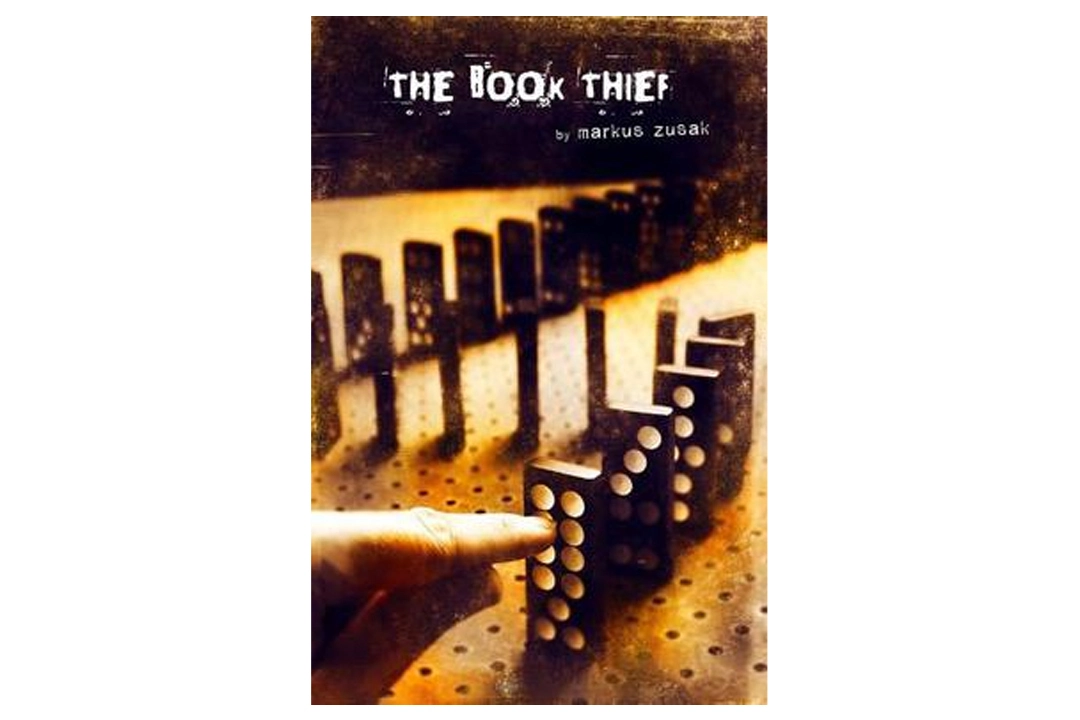
The Book Thief – Markus Zusak: Book Summary
Beverly Ashford • 11 Mar 2026 • 76 views • 3 min read.Let me tell you about the book that made Death feel human. Markus Zusak had an unusual idea: What if the Grim Reaper told a story about a young girl in Nazi Germany? What if Death himself was haunted by humans—by their cruelty and their kindness, their capacity to destroy and to love? The result was The Book Thief, a novel that spent years on bestseller lists, became an international phenomenon, and made millions of readers cry while thinking about the power of words. It's not a typical Holocaust novel. It's not a typical war novel. It's something stranger and more beautiful—a meditation on mortality, language, and why stories matter even when the world is ending.
The Book Thief – Markus Zusak: Book Summary
Quick Summary:
- A girl in Nazi Germany discovers the power of words and stories
- Death narrates, watching humans with fascination and confusion
- Books become survival, resistance, and connection
- Published in 2005, it became one of the most beloved novels of the 21st century
Death as Narrator
The novel is narrated by Death.
Not a grim skeleton with a scythe, but a weary collector of souls who doesn't understand why humans do what they do. Death has a job: show up, take the soul, carry it away. He's done this forever. He'll do it forever more.
But Liesel Meminger haunts him.
Death sees her three times: once when her brother dies, once during a bombing, and once at the end of the war. Each time, he's struck by this girl—by her relationship with words, by her survival, by the colors of the sky at each moment.
He tells her story because he can't stop thinking about it.
Death's voice is unusual: detached but compassionate, darkly humorous, prone to spoiling outcomes before they happen. He tells you characters will die long before they do. This creates a strange effect—you know tragedy is coming but read on anyway, which is perhaps what living through a war feels like.
The Girl on Himmel Street
Liesel Meminger is nine years old when her mother gives her up.
Her father has already been taken by the Nazis—he was a Communist. Her mother is fleeing too. On the train to foster care, Liesel's younger brother dies. They bury him in the snow. A gravedigger drops a book: The Grave Digger's Handbook.
Liesel takes it. She can't read, but she takes it anyway.
She arrives on Himmel Street in the small German town of Molching, delivered to Hans and Rosa Hubermann. Rosa is sharp-tongued and calls everyone a "saumensch" (pig). Hans is gentle, silver-eyed, plays the accordion.
Hans teaches Liesel to read. Late nights in the basement, sounding out words, discovering what letters can do.
Books become everything. Liesel steals them—from the snow, from a Nazi book burning, from the mayor's wife's library. She reads them. She memorizes them. She writes her own.
In a world where the Nazis control language—burning books, demanding allegiance, shaping reality with propaganda—Liesel's reading is rebellion.
Key Characters
| Character | Role | Represents |
|---|---|---|
| Liesel Meminger | Protagonist, book thief | The power of words, survival through stories |
| Hans Hubermann | Foster father | Quiet courage, goodness without fanfare |
| Rosa Hubermann | Foster mother | Love expressed through harshness |
| Max Vandenburg | Jewish man in hiding | Friendship, shared suffering, storytelling |
| Rudy Steiner | Liesel's best friend | Innocence, loyalty, wasted youth |
| Ilsa Hermann | Mayor's wife | Grief, books as connection |
| Death | Narrator | Observer, collector, fascinated outsider |
Max in the Basement
Hans Hubermann once had his life saved by a Jewish man named Erik Vandenburg. When Erik's son Max needs to hide from the Nazis, Hans doesn't hesitate.
Max Vandenburg arrives on Himmel Street. He hides in the basement, surviving on scraps, never seeing daylight. He and Liesel become friends—both orphans in different ways, both sustained by words.
Max writes Liesel a book: The Standover Man, painted over the pages of Mein Kampf. It's the story of his life, ending with meeting Liesel. "Not the fuhrer—the girl."
Later he writes another: The Word Shaker, a fable about how words can build forests that resist Hitler.
Their friendship is dangerous. If Max is discovered, the entire family dies. They live with this terror for years.
The Books Liesel Steals
Each stolen book marks a moment in Liesel's journey:
The Grave Digger's Handbook: Her brother's death, her first book, the beginning of literacy.
The Shoulder Shrug: Stolen from a Nazi book burning. Liesel reaches into the flames. The mayor's wife sees her.
The Whistler: Stolen from the mayor's library after Rosa loses the laundry job. An act of anger that becomes connection—Ilsa Hermann leaves her window open.
The Dream Carrier, A Song in the Dark, The Complete Duden Dictionary: All from Ilsa's library. Books that sustain Liesel through the war.
The Word Shaker: Max's gift. A book within the book.
The Book Thief: The book Liesel writes herself. Her story. The book we're reading.
The Bombing
Death has warned us from early on: Himmel Street will be destroyed.
In 1943, the bombs fall. Hans, Rosa, and Rudy all die. The entire street is destroyed in a single night.
Liesel survives because she's in the basement, writing her book. The rescuers pull her from the rubble. Everything she loved is gone.
Death collects the souls and finds her book—The Book Thief—scattered in the debris. He keeps it. He reads it. He tells us this story because a girl once wrote down her life.
The Ending
Liesel survives the war. Max survives the concentration camps. They reunite after liberation—a scene Death observes from a distance.
Liesel lives a long life. She marries, has children, moves to Australia. She dies as an old woman in Sydney.
Death comes for her one last time. He shows her the book he's kept for decades. He tells her something he's learned from watching humans:
"I am haunted by humans."
Not by ghosts or souls, but by the living—by their capacity for destruction and their capacity for love, often in the same person, often at the same time.
What the Book Is Really About
The power of words. Hitler rose on words—propaganda, speeches, Mein Kampf. Liesel survives on words—stories, books, the vocabulary she builds with Hans. Words can kill and words can save. The same tool, different hands.
Ordinary people under fascism. Molching isn't full of heroes or villains. Hans joins the Nazi party because he has to, but hides a Jew because he must. Rudy refuses to join the Hitler Youth elite program. People navigate an impossible world with small choices.
Death as witness. Death doesn't judge. He collects and observes. His perspective defamiliarizes the war—we see it from outside human experience, which makes human behavior both stranger and more moving.
The colors of the sky. Death notices the sky at each soul's collection. He sees colors humans don't have words for. This poetic detail reminds us that even in death, there's beauty. Even at the end, something transcends.
Frequently Asked Questions
Is this appropriate for young readers?
It's marketed as young adult but crosses over. There's death, violence, and Holocaust content, handled with care. Many readers 12+ find it powerful. Sensitive readers should be prepared.
Why does Death spoil the ending?
Zusak wants you to know tragedy is coming. This creates dread and also acceptance—you read not to find out what happens but to understand how it feels to live toward inevitable loss.
How accurate is the Holocaust depiction?
The book focuses on German civilians rather than camps. The Holocaust is present but not centered. Some critics note this creates a more comfortable narrative. It's a perspective choice with trade-offs.
How does the movie compare?
The 2013 film is faithful and well-acted but loses Death's narration, which is the book's most distinctive element. Read first.
Should I read this if I cry easily?
You will cry. But it's not manipulative crying—it's earned through pages of connection.
The Bottom Line
Here's what Markus Zusak achieved.
He wrote a Holocaust novel that's really about language. He made Death a tender, confused narrator who can't understand why humans hurt each other or why they love so fiercely. He showed a girl stealing books as an act of survival and resistance.
The Book Thief argues that stories matter—that they keep us alive, that they connect us across impossible distances, that they're worth stealing.
Liesel's book survived the bombing. It survived her death. It survived into our hands.
That's what stories do.