
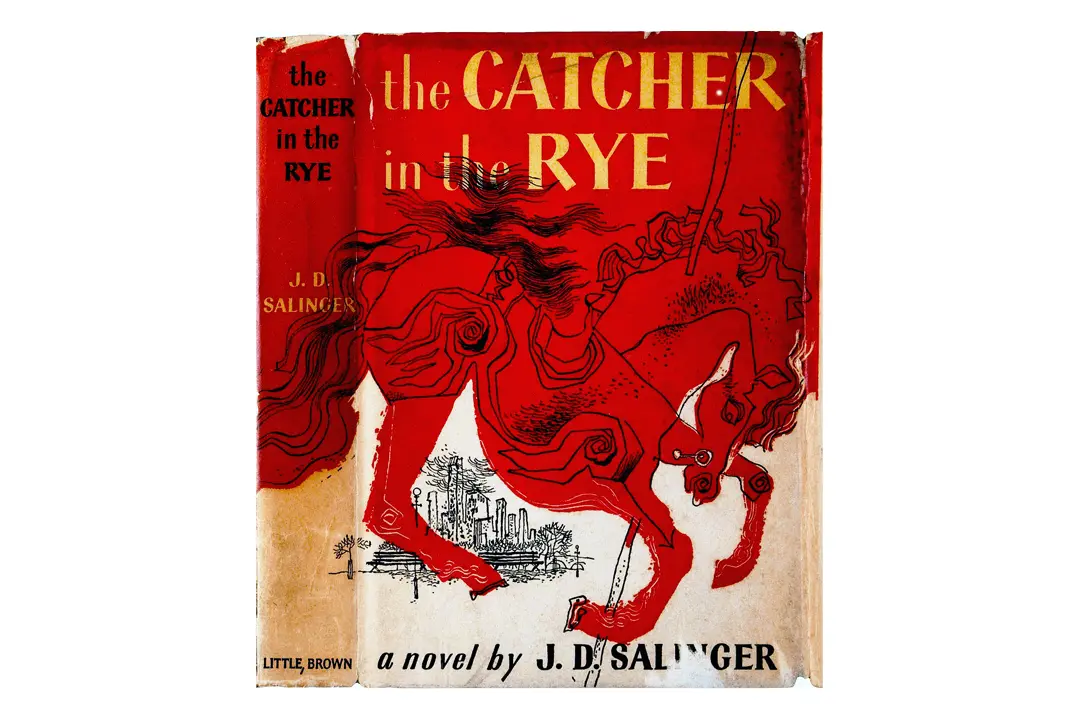
The Catcher in the Rye – J.D. Salinger: Book Summary
Beverly Ashford • 07 Mar 2026 • 83 views • 3 min read.Let me tell you about the most divisive narrator in American literature. People either love Holden Caulfield or find him unbearable. There's almost no middle ground. Readers who connect with him feel genuinely understood, sometimes for the first time. Readers who don't connect find him whiny, pretentious, and exhausting. Here's the thing—Salinger knew exactly what he was doing. Holden isn't meant to be likable in any conventional sense. He's meant to be authentic. He's a messed-up teenager in crisis, lying about his feelings, judging everyone while hating himself, desperate for connection but pushing everyone away. If you've ever felt like a fraud surrounded by phonies, this is your book. If not, read it anyway. Understanding Holden might help you understand someone you know.
The Catcher in the Rye – J.D. Salinger: Book Summary
Quick Summary:
- A troubled teenager wanders New York City after being expelled from prep school
- Holden Caulfield narrates in an unforgettable, authentic voice
- The novel explores alienation, grief, and the fear of growing up
- Published in 1951, it became the defining coming-of-age novel for generations
The Setup
Holden Caulfield is sixteen, narrating from what appears to be a mental health facility in California. He's going to tell us about "this madman stuff" that happened around Christmas, when everything fell apart.
It started at Pencey Prep, a fancy boarding school in Pennsylvania—his fourth school, the fourth to expel him. He's flunking everything except English. He doesn't care. The whole place is full of phonies anyway.
The novel covers about 48 hours, starting the Saturday before Christmas break. Holden has to leave Pencey but can't face going home early and telling his parents about the expulsion. So instead of taking a train to Manhattan and going straight home, he checks into a seedy hotel and wanders the city, encountering a series of people who disappoint or disturb him, drinking too much, lying constantly, and slowly unraveling.
He's not running toward anything. He's running from everything.
Three Days in Manhattan
Saturday night: Holden checks into the Edmont Hotel after arriving in the city. From his window, he watches people in other rooms doing degrading things. He calls a woman whose number a guy gave him, then gets cold feet. He goes to a nightclub, dances with tourists, and returns to the hotel where the elevator operator offers to send a prostitute. Holden accepts, then can't go through with it. He pays her but the pimp beats him up for supposedly underpaying.
Sunday: Holden calls Sally Hayes, a girl he used to date. He wanders to a park, worries about the ducks in the lagoon and where they go when the water freezes. He has breakfast, meets two nuns and enjoys their company, then buys a record for his sister Phoebe. His date with Sally starts well but ends with him insulting her. He meets an old classmate for drinks and gets drunk. He sneaks home to see Phoebe, the only person he actually wants to be with.
Sunday night into Monday: Phoebe is the one person Holden can't lie to. She asks what he wants to do with his life. He describes his fantasy—being the "catcher in the rye," standing in a field of playing children and catching them before they fall off a cliff. It's a misremembered poem (Burns wrote "if a body meet a body," not "catch"). His dream is to prevent innocence from being destroyed.
Holden leaves to stay with Mr. Antolini, a former teacher. He wakes to Antolini stroking his head—possibly a paternal gesture, possibly something else. Holden flees. He wanders the city feeling like he's disappearing. He decides to run away to the West, pretend to be deaf-mute, never deal with anyone again.
But first he wants to say goodbye to Phoebe. She shows up with a suitcase, wanting to come with him. Holden refuses, insisting she stay. Her disappointment breaks something in him. He takes her to the Central Park carousel. He watches her go around and around, reaching for the gold ring. For the first time, he feels something like peace.
Then the narrative returns to the institution. Something happened after the carousel. He's been sick. He might get better. He misses everybody—even the people who hurt him.
Key Characters
| Character | Role | Significance |
|---|---|---|
| Holden Caulfield | Narrator, 16 years old | Voice of alienated youth, unreliable narrator |
| Phoebe Caulfield | Holden's 10-year-old sister | Innocence, connection, what Holden wants to protect |
| Allie Caulfield | Holden's deceased brother | The trauma underlying everything |
| D.B. Caulfield | Older brother, Hollywood writer | Represents selling out, becoming a "phony" |
| Mr. Antolini | Former teacher | Ambiguous mentor figure, wisdom mixed with ambiguity |
| Sally Hayes | Holden's date | Everything Holden rejects about "phoniness" |
| Stradlater | Holden's roommate | Casual cruelty, sexual threat |
| Ackley | Dorm neighbor | Social awkwardness, someone Holden tolerates |
The Key You Need: Allie
Most first-time readers miss something crucial.
Holden's younger brother Allie died of leukemia two years before the novel's events. Holden was thirteen. The night Allie died, Holden broke all the windows in the garage with his bare hands. They never healed properly.
This grief permeates everything. Holden's fear of change, his obsession with protecting innocence, his need to preserve things exactly as they are—all trace back to losing Allie. His famous red hunting hat resembles Allie's red hair. His dream of being the catcher in the rye is about saving children from falling into adulthood, into death, into whatever void claimed his brother.
Holden isn't just a cynical teenager complaining about phonies. He's a traumatized kid who hasn't processed devastating loss, who's terrified of anyone else he loves being destroyed.
Once you see the grief, you can't unsee it.
What "Phony" Really Means
Holden calls everything and everyone phony. It's his favorite word. It's also his armor.
The phoniness he sees everywhere is real. Adult society does involve performance, compromise, and small hypocrisies. People do say things they don't mean. Social conventions are somewhat fake.
But Holden's obsession with phoniness also protects him. If everyone is phony, he doesn't have to connect with anyone. If the adult world is entirely corrupt, he doesn't have to enter it. If he preemptively rejects everything, nothing can hurt him.
The tragedy is that his defenses don't work. He's desperately lonely. He keeps reaching out to people—old girlfriends, former teachers, random strangers—then pushing them away when they inevitably disappoint. He wants connection but fears it. He wants to stay a child but time won't stop.
The novel's genius is making this sympathetic rather than merely annoying. We've all built defenses that trap us. We've all judged others to avoid being judged ourselves.
Why Teenagers Connect (And Adults Sometimes Don't)
The book was marketed to adults but found its true audience in teenagers—especially the alienated, smart, unhappy ones.
Why? Because Holden voices feelings that adolescents experience but struggle to articulate. The sense that adult society is a con game. The fear that growing up means becoming fake. The loneliness that comes from feeling like nobody understands.
Adults often react differently. From a mature perspective, Holden can seem self-absorbed, hypocritical, and unable to see his own phoniness. And he is all those things.
But so are most teenagers. And so are many adults who've forgotten what it felt like.
Frequently Asked Questions
What happens to Holden after the book ends?
Salinger leaves it deliberately ambiguous. He's in some kind of facility, getting treatment. He mentions going back to school in the fall. Whether he truly recovers or the cycle continues is unknown.
Is Holden mentally ill?
Modern readers often diagnose depression, PTSD, or bipolar disorder. Salinger never labels it. What's clear is that Holden is in crisis, his coping mechanisms have failed, and he needs help he's finally getting.
Why was the book banned so often?
Language (lots of "goddamns" and sexual references by 1951 standards), themes of teenage sexuality and prostitution, and general attitude that authority figures found dangerous. The banning made it a rite of passage for generations of readers.
Did Salinger intend Holden to be likable?
He intended Holden to be authentic. Likability wasn't the point. Understanding was. Salinger wanted readers to see inside a troubled mind, not to admire it.
Why did Salinger never publish another novel?
He became increasingly reclusive after Catcher's massive success. He wrote obsessively but published almost nothing after 1965. He died in 2010 with reportedly unpublished manuscripts. His reasons remain mysterious.
Should I reread this as an adult?
Absolutely. You'll see different things. The Holden who seemed like a hero at fifteen might seem more clearly damaged at thirty. Both readings are valid.
The Bottom Line
Here's what Salinger captured that nobody else quite has.
The terror of growing up. The grief that has nowhere to go. The defenses we build that become prisons. The desperation for connection masked as rejection of the world.
Holden Caulfield isn't a role model. He's a cautionary tale and a mirror. He shows us what happens when trauma goes unprocessed, when cynicism becomes a lifestyle, when fear of phoniness becomes its own kind of fake.
But he's also reaching out, through all 277 pages, hoping someone will understand. Hoping someone will catch him before he falls.
That's why the book lasts. It makes readers feel caught.