
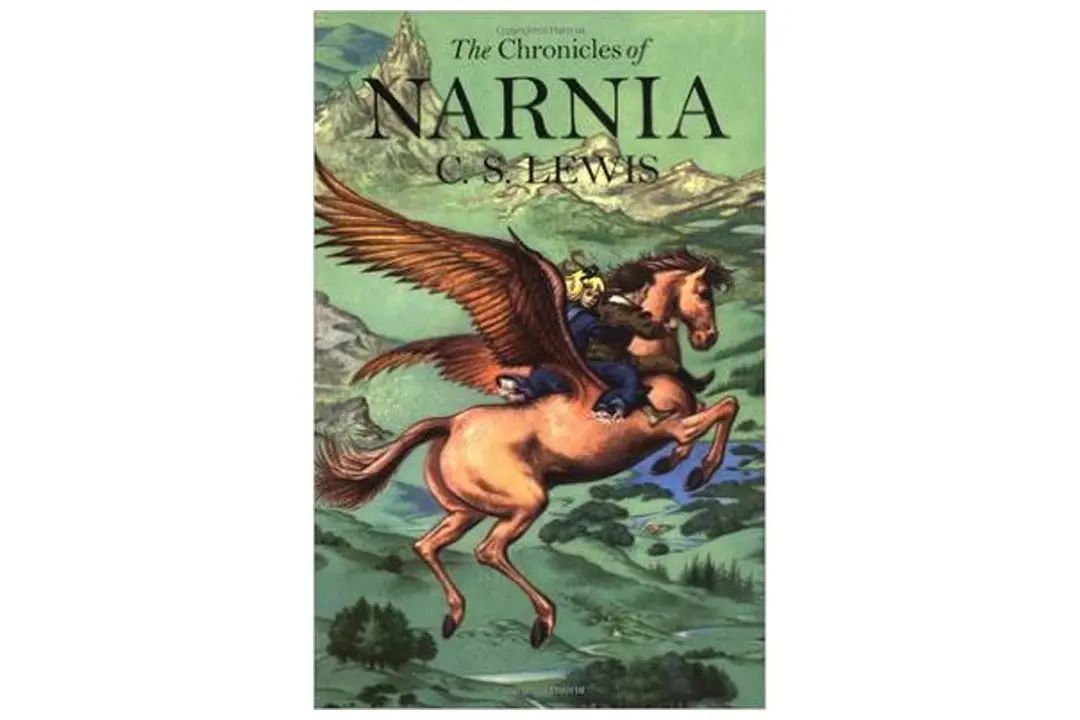
The Chronicles of Narnia by C.S. Lewis: Book Summary
Beverly Ashford • 15 Feb 2026 • 80 views • 3 min read.Let me tell you about the series that gave an entire generation its first experience of a world more real than the real world — and its first encounter with a figure who dies and comes back without explaining himself, which is either the most natural thing in the universe or the most significant thing in the universe depending on where you are when you meet him. C.S. Lewis wrote the seven Narnia books between 1950 and 1956. He was a medieval literature scholar at Oxford, a close friend of J.R.R. Tolkien, a former atheist who had converted to Christianity in his thirties, and a man who had been thinking for years about how to communicate theological ideas to people — particularly young people — who had become inoculated against explicit religious argument. He decided to approach it from the other direction. Put the theology inside a story first. Let readers feel the truth before they think it. By the time they realize what they have been reading, it is already inside them. Whether you find this inspiring or manipulative depends significantly on your relationship to the theology involved. Lewis himself was transparent about what he was doing, eventually. The books work either way — as fantasy adventure for readers who never engage with the allegory at all, and as theological exploration for readers who do.
The Chronicles of Narnia by C.S. Lewis: Book Summary
Quick Summary:
- Seven books following children from our world who enter Narnia — a magical land of talking animals, ancient magic, and an ongoing battle between good and evil presided over by a great lion named Aslan
- Written between 1950 and 1956, they have sold over one hundred million copies and remain among the most widely read fantasy works ever published
- Lewis's central achievement: embedding Christian theology so deeply inside adventure fiction that children absorb the framework before they recognize it as theology
- Books that work simultaneously as pure fantasy adventure and as sustained theological allegory — and that have been argued about on both levels for seventy years
The Seven Books and Their Order Debate
Here begins the argument that has divided Narnia readers for decades: publication order or chronological order?
Publication order: The Lion the Witch and the Wardrobe first, then Prince Caspian, The Voyage of the Dawn Treader, The Silver Chair, The Horse and His Boy, The Magician's Nephew, The Last Battle.
Chronological order within the Narnia timeline: The Magician's Nephew first, The Lion the Witch and the Wardrobe second, then The Horse and His Boy, Prince Caspian, The Voyage of the Dawn Treader, The Silver Chair, The Last Battle.
Lewis himself, late in life, suggested chronological order when asked by a young reader. Most literary scholars recommend publication order. The debate has no resolution. Publication order is how the world works and how Lewis wrote it — The Lion the Witch and the Wardrobe was written first without knowledge of what would follow. Chronological order provides a different kind of coherence.
Read The Lion the Witch and the Wardrobe first. After that, follow your instinct.
The Lion, the Witch and the Wardrobe
Four Pevensie siblings — Peter, Susan, Edmund, and Lucy — are evacuated to a country house during the World War II London Blitz. Lucy discovers a wardrobe in a spare room that leads to Narnia — a land where it has been winter for a hundred years, always winter and never Christmas, under the rule of the White Witch Jadis.
Lucy meets Mr. Tumnus the faun. Edmund, entering later, meets the White Witch herself, who gives him enchanted Turkish Delight and promises him a kingdom if he brings her his siblings. Edmund betrays his family. The four eventually reach Aslan — the great lion, the son of the Emperor-beyond-the-Sea, the rightful king of Narnia.
The White Witch claims Edmund's life under the Deep Magic — the law from the dawn of time that gives her the right to kill every traitor. Aslan offers himself in Edmund's place. He is killed on the Stone Table. He comes back.
The Deeper Magic, which the Witch did not know, states that when an innocent gives his life voluntarily for a traitor, death works backward. Aslan rises. The winter ends. The four Pevensies become kings and queens of Narnia — the High King Peter, Queen Susan the Gentle, King Edmund the Just, Queen Lucy the Valiant — and reign until one day they stumble back through a wardrobe and discover that no time has passed in England at all.
The Voyage of the Dawn Treader
Edmund and Lucy return to Narnia with their insufferable cousin Eustace — a boy who has been raised on improving books rather than imagination and who responds to everything magical with the specific resistance of someone who has been taught that facts are the only real things.
They sail with King Caspian on the Dawn Treader to the edge of the world, visiting enchanted islands along the way. Eustace's arc is the book's finest achievement: he becomes a dragon through his own greed, is unable to remove the dragon skin himself no matter how hard he scratches, and is de-dragoned by Aslan — who tears the skin away in a process that is painful and necessary and comes from outside rather than from Eustace's own effort.
Lewis is explicit about what this means and readers who want to miss the allegory can miss it, but the image is precise and unforgettable either way: you cannot change yourself by your own scratching. Something outside you has to do the tearing.
The Magician's Nephew
The creation story. Polly and Digory travel between worlds using magic rings and accidentally bring the White Witch Jadis into London before entering the newly created Narnia. They watch Aslan sing the world into existence — the animals, the trees, the landscape emerging from his voice as he walks.
This book retroactively transforms The Lion the Witch and the Wardrobe by showing where the wardrobe came from — the wood from a tree grown from a magical apple from Narnia — and where the White Witch came from — her own world destroyed by her willingness to speak a Deplorable Word to win a war rather than lose it.
Lewis's creation sequence is his finest prose. The description of Narnia coming into being from darkness and song is the kind of writing that children read and carry without being able to say what it gave them.
The Last Battle
The final book is the most theologically explicit and the most formally ambitious — and the most divisive. Narnia is destroyed. The stable door through which characters enter is both smaller and larger than everything outside it. Old Narnia ends. Something better, something more real, begins.
Lewis is describing heaven in the specific theological framework of Platonic Christianity — the idea that the earthly world is a shadow of the real world, that what we love here is a copy of what we will love fully elsewhere. Further up and further in, the characters are told as they run toward the center of the new world. It keeps getting more real the further in they go.
Susan is not there. The question of why Susan is not in heaven has generated more literary argument than almost any other element of the series.
The Seven Books Compared
| Book | Main Characters | Core Theme | Allegorical Content |
|---|---|---|---|
| The Lion the Witch and the Wardrobe | Four Pevensies | Sacrifice and resurrection | Crucifixion and resurrection of Christ |
| Prince Caspian | Four Pevensies, Caspian | Faith when evidence is thin | Believing without seeing |
| The Voyage of the Dawn Treader | Edmund, Lucy, Eustace, Caspian | Sanctification and personal transformation | Baptism, conversion, removing sin |
| The Silver Chair | Eustace, Jill, Puddleglum | Following instructions under pressure | Obedience and perseverance |
| The Horse and His Boy | Shasta, Aravis, Bree, Hwin | Providence working through apparent accident | God's hidden hand in events |
| The Magician's Nephew | Digory, Polly | Creation and the origin of evil | Genesis, the fall |
| The Last Battle | Tirian, Eustace, Jill | Death and what follows | Revelation, judgment, heaven |
Frequently Asked Questions
Why is Susan excluded from heaven in The Last Battle?
Lewis has Susan, now an adult, interested only in nylons and lipstick and invitations — having left behind the belief of childhood for adult social preoccupations. The implication is that she has turned away from what she knew was true. Many readers — including famously Philip Pullman and Neil Gaiman — have found this deeply problematic: a female character punished for growing up and becoming interested in adult femininity. Lewis's defenders argue the point is about choosing social approval over deeper reality. The argument is genuine and both positions have been made with intelligence.
Do the books work for non-religious readers?
Extensively. Most children who love Narnia have not identified the allegory. The adventure is real, Aslan is real as a character regardless of what he represents, and the emotional truth of the books — loyalty, betrayal, sacrifice, wonder, the experience of something being more real than ordinary reality — is not dependent on accepting the theology. Many adult readers who were not raised religious find the books moving in ways they cannot entirely account for.
In what order should I read them?
Read The Lion the Witch and the Wardrobe first regardless of any other consideration. After that, publication order or chronological order will give you different but equally valid experiences. Most Lewis scholars prefer publication order for understanding how the series developed. Most casual readers find chronological order coherent after the first book.
How do the film adaptations compare?
The 2005 Disney film of The Lion the Witch and the Wardrobe is competent and occasionally beautiful — Tilda Swinton's White Witch is definitive. The subsequent adaptations declined in quality and the series was abandoned before completion. The BBC miniseries from the 1980s has a specific charm for readers who grew up with it. None of the adaptations capture Lewis's prose voice, which is arguably the series' most distinctive element.
What is the relationship to Tolkien?
Lewis and Tolkien were close friends and members of the Inklings — the Oxford literary group. Tolkien disliked the Narnia books, finding the allegory too obvious and the world inconsistently constructed. Lewis's Narnia and Tolkien's Middle-earth represent two different theories of how mythology and spirituality interact with fiction. Tolkien embedded his Catholic sensibility into the mythology itself without allegory. Lewis embedded Christian theology into explicit allegorical characters and events. Both approaches have produced enduring work.
What should I read next?
His Dark Materials by Philip Pullman — beginning with The Golden Compass — was explicitly written as a response to Narnia, offering an alternative mythology with opposite theological conclusions. It is the essential counterpoint. The Space Trilogy by Lewis himself — beginning with Out of the Silent Planet — covers similar theological territory in science fiction for adult readers. Tolkien's The Hobbit and The Lord of the Rings share the Oxford literary world and the conviction that mythology carries truth.
The Bottom Line
Here is what C.S. Lewis actually built across seven books written for his goddaughter and the children he imagined reading over her shoulder.
Not Christian propaganda, though the theology is real and present and deliberate. Not pure fantasy adventure, though the adventure is real and functions without the theology for readers who want it to.
Something stranger and more durable: a world that feels more real than the real world, presided over by a figure who is wild and good and not safe and cannot be fully explained or contained, who dies and comes back and does not explain himself in terms that satisfy the intellect but that satisfy something else.
Aslan is not a tame lion.
Lewis meant this as the most important thing he could say about the divine — that it cannot be domesticated, cannot be made comfortable, cannot be reduced to a system that gives you control over it.
Children who read Narnia at the right age carry something from it that they cannot always name.
Readers who meet it as adults often feel they missed something essential.
The wardrobe is still there.
The back of it is worth finding out.