
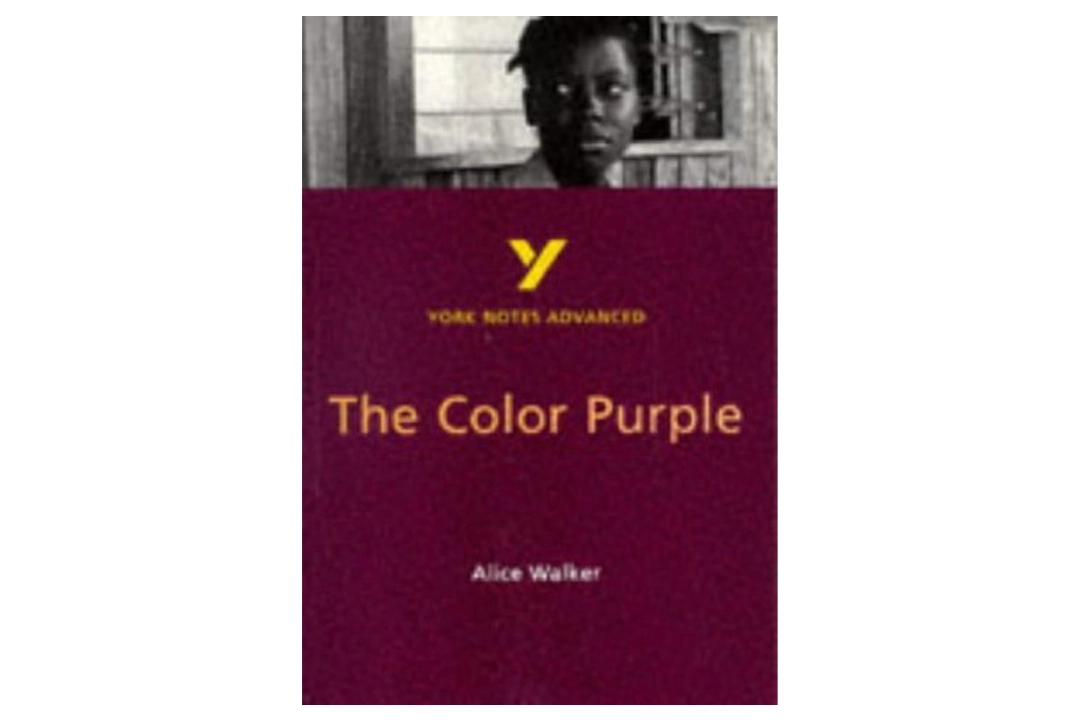
The Color Purple – Alice Walker: Book Summary
Beverly Ashford • 12 Mar 2026 • 83 views • 3 min read.Let me tell you about the book that changed what American literature could be. Alice Walker wrote a novel in letters—mostly to God—from a barely literate Black woman in 1930s Georgia. The protagonist is raped, beaten, separated from everyone she loves, and told she's ugly and worthless. She ends up radiant, self-possessed, and surrounded by love. The Color Purple won the Pulitzer Prize and the National Book Award. Steven Spielberg made it into a film. It became a Broadway musical. It's been banned in schools and celebrated as a masterpiece. It's both intensely personal and politically revolutionary. Walker wrote about the interior life of someone the world considered invisible. She proved that invisibility was a lie.
The Color Purple – Alice Walker: Book Summary
Quick Summary:
- A Black woman in the rural South survives abuse and discovers her voice
- Told through letters to God and to her sister across the ocean
- The novel celebrates sisterhood, sexuality, and spiritual awakening
- Published in 1982, it won the Pulitzer Prize and remains a landmark of American literature
Celie's Story
The novel opens with a warning: "You better not never tell nobody but God."
Celie is fourteen years old. The man she believes is her father has been raping her. She's had two children by him—both taken away. She writes to God because there's no one else.
Her mother dies cursing her. Her father gives her away to Albert (whom she calls "Mr.___"), a widower who wanted her younger sister Nettie. Albert treats Celie as a servant and beats her regularly. His children hate her.
Celie endures. She's been taught that her role is to survive and serve. She has no sense of herself as deserving anything more.
Nettie runs away from their father's house and comes to live with Celie. But Albert wants Nettie too. When she refuses him, he throws her out. The sisters promise to write to each other.
Celie never receives a single letter. She thinks Nettie is dead.
The Women Who Save Her
Celie's transformation comes through women.
Sofia marries Albert's son Harpo. She's everything Celie isn't—fierce, defiant, unwilling to be beaten. When Harpo asks Celie how to make Sofia mind, Celie says "beat her." Sofia confronts Celie: "You told Harpo to beat me?" The shame of this becomes Celie's first step toward self-awareness.
Sofia refuses to submit. She punches the mayor's wife when ordered to be her maid. She's imprisoned and nearly destroyed—but she never breaks. Her existence teaches Celie that women can fight back.
Shug Avery is Albert's longtime mistress, a blues singer, a woman who lives exactly as she pleases. She's gorgeous, talented, and utterly free. When Shug comes to stay (sick and needing care), Celie falls in love.
Shug loves her back. Their relationship becomes sexual—but more than that, it becomes a spiritual awakening.
Key Characters
| Character | Role | Represents |
|---|---|---|
| Celie | Protagonist, narrator | Voice found after silence |
| Shug Avery | Blues singer, lover | Liberation, divine feminine |
| Nettie | Celie's sister | Hope, education, Africa |
| Albert (Mr.___) | Celie's husband | Toxic masculinity, later redemption |
| Sofia | Harpo's wife | Resistance and its costs |
| Harpo | Albert's son | Masculinity's confusion |
| Alphonso | Celie's stepfather | Abuse, theft of identity |
The Letters
The novel's form is epistolary—entirely in letters.
Celie's letters to God open the book. They're written in vernacular English, reflecting her limited education. The prose is direct, spare, and heartbreaking:
"He act like he can't stand me no more. Say I'm evil an always up to no good. He took my other little baby, a boy this time."
Nettie's letters appear halfway through. Celie discovers that Albert has been hiding them for decades. Nettie is alive—she went to Africa as a missionary and has been caring for Celie's two children, who were adopted by the missionaries.
The letters span thirty years. Nettie's describe Africa, colonialism, and different forms of oppression. Celie's trace her transformation from victim to survivor to fully realized self.
Celie's letters shift to Nettie as her relationship with God evolves. She stops writing to God because "the God I been praying and writing to is a man. And act just like all the other mens I know. Trifling, forgitful and lowdown."
Shug helps her reconceive God—not as white, not as male, but as an "it" present in all things, especially beauty: "I think it pisses God off if you walk by the color purple in a field somewhere and don't notice it."
The Transformation
Celie's awakening is gradual and hard-won.
Through Shug, she learns her body isn't shameful. She learns pleasure is possible. She learns she's worthy of love.
Through Sofia, she learns resistance is possible. She apologizes for her betrayal. Their friendship becomes one of the book's emotional centers.
Through Nettie's letters, she learns her children are alive, her history was stolen by lies, and her real father was murdered by white men who envied his success.
Celie confronts Albert. In a dinner scene that readers never forget, she tells him everything she's held back for decades. She curses him: "Until you do right by me, everything you even think about gonna fail."
She leaves. She goes with Shug. She starts a business making pants. She becomes herself.
The Reconciliations
The novel's final section brings unexpected healing.
Albert transforms. Alone and miserable, he begins to reflect. He cleans his house. He learns to cook and sew. He and Celie develop an unlikely friendship—two people who've both been diminished by systems that harmed them differently.
Nettie returns. After decades in Africa, she comes home with Celie's children, now adults. The reunion is everything Celie dreamed of.
The family gathers. The novel ends with a gathering at Celie's house—a house she owns, bought with money she earned, full of people who love her.
What the Book Is Really About
Finding voice after silence. Celie begins unable to speak, writing to God because no one else will listen. She ends speaking truth to power, surrounded by chosen family.
The love between women. Sisterhood—biological and chosen—saves Celie. Romantic and sexual love between Celie and Shug is presented as natural, healing, and spiritually significant.
Reimagining God. Walker offers a theology that rejects patriarchal images. God is in beauty, pleasure, connection. The color purple in a field is holy.
Black women's humanity. Walker centers experiences often ignored: domestic abuse, incest, poverty, the particular oppressions facing Black women. She insists these lives matter and deserve literature.
Redemption is possible. Even Albert, initially monstrous, becomes human. Walker argues that systems damage everyone, and healing can happen when people step outside prescribed roles.
Frequently Asked Questions
Why has this book been banned?
Sexual content (including lesbian sexuality), violence, and religious themes that challenge Christianity have all been cited. Walker has said bans prove the book matters.
Is this autobiographical?
Not directly, but Walker drew on family history and the experiences of Black women in the rural South. The emotional truth is personal.
How do the film and musical compare?
Spielberg's 1985 film is powerful but softens some elements (especially Celie and Shug's relationship). The Broadway musical (2005, revived 2023) restores more of the book's complexity.
Is the vernacular language hard to read?
It takes adjustment, then becomes natural. The voice is part of the meaning—Celie's education and background shape how she tells her story.
What's the significance of the title?
Purple represents beauty, spirituality, and the divine in everyday things. It's the color of royalty that Celie finally claims for herself.
The Bottom Line
Here's what Alice Walker achieved.
She wrote a novel about the most marginalized person imaginable—poor, Black, female, abused, uneducated—and gave her the richest interior life. She showed that survival is only the beginning; full flourishing is possible.
The Color Purple argues that God is in beauty and pleasure, that women save each other, that the most broken people can heal.
Celie ends the novel with one word: "Amen."
After everything she's survived, after finding her voice and her family and herself, that's enough.