
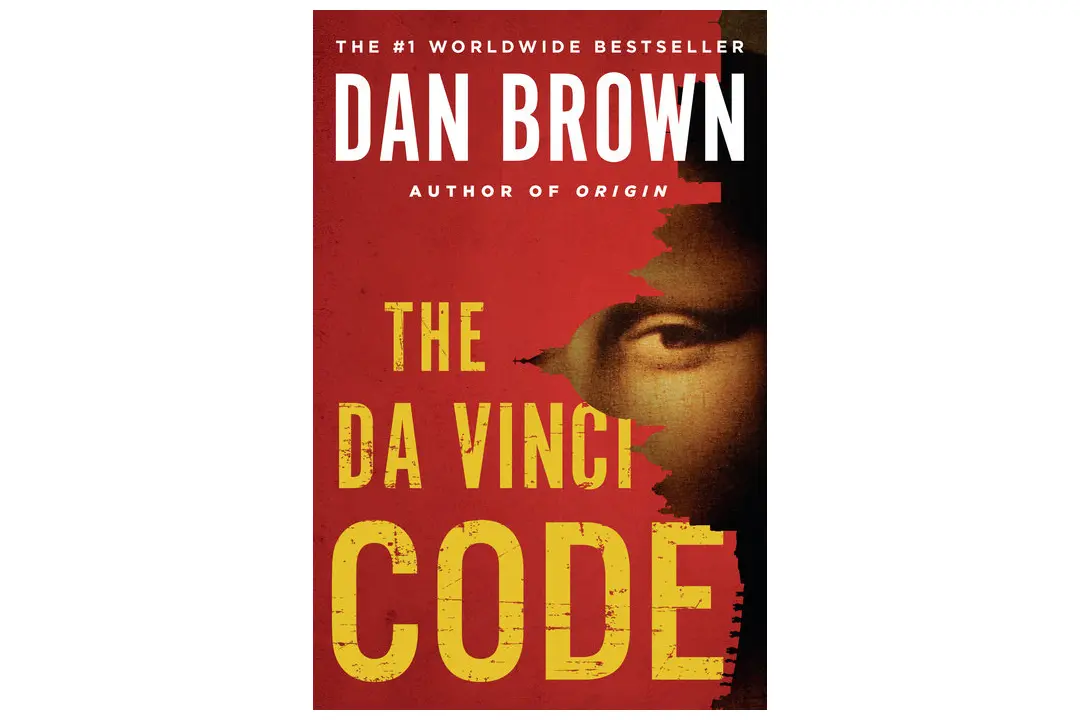
The Da Vinci Code by Dan Brown: Book Summary
Beverly Ashford • 24 Feb 2026 • 87 views • 3 min read.Let me tell you about the novel that made millions of people visit the Louvre, google the Council of Nicaea, and argue about religious history at dinner tables — while literary critics rolled their eyes at the prose and Brown laughed all the way to the bank. Dan Brown published The Da Vinci Code in 2003. It was his fourth novel and his first genuine success. Within a year it had sold twenty million copies. Within a decade, eighty million. It generated a film starring Tom Hanks, a sequel, and more controversy per page than almost any popular novel of the century. Brown is not a literary stylist. His prose is functional rather than beautiful, his characters are thin, and his villains announce themselves early to careful readers. He does not care about any of this and neither do his readers, because what Brown is genuinely skilled at is the architecture of compulsive readability — the specific engineering of chapters that end before you want them to and revelations that arrive at exactly the moment your attention needs refreshing. That is a real skill. It is not the skill critics value. It is the skill that produces eighty million sales.
The Da Vinci Code by Dan Brown: Book Summary
Quick Summary:
- A Harvard symbologist and a French cryptologist spend one night decoding a trail of clues left by a murdered Louvre curator that leads to a secret hidden by the Catholic Church for two thousand years
- Published in 2003, it became the bestselling adult novel of the decade with over eighty million copies sold despite — or because of — the controversy it generated
- Brown's central claim: history is written by the victors, the victors in this case suppressed the truth about Mary Magdalene, and Leonardo da Vinci hid the evidence in plain sight
- A thriller engineered for maximum readability that taught an entire generation that short chapters ending on cliffhangers are a legitimate structural choice
The Setup
Robert Langdon is a Harvard professor of religious iconology and symbology — a discipline Brown invented — who is in Paris giving lectures when he receives an urgent call to the Louvre. Jacques Saunière, the museum's curator, has been murdered in the Grand Gallery. He has been found posed like Leonardo da Vinci's Vitruvian Man, with a cryptic message written in invisible ink beside his body.
The French police — specifically Captain Bezu Fache of the Direction Centrale Police Judiciaire — want Langdon's help interpreting the symbols. Langdon arrives to find that the symbols point to him as a suspect, which he discovers when Sophie Neveu, a police cryptologist who is also Saunière's estranged granddaughter, slips him a warning.
Sophie and Langdon escape Fache and spend the next twelve to fourteen hours — the novel takes place almost entirely in one night — decoding the trail of clues Saunière left behind. The clues lead through Leonardo da Vinci's paintings, through anagrams and Fibonacci sequences and hidden compartments in religious artwork, toward a secret that Saunière was the last keeper of and that someone killed him to protect.
The Holy Grail Reframe
The novel's central historical argument — presented as suppressed truth rather than alternative theory — is that the Holy Grail is not a cup. It is a person. Specifically Mary Magdalene, who Brown argues was married to Jesus, carried his child to France after the crucifixion, and whose bloodline continues to the present day.
This argument draws heavily on Holy Blood, Holy Grail — a 1982 book by Michael Baigent, Richard Leigh, and Henry Lincoln that presented similar claims as historical research. Brown acknowledges this source material within the novel. Baigent and Leigh subsequently sued him for copyright infringement, lost the case, and created significantly more publicity for The Da Vinci Code in the process.
Brown argues that the Catholic Church — specifically the early Church under Constantine — suppressed the truth about Mary Magdalene, reframed her as a prostitute to undermine her authority, and destroyed evidence of Jesus's human bloodline because it threatened the divinity narrative the institution was built on. The Priory of Sion — a real organization, though not the powerful secret society Brown describes — has been protecting the secret and the bloodline for centuries.
Leonardo da Vinci, Brown claims, was a Grand Master of the Priory and hid encoded references to the secret in his paintings — most famously The Last Supper, where the figure to Jesus's right that Brown identifies as Mary Magdalene rather than the Apostle John holds the V shape that represents the sacred feminine and the inverted V that represents the male, together forming the Star of David and the hidden symbol of the bloodline.
The Villain and the Twist
Silas is the novel's most memorable character — an albino monk of Opus Dei who has committed murder at the direction of a figure he knows only as the Teacher. His backstory is tragic in ways Brown uses to generate sympathy for a murderer, which is one of the novel's more effective character moves. He is violent, devout, and completely deceived about what he is actually doing and for whom.
The Teacher's identity is the novel's central mystery and the reveal is structured to genuinely surprise readers who have not seen it coming — which, on a first read, most have not. Brown plants the information fairly but in conditions of information overload that make the relevant details easy to miss. The twist works.
Sir Leigh Teabing — an eccentric British historian and Holy Grail obsessive who becomes Langdon and Sophie's ally and guide through the novel's historical exposition — delivers most of the book's theoretical content in extended lecture sequences that are either fascinating or tedious depending on how interested you are in alternative Christian history. He is also one of fiction's more theatrical names, being an anagram constructed from Baigent and Leigh, the Holy Blood Holy Grail authors.
What the Novel Actually Does Well
Brown's chapter structure deserves genuine analysis. Most chapters run two to five pages. Most end on a revelation, a threat, or an unanswered question. The reader is almost never given a natural stopping point — which is precisely the engineering that produces the I'll just read one more chapter experience that kept millions of people up past midnight.
The historical content — regardless of its accuracy, which is disputed — is genuinely interesting. Brown is a good explainer. The sections on Fibonacci sequences, on the history of the sacred feminine in religious art, on the specific symbolism in The Last Supper, on the Council of Nicaea and its role in establishing the New Testament canon — these are explained with enough clarity and enthusiasm that readers who had never thought about religious history found themselves genuinely engaged.
Key Characters Compared
| Character | Role | Core Quality | Hidden Dimension |
|---|---|---|---|
| Robert Langdon | Protagonist, symbologist | Knowledge and adaptability under pressure | Passive — is guided more than he guides |
| Sophie Neveu | Co-protagonist, cryptologist | Intelligence and personal stake in the mystery | Her identity is the answer to the central question |
| Jacques Saunière | Murdered curator, Sophie's grandfather | Keeper of the secret | His elaborate death was an elaborate message |
| Silas | Opus Dei monk, assassin | Violent devotion to a cause he does not fully understand | Tool of someone who has deceived him completely |
| Leigh Teabing | British historian, Holy Grail obsessive | Encyclopedic knowledge and theatrical presentation | The novel's most significant misdirection |
| Bezu Fache | French police captain | Dogged institutional authority | Wrong about everything important |
| Bishop Aringarosa | Opus Dei head | Institutional ambition dressed as faith | Also deceived, also culpable |
Frequently Asked Questions
Is the historical content accurate?
Mostly no — or more precisely, Brown presents contested alternative history as suppressed fact, which is a significant distinction. The Council of Nicaea did not establish the divinity of Jesus by vote — the divinity of Jesus was already central to Christian theology before Nicaea. The historical Priory of Sion was founded in 1956, not medieval times. The identification of the figure in The Last Supper as Mary Magdalene is Brown's interpretation, not art historical consensus. The novel's historical claims should be treated as the starting point for research rather than the conclusion.
Why did it sell so many copies if the prose is widely criticized?
Because prose quality and readability are different skills and Brown maximized the second one. The chapter structure, the revelation pacing, the blend of familiar settings with forbidden knowledge, the combination of intellectual content with physical danger — these are genuinely effective thriller mechanics. Most readers are not reading for the sentences. They are reading for the experience of forward momentum, and Brown delivers that reliably.
How did the Catholic Church respond?
With significant official criticism. The Vatican's official newspaper called it offensive and historically fraudulent. Several Catholic dioceses organized response campaigns. Some countries saw church-organized protests against the film adaptation. The controversy generated enormous additional publicity that Brown and his publisher were not unhappy about.
Is the film worth watching?
The 2006 Ron Howard film with Tom Hanks is competent and faithful to the novel's plot while losing the reading experience entirely — the chapter structure that makes the novel compulsively readable does not translate to screen, and what remains is a procedural that moves at thriller pace without thriller momentum. It is a reasonable use of two and a half hours if you enjoyed the book. It is not a film that stands independently.
What is Opus Dei's actual relationship to the events depicted?
Opus Dei is a real Catholic organization. It does not employ albino monk assassins. It has no documented involvement in suppressing historical secrets about Jesus's bloodline. Opus Dei's actual practices and controversies — internal discipline, recruitment methods, political influence — are genuinely debated and documented, but they are entirely separate from anything depicted in The Da Vinci Code. The organization requested a disclaimer in the film; the filmmakers declined.
What should I read next?
Angels and Demons by Brown is the prequel featuring Langdon and was actually written first — it is faster and more physically propulsive, with the Vatican and CERN as its settings. Inferno continues the series with Dante as its source material. For genuinely rigorous alternative religious history, Elaine Pagels's The Gnostic Gospels covers the actual suppressed early Christian texts with academic rigor that Brown's novel gestures toward without providing.
The Bottom Line
Here is what Dan Brown actually built in 2003.
Not a literary novel. Not rigorous history. A delivery mechanism for the specific pleasure of feeling like you are learning forbidden knowledge while racing through a thriller that will not let you stop.
The formula is simple and Brown executes it without apology: take a real setting with genuine historical depth, layer in alternative history that reframes everything you thought you knew, add a mystery with a ticking clock and a villain with genuine menace, provide a protagonist with specialized knowledge that makes him useful without making him invulnerable, and end every chapter before the reader is ready to stop.
The Da Vinci Code is not a good novel by most literary measures. It is an extraordinarily effective reading experience by the measure that actually matters to eighty million people — the inability to put it down.
Brown knew exactly what he was making.
He made it very well.
The critics are right about the prose.
The readers are right about the experience.
Both things are true simultaneously, which is its own kind of achievement.