
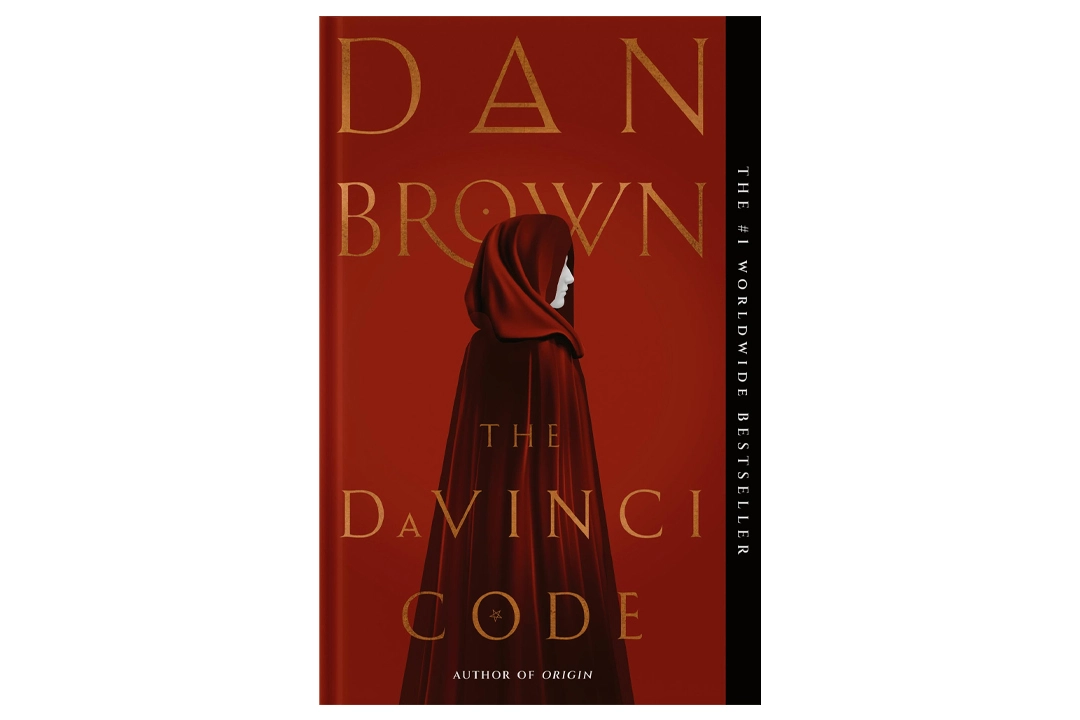
The Da Vinci Code – Dan Brown: Book Summary
Beverly Ashford • 11 Mar 2026 • 63 views • 3 min read.Let me tell you about the book that made everyone an amateur art historian. Dan Brown wrote a thriller that sold over 80 million copies and sparked international controversy. The Vatican condemned it. Scholars debunked it. Tourists flooded churches and museums mentioned in its pages. The Da Vinci Code isn't great literature. The prose is clunky. The characters are thin. The historical claims are largely nonsense. None of that mattered. The book hit something—a hunger for secret knowledge, hidden meanings, the idea that everything you were taught might be wrong. It made people feel smart while reading something deliberately accessible. Love it or hate it, it changed publishing. Here's what happens in those 400 pages.
The Da Vinci Code – Dan Brown: Book Summary
Quick Summary:
- A murder in the Louvre reveals a conspiracy hidden for two thousand years
- A symbologist and cryptologist race to uncover the truth about Christianity
- Art, history, and religion interweave in a breakneck thriller
- Published in 2003, it became the best-selling novel of the 21st century
The Murder
Jacques Saunière, curator of the Louvre, is shot in the museum at night. He has fifteen minutes to live. He spends them creating an elaborate puzzle.
He strips naked. He arranges his body like Leonardo da Vinci's Vitruvian Man. He writes coded messages in his own blood. He uses an invisible ink pen to leave more clues.
Why? Because Saunière was the Grand Master of the Priory of Sion—a secret society that has protected a dangerous truth for centuries. He must pass his secret before he dies.
Robert Langdon is a Harvard symbologist in Paris for a lecture. He's awakened by police and brought to the Louvre—his name is written at the crime scene. He's a suspect.
Sophie Neveu is a French cryptologist and police agent. She's also Saunière's granddaughter. She knows Langdon is being framed. She helps him escape.
Together they begin decoding Saunière's dying messages. The trail leads to secrets that could shake Christianity itself.
The Secret
The Priory of Sion, according to the novel, has protected one truth for 2,000 years:
Jesus Christ was married to Mary Magdalene. They had children. Their bloodline continues today. The Holy Grail isn't a cup—it's Mary Magdalene herself, the "vessel" that carried Jesus's child.
The Catholic Church, according to the book, has suppressed this truth violently. Constantine transformed Jesus from mortal prophet to divine Son of God at the Council of Nicaea. The Church demonized Mary Magdalene as a prostitute. They eliminated evidence of Jesus's humanity and marriage.
Leonardo da Vinci knew the truth. He embedded clues in his paintings. In The Last Supper, the figure to Jesus's right isn't the apostle John—it's Mary Magdalene. The "V" shape between them represents the feminine divine. The Mona Lisa's name is an anagram for "Amon L'Isa," blending masculine and feminine Egyptian deities.
The Priory has protected the secret and the bloodline, waiting for the right moment to reveal the truth.
The Chase
Langdon and Sophie race across Paris and London, pursued by multiple enemies:
Bezu Fache is the French police captain convinced Langdon is the murderer. He's being manipulated.
Silas is an albino monk working for Opus Dei, a conservative Catholic organization. He believes he's doing God's work by killing Priory members to find the Grail. He's been told the Church must destroy the secret forever.
Bishop Aringarosa leads Opus Dei and believes the Grail's discovery would destroy the faith. He's authorized Silas's mission.
The Teacher is the mysterious figure directing Silas. His identity is hidden until the climax.
The chase moves through:
- The Louvre (where clues hide in plain sight)
- The Swiss bank (where a cryptex—a coded cylinder—awaits)
- Château Villette (home of Holy Grail historian Leigh Teabing)
- Temple Church in London
- Westminster Abbey
- Rosslyn Chapel in Scotland
Key Locations and Symbols
| Symbol/Location | What It Means | Role in Plot |
|---|---|---|
| Vitruvian Man | Da Vinci's image of man | Saunière's body position |
| The Last Supper | Mary Magdalene hidden in plain sight | Proof of suppressed truth |
| The Cryptex | Coded cylinder with vinegar inside | Protected message carrier |
| Rose Line | Prime meridian through Paris | Navigation through clues |
| Rosslyn Chapel | Scottish church with Grail mythology | Climactic revelation |
| Louvre Pyramid | Glass pyramid entrance | Final resting place |
The Twists
Brown loves short chapters and cliffhangers. The reveals pile up:
Leigh Teabing is the Teacher. The wealthy Grail historian has been manipulating everyone. He wants to expose the secret publicly, believing the world deserves to know. He doesn't care how many people die.
Sophie is the bloodline. Her grandmother still lives. Her brother survived a car crash she thought killed her whole family. She's a direct descendant of Jesus and Mary Magdalene.
The documents are real but hidden. Mary Magdalene's sarcophagus and ancient texts exist. The Priory has protected them for centuries.
The final resting place is beneath the inverted pyramid at the Louvre—the same museum where the novel began. The chalice (feminine) descends toward the blade (masculine). Mary Magdalene rests beneath the museum floor.
Langdon kneels at the spot in the final pages, contemplating whether the world should know the truth.
What the Book Claims (And What's Actually True)
This is where things get complicated.
The Priory of Sion: Invented in 1956 by Pierre Plantard, a French con man, using forged documents planted in a library. Not an ancient secret society. Completely fake.
Constantine and Nicaea: The Council of Nicaea (325 CE) did address Christ's divinity, but the debate was between "divine" and "most divine," not "human" and "divine." Christ's divinity was established long before Constantine.
Mary Magdalene: The Gospels never call her a prostitute. That conflation happened in the 6th century, not through Constantine. Whether she was married to Jesus is historically unsupported.
The Last Supper: Art historians uniformly agree the figure is John, depicted as young and beardless per Renaissance convention. Da Vinci wasn't encoding secrets.
The sacred feminine: The Church did suppress goddess worship and female leadership. This part has historical merit, though Brown exaggerates.
Dan Brown's "FACT" page at the beginning is misleading. The Priory documents are forgeries. Most "historical" claims are invented or distorted.
Why It Worked
Despite (or because of?) factual problems, the book worked phenomenally:
It made readers feel smart. The puzzles are solvable but satisfying. Following along creates intellectual engagement.
It questioned authority. In the early 2000s, distrust of institutions was growing. A conspiracy involving the Catholic Church felt plausible and thrilling.
The pacing is relentless. Short chapters, constant cliffhangers, no room to get bored. It's engineered for compulsive reading.
It touched real curiosity. People genuinely wonder about early Christianity, about what was suppressed, about hidden meanings in art.
The premise is irresistible. What if everything you knew was wrong? What if Jesus had descendants walking among us?
Frequently Asked Questions
Is any of it true?
Some architectural and artistic details are accurate. The historical and religious claims range from exaggerated to completely fabricated. It's fiction presented with a veneer of authority.
Why did the Church get so upset?
Because readers believed it. The "FACT" page made fiction seem like suppressed truth. Millions of people came away thinking the Church had actually hidden Jesus's marriage.
Should I take it seriously?
No. Enjoy it as a thriller. Don't cite it in theological debates.
How does the movie compare?
The 2006 film stars Tom Hanks and is faithful but less thrilling. The puzzles work better on the page. The movie feels slow despite the chase structure.
Is Brown's other work similar?
Angels & Demons, The Lost Symbol, Inferno, and Origin all follow Langdon through conspiracies involving art, symbols, and secret histories. Same formula, different secrets.
Why do critics hate it?
The prose is often mocked. Sentences like "the famous man looked at the world-famous painting" abound. Literary merit wasn't the goal.
The Bottom Line
Here's what Dan Brown achieved.
He wrote a page-turner that sold 80 million copies by mixing puzzles, conspiracy, and just enough real-world detail to feel plausible. He got people talking about art, religion, and history—even if the conversation was based on fiction.
The Da Vinci Code isn't revealing truth. It's entertainment that feels like revelation. That's a different, and very lucrative, accomplishment.
Is there a secret the Church has hidden for 2,000 years? Almost certainly not this one.
But wasn't it fun to wonder?