
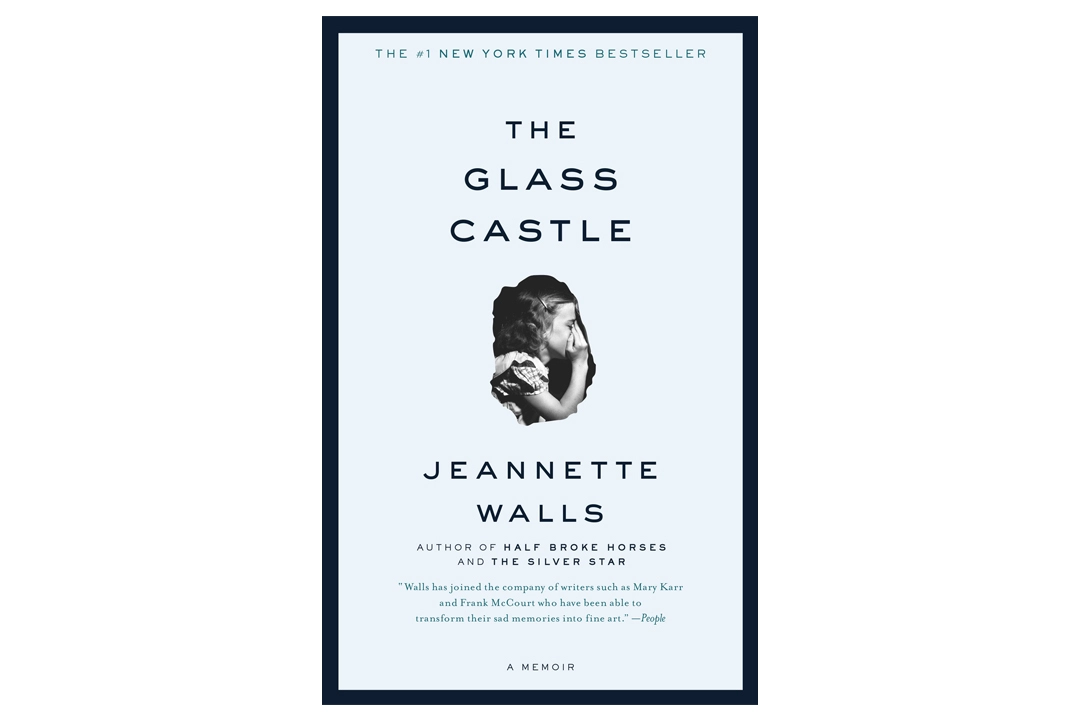
The Glass Castle – Jeannette Walls: Book Summary
Beverly Ashford • 11 Mar 2026 • 77 views • 3 min read.Let me tell you about the book that opens with a woman seeing her homeless mother digging through garbage—from a taxi on her way to a party. Jeannette Walls was a successful journalist in New York, married to a man whose family was in the social register, attending Park Avenue events. She kept her past secret. Then one night, she looked out her taxi window and saw her mother rummaging through a dumpster. A few days later, she had lunch with her mother and asked: Aren't you embarrassed? Living on the street when your daughter could help? Her mother said: "Why would I be embarrassed? I'm not ashamed of who I am." That question—and that answer—is what The Glass Castle explores.
The Glass Castle – Jeannette Walls: Book Summary
Quick Summary:
- A journalist reveals her childhood of poverty, neglect, and unconventional parents
- Her father was brilliant and alcoholic; her mother was artistic and irresponsible
- The memoir asks how we reconcile loving people who damaged us
- Published in 2005, it became one of the most widely read memoirs of the century
The Childhood
Jeannette's first memory: she's three years old, cooking hot dogs by herself, and her dress catches fire. She's severely burned and hospitalized for weeks.
Her father, Rex, responds by sneaking her out of the hospital. He calls it a "skedaddle"—the family disappearing before anyone can ask too many questions. This is their pattern.
The Walls family: Rex, Rose Mary, and eventually four children—Lori, Jeannette, Brian, and Maureen. They move constantly, living in cars, shacks, and mining towns across the Southwest.
Rex is charismatic and brilliant. He knows engineering, physics, geology. He tells his children fantastic stories, teaches them astronomy, promises to build them a glass castle—a solar-powered house with a glass staircase. He carries the blueprints everywhere.
He's also an alcoholic who can't hold a job. He drinks every paycheck. He rages. He vanishes for days.
Rose Mary is an artist who resents the domestic obligations of motherhood. She wants to paint, not cook. She hides food from her hungry children. She inherits a million-dollar property in Texas and refuses to sell it because "land is a good investment."
The children starve regularly. They eat margarine and ice cubes. They dig through garbage at school. They wear clothes until they fall apart.
Key People
| Person | Role | Complexity |
|---|---|---|
| Jeannette Walls | Author, middle child | Resilient, loving, conflicted |
| Rex Walls | Father, dreamer | Brilliant, alcoholic, loving, destructive |
| Rose Mary Walls | Mother, artist | Creative, neglectful, philosophically defiant |
| Lori | Oldest sister | Steady, artistic, the first to escape |
| Brian | Brother | Tough, protective, fellow survivor |
| Maureen | Youngest sister | Most damaged, least resilient |
The Squalor of Welch
The family eventually settles in Welch, West Virginia—Rex's hometown, deep in Appalachian poverty.
The house has no heat. The children sleep under piles of clothes in winter. The roof leaks. The toilet breaks; they use a bucket. The porch collapses. Rex starts digging a foundation for the Glass Castle but the hole fills with garbage instead.
The poverty is crushing. Jeannette hides from classmates. She's bullied for her smell, her clothes, her hunger. She works odd jobs from age thirteen. Her father drinks whatever money enters the house.
Rose Mary gets a teaching job. It pays regularly. But she hides food for herself, keeps money secret, refuses to budget. She believes struggle is good for children. She resents having to provide.
The children are essentially on their own.
The Abuse and Neglect
The memoir doesn't use the language of abuse. It shows rather than labels.
Rex is violent when drunk. He throws things, breaks furniture, terrorizes the household. Sober, he's warm and engaging. The children never know which father they're getting.
Sexual abuse lurks. Jeannette's grandmother Erma molests Brian. When Jeannette confronts her, Rex sides with Erma. Rose Mary says "sexual abuse is so overrated."
The parents repeatedly fail to protect. A neighbor tries to molest Jeannette. Rose Mary minimizes it. Rex teaches Jeannette to swim by throwing her into hot springs repeatedly until she nearly drowns—he calls it "sink or swim."
Walls writes about these events without commentary, letting readers feel the outrage she doesn't directly express.
The Escape
Lori escapes first. She saves money, hides it, moves to New York. She works and attends art school.
Jeannette follows at seventeen. She's saved enough for a bus ticket. She finishes high school in New York while working multiple jobs. She puts herself through Barnard College. She becomes a journalist.
Brian escapes too. He joins the police force, builds a stable life.
Maureen doesn't escape. The youngest, least protected, she struggles with mental illness. She eventually stabs her mother and is institutionalized.
The children who survived did so by getting out. The one who stayed was destroyed.
The Parents in New York
This is where the memoir becomes truly complicated.
Rex and Rose Mary follow their children to New York. They become homeless—not because they're unable to find help, but because they prefer it.
They squat in abandoned buildings. They dumpster-dive by choice. Rose Mary calls it "an adventure." She could sell the Texas land and live comfortably. She refuses.
Jeannette is now a successful gossip columnist, attending galas and interviewing celebrities. She hides her past completely. She's terrified someone will discover her parents are the homeless people down the street.
The shame is overwhelming. But so is the love. Jeannette keeps visiting. She keeps trying to help. Her parents keep refusing.
The Glass Castle
The title represents Rex's grandest promise.
He drew blueprints. He carried them everywhere. He described it to his children in vivid detail: a solar-powered house in the desert with a glass staircase, where they would live together beautifully.
He never built it. The Glass Castle was always a someday project, perpetually deferred. It symbolized everything Rex could have been and wasn't—the brilliant plans that never materialized, the promises that never came true.
But Jeannette doesn't dismiss the dream. Rex believed in it. The children believed in it. The believing mattered, even if the house never did.
What the Book Is Really About
Complicated love. Jeannette clearly loves her parents despite everything. The memoir doesn't condemn them—it portrays them fully, including their charm and their damage.
Resilience and escape. The children who survived did so through education and distance. The memoir shows that escape is possible but isn't free.
The ethics of storytelling. Walls wrote this while her parents were still alive. They read it. Her mother's reported response: she wished Jeannette had been nicer about some things, but she was proud of her.
Poverty and freedom. Rex and Rose Mary insisted their poverty was a choice—a refusal to conform. The children experienced it as neglect and suffering. Both perspectives are present.
Frequently Asked Questions
Did her parents really refuse help?
Yes. Rose Mary could have sold property worth a million dollars. She declined. They chose their lifestyle, at least in adulthood.
Is this exaggerated?
Walls has stood by her account. Some memoirists embellish; Walls seems to understate. The restraint of the prose suggests accuracy.
How does she avoid bitterness?
Barely, and deliberately. The book is a act of trying to understand rather than condemn. Walls has spoken about choosing love over anger.
Should I watch the movie?
The 2017 film with Brie Larson is faithful but compressed. The memoir's accumulation of detail creates impact the film can't fully replicate.
How does writing about this help?
Walls has said the book freed her from shame. Telling the truth publicly released her from hiding.
The Bottom Line
Here's what Jeannette Walls achieved.
She wrote a memoir about neglectful parents that's also a love letter. She refused to simplify her family into villains. She showed how people can be brilliant and destructive, loving and absent, full of dreams and incapable of execution.
The Glass Castle asks: How do we hold parents accountable while still loving them? How do we escape damage without erasing where we came from?
Jeannette escaped. She built her own life, her own castle. But she kept visiting those dumpsters.
That's the tension the book lives in.