
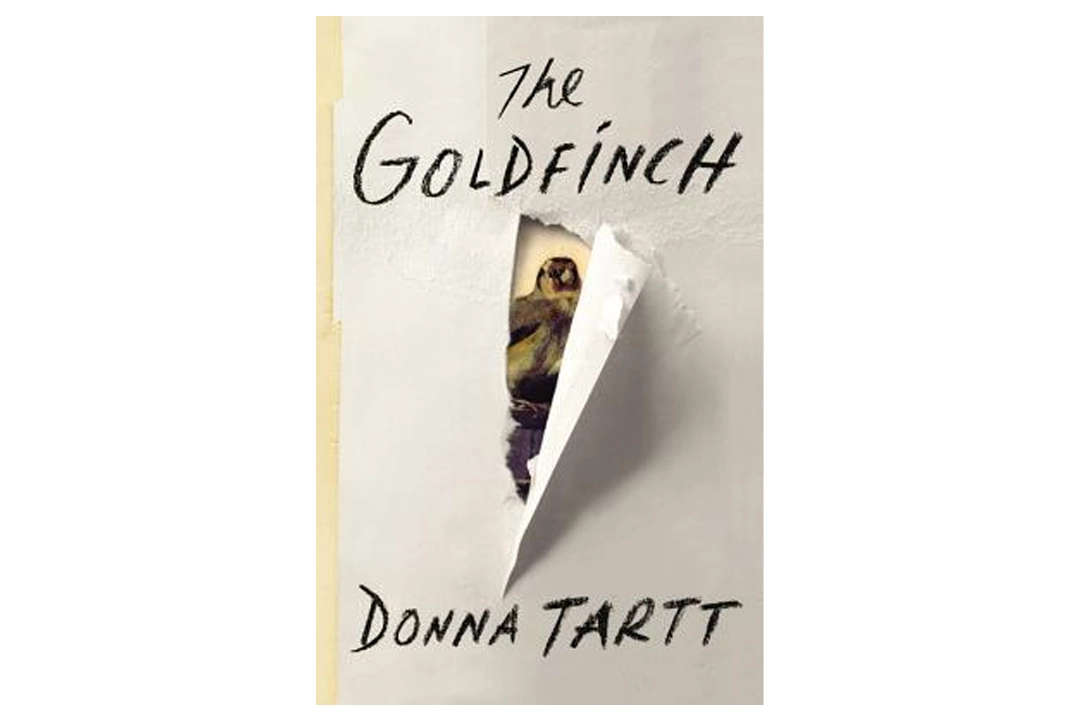
The Goldfinch – Donna Tartt: Book Summary
Beverly Ashford • 11 Mar 2026 • 88 views • 3 min read.Let me tell you about the book that won every prize and still got called a fraud. Donna Tartt spent eleven years writing The Goldfinch. It won the Pulitzer Prize for Fiction. It sold millions of copies. Oprah loved it. Readers devoured its 800 pages. Then critics revolted. The New Yorker called it "the very definition of middlebrow." Academics sneered. A counter-narrative formed: the book was sentimental, overwritten, a soap opera dressed as literature. Here's the truth: The Goldfinch is both things. It's an immersive, propulsive story about grief and obsession. It's also sprawling, melodramatic, and occasionally indulgent. Whether that's a flaw or a feature depends entirely on you.
The Goldfinch – Donna Tartt: Book Summary
Quick Summary:
- A boy steals a priceless painting during a terrorist attack that kills his mother
- The painting becomes his secret burden and salvation across decades
- A sprawling novel about loss, beauty, fate, and survival
- Published in 2013, it won the Pulitzer Prize and divided critics spectacularly
The Bombing
Theo Decker is thirteen years old when his life ends and begins.
He and his mother are visiting the Metropolitan Museum of Art in New York. She wants to show him a small painting she loves—The Goldfinch by Carel Fabritius, a Dutch master killed in an explosion in 1654.
A bomb goes off. The museum fills with dust, smoke, and screams. Theo survives. His mother doesn't.
In the chaos, Theo encounters a dying old man who presses a ring into his hand and urges him to take the painting—the Goldfinch, somehow nearby, somehow surviving the blast. In shock, Theo takes it.
He staggers out of the museum with the painting wrapped in his jacket.
He tells no one.
The painting—small, precious, depicting a chained bird—becomes his secret. His connection to his mother. His guilt. His treasure. His curse.
The Years That Follow
Theo's life fractures after the bombing.
With the Barbours: His father has abandoned the family. With no immediate relatives, Theo is taken in by the wealthy Barbour family—his friend Andy's household on Park Avenue. Mrs. Barbour is distant but proper. Theo exists in their elegant world while carrying a stolen masterpiece in his backpack.
Hobie and the shop: Following the dying man's instructions, Theo finds James Hobart, a furniture restorer in Greenwich Village. Hobie becomes a surrogate father figure. His antique shop becomes Theo's sanctuary. Hobie's partner, Welty, was the old man who died—and the girl Theo saw in the museum, Pippa, was Welty's great-niece.
Theo falls in love with Pippa instantly. He will remain in love with her for the entire novel.
Las Vegas: Theo's father reappears with a new girlfriend, Xandra. They drag Theo to a half-finished suburb outside Las Vegas—abandoned houses, swimming pools turning green, a wasteland during the housing crash.
Here Theo meets Boris.
Key Characters
| Character | Role | Significance |
|---|---|---|
| Theo Decker | Protagonist, narrator | Survivor, thief, searcher |
| Boris | Best friend, chaos agent | Freedom, destruction, loyalty |
| Hobie | Furniture restorer, father figure | Goodness, craft, redemption |
| Pippa | Object of Theo's love | Unattainable ideal, shared trauma |
| Mrs. Barbour | Upper-class guardian | Cold warmth, unexpected love |
| Larry Decker | Theo's father | Abandonment, failure, death |
| The Goldfinch | Painting by Fabritius | Memory, beauty, burden |
Boris
Boris is Ukrainian, wild, neglected by his own absent father. He and Theo become inseparable—drinking, doing drugs, watching old movies, surviving together in the Vegas wasteland.
Boris is chaos incarnate. He lies constantly but is also fiercely loyal. He introduces Theo to substances that will haunt him for decades. He makes the unbearable bearable.
Boris knows about the painting. He's the only one Theo tells. This will matter later.
When Theo's father dies in a car crash (driving drunk, possibly suicide), Theo flees back to New York rather than enter the foster system. He leaves the painting hidden in storage.
Or so he thinks.
Years Later
The novel jumps forward. Theo is in his mid-twenties.
He lives with Hobie above the antique shop. He's become an antiques dealer himself—but with a dark secret. To cover the shop's debts, Theo has been selling forgeries as authentic antiques.
He's addicted to pills. He's engaged to a wealthy woman he doesn't love. He's still obsessed with Pippa, who has built a life in London and doesn't reciprocate his intensity.
He hasn't looked at the painting in years. It's still hidden in storage, his talisman and his terror.
Then Boris reappears.
The Twist
Boris has something to confess.
Years ago, in Vegas, Boris stole the painting from Theo's hiding place. He didn't tell Theo. He felt guilty but needed money. He used it as collateral in various criminal enterprises.
The painting Theo has been carrying isn't the Goldfinch. It's been a different wrapped package all along.
The real Goldfinch has circulated through the criminal underworld. Boris now knows where it is—in Amsterdam, held by criminals.
Theo should be furious. Instead, he feels something like relief. The burden might finally be lifted.
He goes to Amsterdam.
Amsterdam
The final section is Tartt's thriller climax.
Theo and Boris attempt to retrieve the painting from dangerous criminals. Things go wrong. There's violence. A man dies—Theo may have killed him.
In the aftermath, Theo hides in a hotel room, strung out on drugs, contemplating suicide.
Then grace arrives. Boris has given the painting to authorities for the reward, which he splits with Theo. The Goldfinch is recovered. It will return to the museum.
Theo is complicit in crimes but free. The painting that bound him for fifteen years is finally released.
The Ending
The novel's final pages are philosophical meditation.
Theo reflects on fate, randomness, beauty. His mother died because they happened to be in the wrong gallery. The painting survived because of chance. His life was shaped by arbitrary disaster.
But the painting also saved him. His love for it—for beauty itself—kept him tethered to meaning when everything else failed.
"What if our badness and mistakes are the very thing that set our fate and bring us round to good?"
The ending doesn't resolve neatly. Theo is damaged. He'll always be damaged. But he's alive. The bird is unchained. Beauty persists.
What the Book Is Really About
Grief that never ends. Theo's mother dies on page 30. The remaining 750 pages are about living with that loss. Grief doesn't resolve; it shapes everything.
Art as salvation. The painting is both curse and lifeline. Beauty doesn't fix anything, but it makes endurance possible.
The randomness of fate. Why did Theo survive and his mother die? Why was he in that gallery? The novel obsesses over accident and meaning.
Crime and morality. Theo does bad things—steals, lies, defrauds. Yet the novel treats him with compassion. Goodness and badness coexist.
The object that carries us. Everyone has a Goldfinch—something that connects them to what they've lost, that they carry secretly, that both burdens and sustains.
Frequently Asked Questions
Why is it so long?
Tartt is a maximalist. She wants you to live inside Theo's life, not observe it. The length creates immersion but tests patience.
Is the criticism fair?
Partly. The prose can be indulgent. The Vegas section drags. But "middlebrow" is a snob's complaint. The book does what it intends—creates emotional investment over 800 pages.
How is the movie?
The 2019 film was poorly reviewed and flopped. The structure doesn't adapt well to film. Read the book.
Should I read Tartt's other novels?
The Secret History (1992) is tighter and darker—a campus novel about murder. Many prefer it. Both are worth reading.
Is this literary fiction or a thriller?
Both. The Amsterdam section is pure thriller. The rest is character study and meditation. Genre-mixing confuses some readers.
Do I need to know the real painting?
Seeing Fabritius's actual Goldfinch enriches the experience. It's small, haunting, and the chained bird resonates with Theo's imprisonment by grief.
The Bottom Line
Here's what Donna Tartt achieved.
She wrote an 800-page novel about grief, art, and survival that millions of people actually finished. She created characters that lodge in memory. She made a 400-year-old painting famous again.
The Goldfinch isn't perfect. It's too long. It's sentimental in places. The Amsterdam climax strains credibility.
But it also captures something true: how we cling to objects that connect us to what we've lost, how beauty keeps us alive, how damage and love intertwine.
The bird is chained. The bird survives.
So do we.