
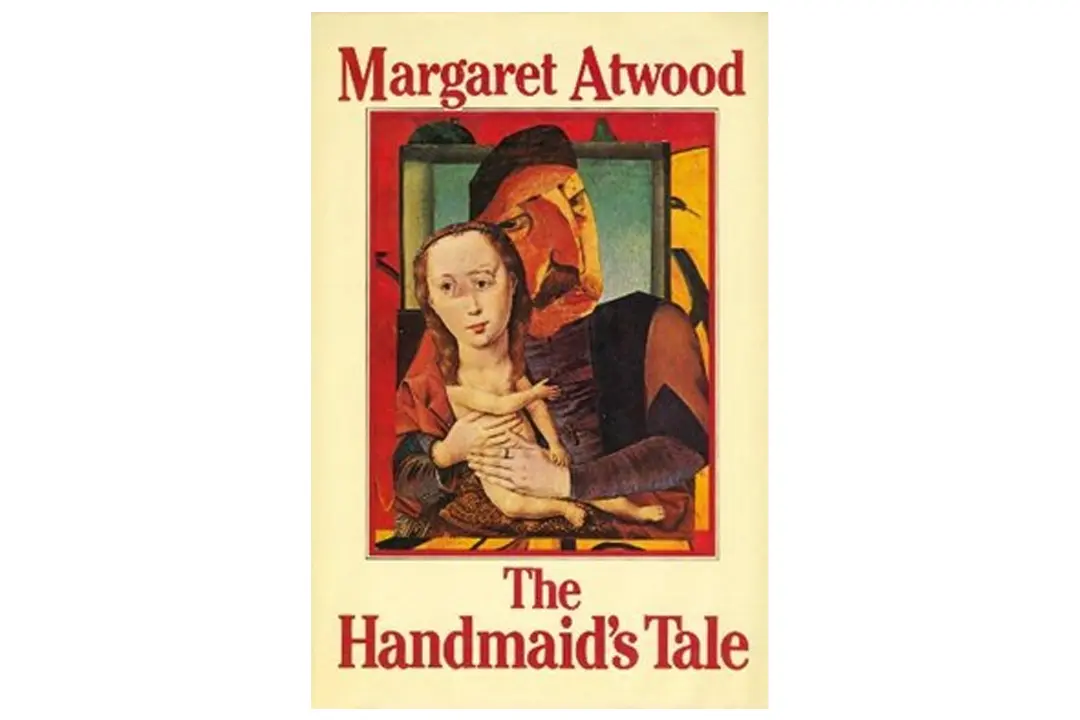
The Handmaid's Tale – Margaret Atwood: Book Summary
Beverly Ashford • 11 Mar 2026 • 81 views • 3 min read.Let me tell you about the book that keeps becoming more relevant than anyone wants it to be. Margaret Atwood wrote The Handmaid's Tale in West Berlin in 1984, looking at the wall that divided the city. She set herself a rule: nothing in the book could be invented. Every atrocity, every control mechanism, every horror had to have happened somewhere in human history. She succeeded. The forced breeding comes from slavery. The public hangings come from multiple societies. The removal of women's rights comes from Iran, Afghanistan, and the American history Atwood studied extensively. The book was meant as a warning. Readers keep rediscovering it as a mirror.
The Handmaid's Tale – Margaret Atwood: Book Summary
Quick Summary:
- A woman is forced into reproductive slavery in a theocratic America
- The novel examines how ordinary societies become totalitarian
- Every horror in the book has historical precedent
- Published in 1985, it became terrifyingly relevant again in the 2010s
The World of Gilead
The United States no longer exists. In its place is the Republic of Gilead—a theocratic regime that emerged after a coup blamed on terrorists.
The fertility crisis justified everything. Birth rates collapsed due to pollution, STDs, and environmental degradation. The new regime claimed religious authority to address the problem.
Women are property. They can't own money, work, read, or write. They're sorted into categories by function:
- Wives: Commanders' spouses, dressed in blue
- Handmaids: Fertile women assigned to bear children for elite families, dressed in red
- Marthas: Domestic servants, dressed in green
- Aunts: Women who train and control Handmaids
- Econowives: Lower-class wives who do everything
- Unwomen: Undesirables sent to the Colonies to clean toxic waste until they die
The transition happened fast. Banks froze women's accounts. Employment became illegal. Rights vanished overnight. By the time people understood what was happening, resistance was already impossible.
Offred
Our narrator is a Handmaid. Her real name is never revealed; we call her Offred—"Of Fred"—because she belongs to a Commander named Fred.
Before Gilead, she was an ordinary woman. She had a husband, Luke. She had a daughter. She had a job, a bank account, a life.
She tried to escape with her family to Canada. They were caught. Luke was shot—she doesn't know if he's alive or dead. Her daughter was taken and given to a loyal Gilead family.
Now she lives in the Commander's house. She wears red. She shops for groceries with another Handmaid. She waits.
Once a month, during the "Ceremony," she lies between the Wife's legs while the Commander rapes her. It's framed as biblical reproduction—Rachel giving her handmaid to Jacob. It's ritualized dehumanization.
Offred remembers her old life. She compares it to now. She looks for any small freedom, any crack in the system.
Key Characters
| Character | Role | Represents |
|---|---|---|
| Offred | Protagonist, Handmaid | Memory, survival, witness |
| The Commander | Offred's owner | Power's banality, complicity |
| Serena Joy | The Commander's Wife | Women who enforce patriarchy |
| Moira | Offred's friend | Resistance, what happens to resisters |
| Nick | The Commander's driver | Ambiguous ally, possible spy or savior |
| Ofglen | Offred's shopping partner | Underground resistance |
| Aunt Lydia | Handmaid trainer | Indoctrination, enforced conformity |
The Daily Life of Control
Gilead maintains power through constant surveillance and ritual.
Walking in pairs. Handmaids shop in twos, supposedly for protection, actually so they can't trust each other.
Prayvaganzas and Salvagings. Public ceremonies reinforce ideology. Weddings are mass affairs. Executions are public entertainment.
The Eyes. Secret police who are everywhere—or might be. Paranoia does the surveillance work.
Language control. Greetings are scripted. "Blessed be the fruit." "May the Lord open." Individual expression disappears.
The wall. Bodies hang on the wall near the river. Doctors who performed abortions. Priests who wouldn't convert. The display warns everyone else.
Offred navigates this world with microscopic rebellions: stealing butter to moisturize her skin, savoring forbidden words in her mind, remembering.
The Commander's Game
The Commander wants something from Offred beyond the Ceremony.
He invites her to his study—forbidden territory for women. He plays Scrabble with her. He lets her read magazines from before. He takes her to a secret club where the regime's elite men drink and consort with women dressed in banned clothing.
He wants her to like him. He wants connection, perhaps absolution. He gave the phrase "Nolite te bastardes carborundorum"—fake Latin meaning "Don't let the bastards grind you down."
Serena Joy wants a baby. She suspects the Commander is sterile. She arranges for Offred to sleep with Nick, the driver. This is illegal but practical—Handmaids who don't produce are sent to the Colonies.
Offred begins an affair with Nick. It might be survival strategy. It might be genuine feeling. It might be both. In Gilead, these distinctions blur.
The Resistance
Offred learns there's an underground. Mayday—a network that smuggles people out of Gilead.
Ofglen is a member. She passes information. She's also being watched. When she's about to be captured, she kills herself to avoid betraying others.
Moira escaped the training center once. She was caught, tortured, and sent to Jezebel's—the secret club—as a prostitute. Resistance has costs. Not everyone who fights wins.
Offred knows very little. She's not a hero. She's not leading a rebellion. She's surviving, witnessing, hoping for rescue.
The Ending
The ending is deliberately ambiguous.
A black van comes for Offred. Nick says it's Mayday—he's been working with the resistance. The Eyes would be in the same kind of van.
She gets in. She doesn't know if she's being rescued or arrested.
The "Historical Notes" epilogue takes place at an academic conference 200 years later. Gilead has fallen. Historians analyze the recorded tapes that form Offred's narrative.
They don't know what happened to her. They discuss her unreliability as a narrator. They make academic jokes. They're slightly dismissive.
The horror has become history—something to be studied, not felt. The final irony is that even after Gilead falls, men still fail to fully hear women's stories.
What the Book Is Really About
How freedom ends. Gilead didn't emerge from nowhere. It exploited real anxieties—terrorism, fertility, morality—to seize power. Every step seemed temporary or necessary until suddenly it wasn't.
Women who enforce patriarchy. The Aunts are women. Serena Joy helped create this system. Oppression often requires participation from the oppressed.
Memory as resistance. Offred can't fight with weapons. She fights by remembering—her name, her daughter, what life was like before. Totalitarianism requires erasing the past.
The body as battleground. Control of reproduction is control of women. Gilead makes this literal. So have many actual societies.
Ordinary complicity. The Commander isn't a monster. He's banal, ordinary, capable of kindness within a monstrous system. That's what makes him terrifying.
Frequently Asked Questions
Why did this book become popular again?
The 2017 TV adaptation aired after the 2016 U.S. election. Debates about reproductive rights made the book feel prescient. Sales increased by 200%.
Is this feminist sci-fi?
Atwood calls it "speculative fiction"—everything has historical precedent. It's feminist in that it centers women's experience and critiques patriarchy. But it doesn't idealize women—some are complicit in the system.
Should I watch the show?
The show expands the story beyond Offred's perspective and continues past the book's ending. It's excellent but increasingly dark. The book is more contained.
Is there a sequel?
The Testaments (2019) follows characters 15 years later, including Aunt Lydia. It's more accessible and provides more closure.
What's the connection to current events?
Atwood maintains that the book isn't about any specific political moment but about patterns that recur throughout history. Readers consistently find uncomfortable parallels.
The Bottom Line
Here's what Margaret Atwood achieved.
She wrote a warning that doesn't feel like propaganda. The horror grows gradually, through domestic detail rather than spectacle. You understand how ordinary people become victims and perpetrators.
The Handmaid's Tale argues that theocracy could happen here—not through alien invasion, but through the machinery already present: religious extremism, environmental crisis, patriarchal tradition.
"Better never means better for everyone," the Commander tells Offred. "It always means worse, for some."
That's the lesson. And we're still learning it.