
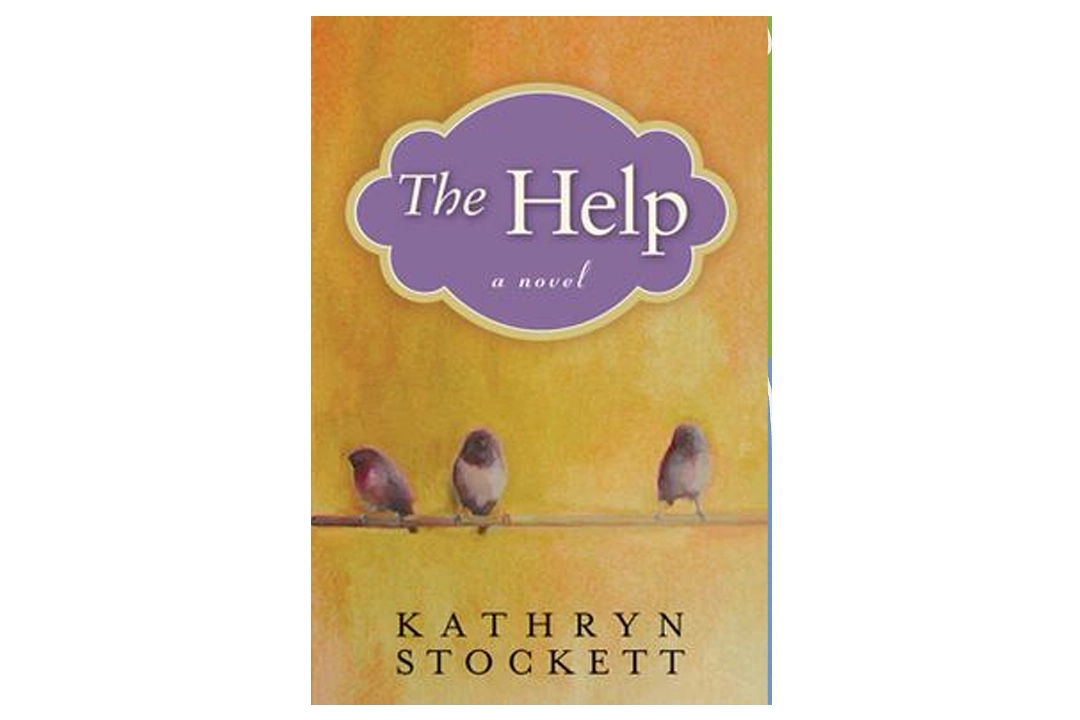
The Help – Kathryn Stockett: Book Summary
Beverly Ashford • 11 Mar 2026 • 71 views • 3 min read.Let me tell you about the book that everyone read and then argued about. Kathryn Stockett wrote The Help based on her memories of growing up in Mississippi with a Black maid named Demetrie. The book sold over 10 million copies, became an Oscar-winning movie, and launched countless book club discussions. It also sparked serious criticism. Who has the right to tell certain stories? Can a white author authentically voice Black experiences? Is the narrative too comfortable for white readers? These are valid questions. The book exists in that tension—wildly popular, genuinely moving, and legitimately problematic in ways worth examining. Here's the story, and then the conversation around it.
The Help – Kathryn Stockett: Book Summary
Quick Summary:
- Black maids in 1960s Mississippi tell their stories to a white journalist
- The book they create risks everything but changes their world
- Three women from different worlds find courage in each other
- Published in 2009, it became a phenomenon and sparked important debates about whose stories get told
Jackson, Mississippi, 1962
The Civil Rights Movement is building, but Jackson remains firmly segregated. White families employ Black women to cook, clean, and raise their children. These maids know everything about white households but are treated as invisible.
The rules are clear. Separate bathrooms. Separate entrances. Don't eat at the table. Don't use the good dishes. Always say "yes ma'am." Never forget your place.
Three women are about to challenge this order.
The Three Narrators
Aibileen Clark is a middle-aged maid who has raised seventeen white children. Her own son was killed in an industrial accident—his white employers didn't call an ambulance. Aibileen pours her love into Mae Mobley, the neglected toddler of her current employer.
She tells Mae Mobley: "You is kind. You is smart. You is important." She's trying to break the cycle of racism before it takes hold.
Minny Jackson is Aibileen's best friend—a brilliant cook with a sharp tongue she can't control. She keeps getting fired for talking back. Her husband beats her. She has five children to feed.
Minny's temper gets her in trouble, but it's also her dignity. She refuses to disappear into servitude.
Eugenia "Skeeter" Phelan is a young white woman who has just returned from college. She doesn't fit Jackson society—she's tall, awkward, more interested in writing than husband-hunting. Her friends are getting married and settling into the expected life.
Skeeter notices something she never questioned before: the help. The women who raised her. The woman who raised her friends. Where do they go at night? What do they actually think?
She decides to write a book.
The Dangerous Idea
Skeeter approaches Aibileen with a proposal: interview the maids of Jackson about their experiences working for white families. Tell their stories. Publish a book.
This is dangerous. Mississippi in 1962 is violently hostile to civil rights. Medgar Evers will be assassinated the following year. Black people who challenge the order face firing, beatings, or worse.
Aibileen agrees anyway. Her son is dead. She's tired of keeping quiet. She has nothing left to lose.
Minny joins. Then others. Slowly, secretly, maids begin sharing their stories. The interviews happen at night, in hidden locations, always with risk.
The women tell everything: the cruelty, the indignities, the small kindnesses, the children they loved who grew up to become their oppressors.
Key Characters
| Character | Role | Significance |
|---|---|---|
| Aibileen | Maid, first narrator | Courage through grief, quiet strength |
| Minny | Maid, second narrator | Defiance, survival, dignity |
| Skeeter | White journalist, third narrator | Catalyst, outsider in her own world |
| Hilly Holbrook | Antagonist, society queen | Racism with a smile, the system personified |
| Celia Foote | Social outcast, Minny's employer | Kindness outside the rules |
| Constantine | Skeeter's childhood maid | The absence that haunts the story |
Hilly Holbrook
Every story needs a villain. Hilly is the face of polite Mississippi racism.
She spearheads the "Home Help Sanitation Initiative"—requiring separate bathrooms for Black servants because, she claims, they carry different diseases. She frames this as practical, not hateful.
Hilly controls Jackson's social scene. Cross her and you're finished. She'll blacklist you, spread rumors, destroy your standing.
Hilly represents how racism maintains itself: not through violence (though violence exists) but through social enforcement. The white women police each other. The system sustains itself through exclusion and shame.
When the book is published, Hilly recognizes herself. Her revenge will be terrible—but so will her humiliation.
The "Terrible Awful"
Minny has a secret weapon: the "terrible awful" thing she did to Hilly Holbrook.
After Hilly had Minny fired, Minny baked her a chocolate pie. Hilly ate two slices before Minny told her the secret ingredient.
It's in the book. Everyone knows it's Hilly. If Hilly admits it's her, she admits she ate what Minny fed her.
The terrible awful is insurance. Hilly can't retaliate without confirming her identity. It's a moment of dark comedy but also a statement: the powerless have their own weapons.
The Publication
The book, titled "Help," is published anonymously. The setting is changed to a fictional town. But Jackson knows.
Everyone is reading it. White women scrutinize the stories, recognizing themselves or their neighbors. Black maids know who the authors are—and stay silent.
The consequences are mixed. Some maids are fired. Some white women quietly question their treatment of servants. Skeeter is ostracized but escapes to New York for her journalism career.
Aibileen is fired by Hilly's machinations. But she's ready for something new. The book ends with her walking home, finally free, beginning to imagine a different life.
The Criticism
The Help has faced substantial criticism that deserves attention:
White savior narrative. Skeeter is positioned as the catalyst for change. The Black characters' stories exist in service of her development. This centers white heroism in a story about Black experience.
Voice and appropriation. Can a white author authentically represent Black speech and thought? Stockett writes in AAVE (African American Vernacular English) that some readers find inauthentic or caricatured.
Comfortable for white readers. The racism depicted is individual and Southern, safely distant from contemporary readers. Structural racism is largely invisible. The book allows white readers to feel good without confronting their own complicity.
Historical accuracy. The novel downplays the violence of 1960s Mississippi. The real dangers facing Black organizers were more severe than the book depicts.
Whose story is this? A Black maid, Ablene Cooper, sued Stockett claiming the character Aibileen was based on her without permission. The case was dismissed on statute of limitations, but the questions it raised persist.
These criticisms don't invalidate the book, but they contextualize its popularity. Many readers loved feeling moved by racial injustice while reading a story that ultimately comforts more than challenges.
Frequently Asked Questions
Is the criticism fair?
Much of it is legitimate. The book does center a white protagonist in a story about Black experience. It does make racism feel safely historical. These are valid concerns, especially regarding who profits from whose stories.
Can I still enjoy it?
Yes. You can appreciate the compelling narrative and dimensional characters while holding the critique. Art and politics coexist.
How does the movie compare?
The 2011 film won Octavia Spencer an Oscar and is generally faithful. The same criticisms apply, perhaps more sharply because the visual medium makes the centering of whiteness more obvious.
Should I read something else instead?
Read this AND read work by Black authors about this era—The Warmth of Other Suns by Isabel Wilkerson, or fiction by Toni Morrison, Alice Walker, Colson Whitehead. Context enriches understanding.
What did Stockett intend?
She's spoken about wanting to honor Demetrie, the maid who raised her. Intentions and impact don't always align. The book can be well-intentioned and problematic simultaneously.
The Bottom Line
Here's what The Help achieved and what it didn't.
It made millions of readers think about American racism, even in a comfortable way. It created vivid, memorable characters. It told a story that propelled itself through 500 pages.
It also centered white experience, profited from Black stories, and offered resolution that real history didn't provide.
Both things are true. The book's massive popularity and its substantial criticism exist together. Reading it thoughtfully means holding both.
Aibileen and Minny deserve better than their world gave them.
They might also deserve better than the book gave them.