
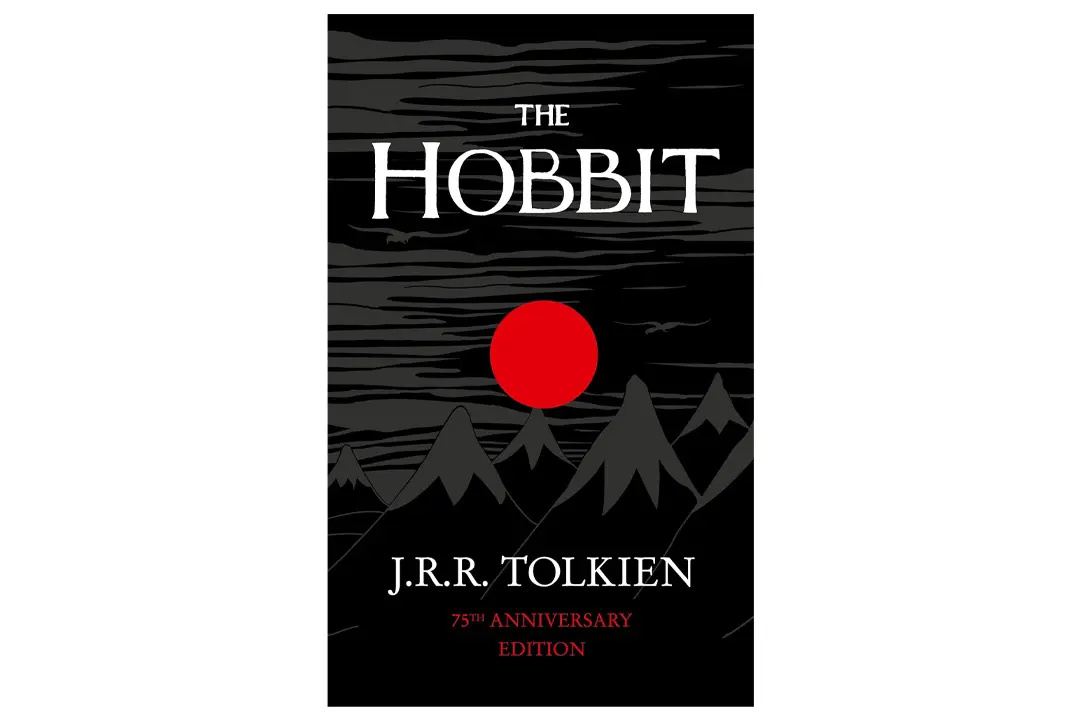
The Hobbit – J.R.R. Tolkien: Book Summary
Beverly Ashford • 11 Mar 2026 • 62 views • 2 min read.Let me tell you about the book that invented modern fantasy. Before The Hobbit, fantasy meant fairy tales for children or dusty mythology for scholars. J.R.R. Tolkien, an Oxford professor who studied ancient languages and medieval literature, wrote a story for his children that changed everything. He created a world—Middle-earth—with its own languages, histories, and peoples. He wrote about creatures no one had imagined before: hobbits, small and comfort-loving, with hairy feet and a distaste for adventures. He made a dragon feel real. The Hobbit was supposed to be a children's book. It became the gateway drug to The Lord of the Rings and the foundation of modern fantasy literature.
The Hobbit – J.R.R. Tolkien: Book Summary
Quick Summary:
- A homebody hobbit is swept into a quest for dragon treasure
- Bilbo Baggins discovers courage he didn't know he possessed
- The adventure introduces Middle-earth and its wonders
- Published in 1937, it launched the most influential fantasy world ever created
In a Hole in the Ground
Bilbo Baggins is a respectable hobbit. He lives in Bag End, a comfortable hole in the Shire. He eats six meals a day. He has never done anything unexpected.
Then Gandalf arrives.
Gandalf is a wizard who remembers Bilbo's mother, Belladonna Took, who had a wild streak. He marks Bilbo's door, and the next evening, dwarves arrive. Thirteen dwarves, led by Thorin Oakenshield, heir to the Dwarf-kingdom under the Lonely Mountain.
They need a burglar. They need someone quiet and clever to help them reclaim their homeland from Smaug, a dragon who stole their mountain and their treasure 150 years ago. Gandalf has recommended Bilbo.
Bilbo protests. He's not a burglar. He's a Baggins—sensible and unadventurous. But something in him—the Took part—accepts before he understands why.
He runs out his door without a handkerchief.
The Journey There
The company travels east across Middle-earth, encountering dangers at every stage:
The Trolls. Three giant trolls capture the dwarves, planning to cook them. Gandalf tricks them into arguing until dawn—when sunlight turns them to stone. Bilbo contributes nothing, but survives.
Rivendell. The elven refuge provides rest and counsel. Elrond reads the moon-letters on Thorin's map, revealing the secret entrance to the mountain.
The Misty Mountains. Goblins capture the company in the tunnels. In the darkness, Bilbo is separated from the others. He finds a ring.
Gollum. In the depths, Bilbo meets a creature who's been corrupted by years alone with "his precious"—the ring. They play a riddle game. Bilbo wins through luck and cleverness. He discovers the ring makes him invisible, which saves his life.
Wargs and Eagles. Escaping the mountains, the company is treed by wolves and goblins. Giant Eagles rescue them—the first of several miraculous interventions.
Beorn. A skin-changer who becomes a bear houses them and provides supplies. He's terrifying and helpful in equal measure.
Mirkwood. The dark forest almost defeats them. Giant spiders attack. Wood-elves capture the dwarves. Bilbo rescues everyone, first by fighting spiders alone, then by finding the prisoners and engineering an escape in barrels.
Each challenge transforms Bilbo. He begins the journey useless—forgetting handkerchiefs, needing rescue. By Mirkwood, he's saving the dwarves. He's becoming the burglar Gandalf promised.
Key Characters
| Character | Role | Significance |
|---|---|---|
| Bilbo Baggins | Protagonist, burglar | Ordinary person becoming heroic |
| Gandalf | Wizard, guide | Catalyst who starts and guides the quest |
| Thorin Oakenshield | Dwarf leader | Pride and tragedy, the cost of greed |
| Gollum | Creature in the mountain | Introduces the Ring (connecting to LOTR) |
| Smaug | Dragon | The enemy, embodying greed and destruction |
| Bard | Human bowman | Slays Smaug, bridges human story |
| Beorn | Skin-changer | Wild ally, nature's power |
The Lonely Mountain
The company reaches the mountain. Bilbo uses the secret door to enter alone—that's what a burglar does.
Smaug is magnificent and terrifying. A dragon sleeping on gold, he can smell dwarf and hobbit. Bilbo converses with him, trading riddles, discovering his weakness: a bare patch on his chest where a scale is missing.
Smaug attacks Lake-town, seeking revenge. Bard, a human bowman, shoots an arrow into the dragon's weak spot—information passed along from Bilbo. Smaug dies. The dragon is dead.
But peace doesn't follow.
The gold corrupts. Thorin refuses to share treasure with the humans and elves who suffered from the dragon. He sends for a dwarf army. The humans and elves besiege the mountain. War seems inevitable.
Bilbo intervenes. He takes the Arkenstone—the dwarves' most prized treasure—and gives it to Bard and the Elvenking as a bargaining chip. It's theft, technically. It's also the bravest thing he does.
The Battle of Five Armies. Goblins and wargs attack, forcing dwarves, elves, and humans to ally against the common enemy. Eagles and Beorn arrive. The battle is won.
Thorin dies. Wounded in battle, he reconciles with Bilbo, admitting his gold-sickness was wrong. He dies with honor recovered.
Bilbo goes home.
The Return
Bilbo returns to the Shire—and finds his house being auctioned off. He's been declared dead. His relatives are selling his furniture.
He reclaims his home, but he's changed. He's no longer entirely respectable. He writes poetry. He welcomes Gandalf and the occasional dwarf visitor. His neighbors think him odd.
But he's happier than he was. The adventure gave him something he didn't know he needed.
And he keeps the ring. That small, golden ring that makes him invisible.
It will matter later.
What the Book Is Really About
The growth of courage. Bilbo begins comfortable and cowardly. Each challenge forces him to discover resources he didn't know he had. He doesn't become a warrior—he becomes clever, sneaky, and brave.
The corruption of treasure. The dragon's gold destroys Thorin almost as surely as Smaug destroyed Dale. Greed is the enemy within, not just without.
Home and adventure. The book honors both. Bilbo is better for having left—but he's also better for returning. Adventure has meaning because home exists.
The ordinary becoming extraordinary. Bilbo isn't chosen because he's special. He becomes special because he was chosen. Anyone might be a hobbit with hidden depths.
Frequently Asked Questions
Is this a children's book?
Yes and no. Tolkien wrote it for his children, and the tone is lighter than The Lord of the Rings. But adults have loved it since publication. It works on multiple levels.
Should I read this before The Lord of the Rings?
You can read either first. The Hobbit is lighter and shorter—a good introduction. LOTR expands the world dramatically. Many readers prefer starting here.
How does the ring connect to LOTR?
Tolkien retroactively made the ring more sinister. In The Hobbit, it's a useful magic item. In LOTR, it becomes the One Ring—the source of Sauron's power. The connection was invented later.
Are the movies faithful?
Peter Jackson's three films expand the book dramatically—adding characters, battles, and subplots. The story is there, but with Hollywood amplification. The single book became nearly nine hours of film.
What makes Tolkien's fantasy different?
The depth of worldbuilding. Tolkien created languages first, then the peoples who spoke them. Middle-earth has history, mythology, and consistency that most fantasy lacks.
Is Gollum evil?
Tragic more than evil. The ring corrupted him over centuries. He was once a hobbit-like creature named Sméagol. His wretchedness is what the ring does to souls.
The Bottom Line
Here's what J.R.R. Tolkien achieved with this book.
He made fantasy respectable. Before The Hobbit, dragons and wizards were for children or folklore scholars. After it, they were literature.
He created the template for the modern fantasy quest: the unlikely hero, the diverse fellowship, the journey there and back again, the treasure that corrupts, the homecoming that transforms.
Most importantly, he told a human story. Bilbo isn't strong or magical. He's small, scared, and homesick. He succeeds through cleverness, luck, and discovering courage he didn't know he had.
That's what adventures do. They show you who you are.
There and back again—changed forever.