
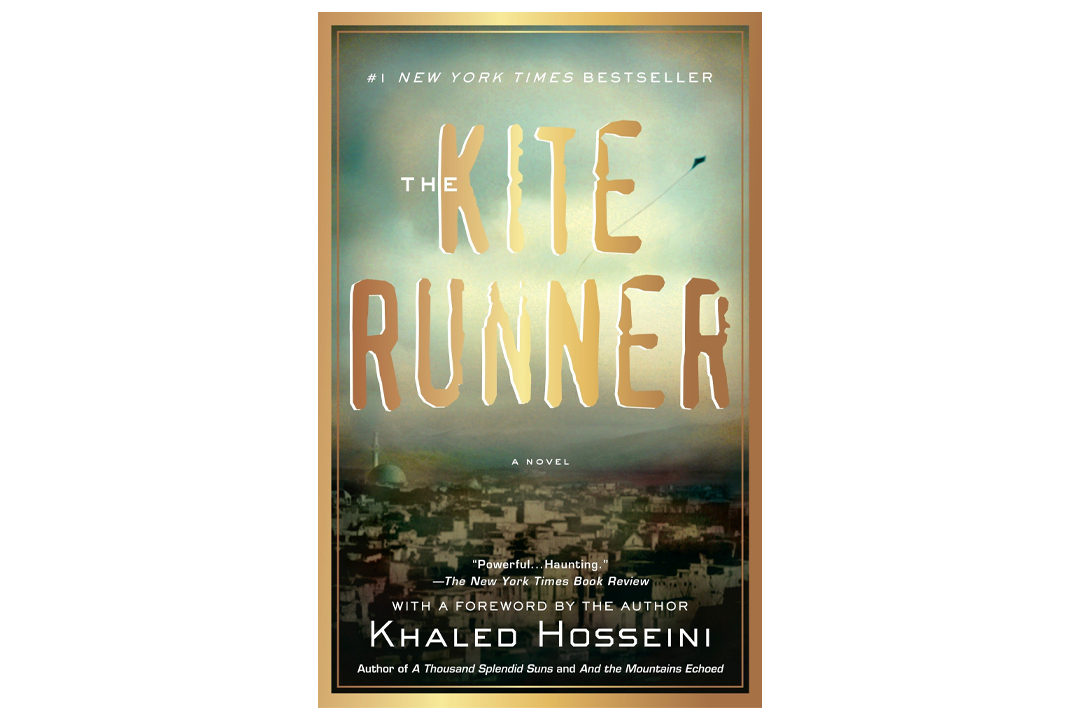
The Kite Runner by Khaled Hosseini: Book Summary
Beverly Ashford • 13 Mar 2026 • 64 views • 2 min read.Let me tell you about the book that will make you feel guilty for things you did not even do. Khaled Hosseini published The Kite Runner in 2003. It is his first novel and still his most read. The story follows Amir, a privileged boy in Kabul, and Hassan, the son of his family's Hazara servant. They are inseparable. Then one afternoon in a cold alley, Amir watches something terrible happen to Hassan and does nothing. He does not intervene. He does not speak up. He walks away. That moment of cowardice becomes the gravitational center of the entire novel. Everything else — the Soviet invasion, the Taliban, immigration to America, return to a destroyed country — orbits around that one failure.
The Kite Runner by Khaled Hosseini: Book Summary
Quick Summary:
- A wealthy Afghan boy betrays his loyal servant's son — and spends his life trying to atone
- Spans from 1970s Kabul to Taliban-era Afghanistan to immigrant life in San Francisco
- Published in 2003, it introduced millions of Western readers to Afghanistan as a living, breathing place
- A novel about guilt, redemption, and whether the past can ever truly be fixed
The Setup
Amir grows up in a beautiful house in Kabul in the early 1970s. His father, Baba, is a large, respected man full of opinions about honor and courage — qualities Amir fears he does not possess. Hassan is the son of Ali, the family's servant, a Hazara boy in a country where Hazaras occupy the lowest social position. Despite the class divide, Amir and Hassan are childhood companions. Hassan is fiercely loyal, genuinely kind, and an extraordinary kite runner — the person who chases down kites cut loose during competitions.
The annual kite-fighting tournament is the emotional set piece of the first act. Amir wins. Hassan runs the final kite. In retrieving it, he is cornered by Assef, a sadistic older boy who is a bully now and will be a Taliban commander later. Assef assaults Hassan. Amir watches from around the corner. He does not move.
This is the wound the novel never fully closes.
The Middle: Loss and Exile
Amir cannot live with his guilt and cannot confess it. Instead, he frames Hassan for theft — a lie that drives Hassan and his father Ali out of the house permanently. Baba and Amir leave Afghanistan shortly after as the Soviet invasion begins, eventually settling in Fremont, California.
In America, Baba sells goods at a flea market. Amir goes to college. They rebuild a quieter, smaller life. Amir meets Soraya, an Afghan woman from a family with its own secrets, and they marry. Baba dies of cancer not long after.
Amir becomes a writer. Life continues. But Hassan does not disappear from his conscience.
The Return
Years later, Rahim Khan — Baba's old friend — calls from Pakistan. He tells Amir: there is a way to be good again.
Hassan, it turns out, has been living in Baba's old house in Kabul, maintaining it. He married. He had a son named Sohrab. The Taliban came. Hassan and his wife were murdered in the street. Sohrab is in an orphanage.
Rahim Khan also reveals a secret about Hassan's true parentage that reframes everything Amir thought he understood about his childhood. The betrayal was worse than he knew, and the stakes of returning are higher than he realized.
Amir goes back to Taliban-controlled Kabul. What he finds is a country hollowed out — stadiums used for executions, women invisible under burqas, the city he grew up in unrecognizable. He finds Sohrab. He also finds Assef, the boy from the alley, now a Taliban official. There is a confrontation. It is brutal and earned.
What the Book Is Really About
Guilt is the obvious theme. But Hosseini is more precisely interested in the question of whether redemption is actually possible — or whether it is just a story we tell ourselves to feel better. Amir cannot undo what happened in the alley. He can only choose what to do next. The novel argues that this choosing, done honestly and at real cost, matters.
The father-son dynamic runs through everything. Amir spends the novel trying to earn Baba's love and failing to understand why it feels withheld. The revelation about Hassan recontextualizes Baba completely — he was also carrying guilt, also performing atonement in his own way, also unable to speak the truth directly.
Afghanistan itself is a character. Hosseini writes pre-war Kabul with genuine love — kite fights, pomegranate trees, lamb kebabs, cinema. The contrast with Taliban-era Kabul is not melodramatic. It is grief.
Character Comparison Table
| Character | Role | Core Quality | Arc |
|---|---|---|---|
| Amir | Narrator, protagonist | Cowardice seeking redemption | Returns to Afghanistan, saves Sohrab |
| Hassan | Amir's companion | Unconditional loyalty | Murdered by Taliban; legacy lives in Sohrab |
| Baba | Amir's father | Honor with a buried secret | Dies in America; secret revealed posthumously |
| Ali | Hassan's father | Quiet dignity | Leaves after Amir's betrayal |
| Assef | The antagonist | Cruelty dressed as ideology | Taliban commander; final confrontation with Amir |
| Sohrab | Hassan's son | Trauma, fragile survival | Rescued by Amir; slow, uncertain recovery |
| Rahim Khan | Baba's friend | Wisdom, moral clarity | Reveals the truth; enables Amir's return |
| Soraya | Amir's wife | Honesty, steadiness | Supports Amir; her own past parallels his |
Frequently Asked Questions
Is the novel accurate about Afghanistan?
Hosseini grew up in Kabul before his family sought asylum in the United States. His depiction of pre-war Kabul draws on personal memory. The cultural details — Pashtun and Hazara dynamics, the Soviet invasion, Taliban rule — are grounded in historical reality, though the novel is fiction.
Is the assault scene graphic?
It is handled with restraint. Hosseini does not describe it in explicit detail. The emotional weight comes from Amir's choice not to intervene rather than from graphic depiction. It is upsetting but not gratuitous.
Does Sohrab recover?
The ending is deliberately unresolved. Sohrab is alive and safe in America. He is deeply traumatized. There is a small moment near the end — a kite, a half-smile — that Hosseini offers as something between hope and possibility. He does not promise recovery. He suggests it might be available.
How does it compare to Hosseini's other novels?
A Thousand Splendid Suns focuses on two Afghan women across the same historical period and is arguably more emotionally controlled. And the Mountains Echoed is structurally more complex. Most readers find The Kite Runner the most immediately gripping of the three.
Is the film worth watching?
The 2007 film is competent and emotionally effective. The child actors are remarkable. It compresses the novel significantly but preserves the essential story. Read the book first — the internal experience of Amir's guilt translates better in prose than on screen.
What should I read next?
A Thousand Splendid Suns is the natural follow-up — same world, different lens, equally devastating. For another novel about guilt, betrayal, and the long shadow of a single moment, Ian McEwan's Atonement covers similar emotional territory in a very different setting.
The Bottom Line
Here is what Khaled Hosseini actually wrote.
Not an Afghanistan novel. Not a political novel. A novel about the specific weight of watching someone be harmed and doing nothing — and what a person owes the world after that.
Amir cannot go back to the alley. None of us can go back to our worst moments. The novel's argument is that we go forward instead, honestly, at cost, without guarantees.
There is a kite at the end. Amir offers to run it.
For you, a thousand times over.
You will remember that line.