
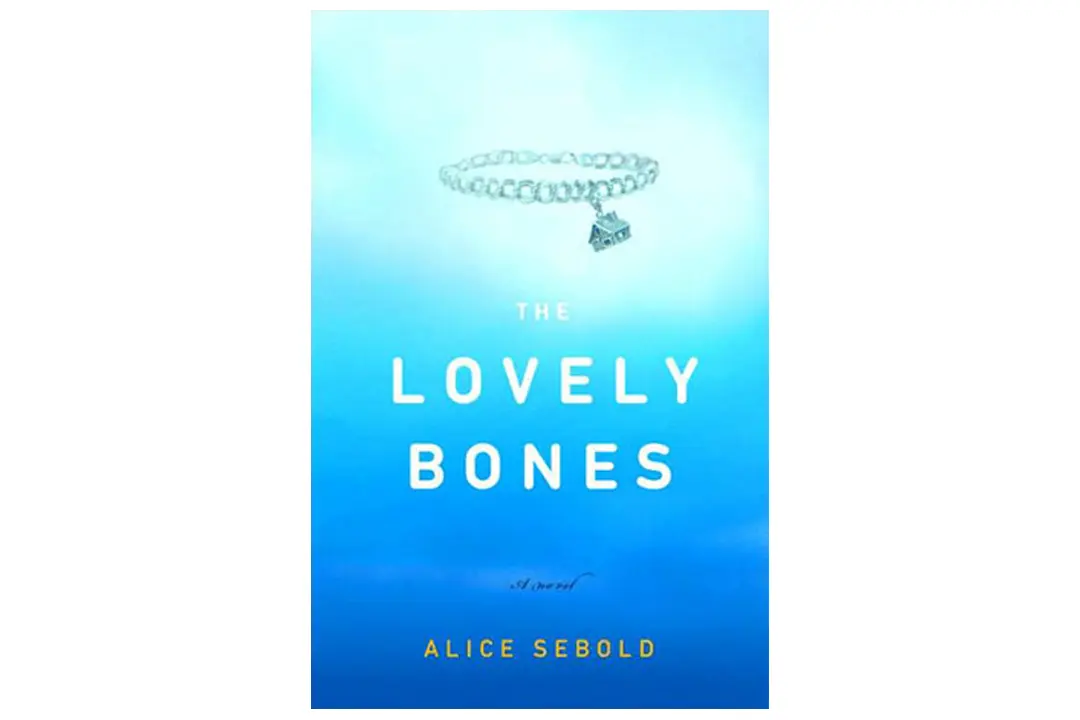
The Lovely Bones – Alice Sebold: Book Summary
Beverly Ashford • 13 Mar 2026 • 70 views • 3 min read.Let me tell you about the book that opens with a fourteen-year-old girl describing her own murder. Alice Sebold did something that shouldn't work: she wrote a novel from the perspective of a dead child watching her family fall apart. It's not a mystery (we know the killer immediately) and not a ghost story (Susie can't intervene). It's about grief—the long, slow, sometimes impossible work of surviving loss. The Lovely Bones sold over 10 million copies. It spent years on bestseller lists. It was adapted into a Peter Jackson film. It divided critics while uniting readers. Here's what happens, and why it resonated.
The Lovely Bones – Alice Sebold: Book Summary
Quick Summary:
- A murdered girl narrates from heaven, watching her family struggle to heal
- She knows who killed her, but she can only observe
- The novel explores grief, memory, and how the dead haunt the living
- Published in 2002, it became a massive bestseller despite—or because of—its dark premise
The Murder
Susie Salmon is fourteen years old in 1973 when she takes a shortcut through a cornfield on her way home from school.
George Harvey, a neighbor, has built an underground room there. He lures Susie inside. He rapes her. He kills her. He dismembers her body.
This happens in the first pages. Sebold doesn't linger on the violence, but she doesn't hide it either.
Susie goes to her heaven. Not the general heaven—her personal one. It has high school gazebos and soccer fields and everything she wanted but never had. She can watch Earth. She can't affect it.
She watches.
The Aftermath
The Salmon family begins to break.
Jack, Susie's father, becomes obsessed with finding the killer. He suspects Harvey correctly but can't prove it. His obsession alienates him from his wife. He builds ships in bottles, then smashes them in rage. He's determined to find justice that will never come.
Abigail, Susie's mother, retreats into numbness. She can't bear her grief or her husband's obsession. She begins an affair. Eventually, she leaves the family entirely—moves to California, works in a winery, tries to become someone without a dead daughter.
Lindsey, Susie's younger sister, carries impossible burdens. She's the "surviving daughter," always compared to her dead sister. She breaks into Harvey's house searching for evidence. She grows up too fast, armored against vulnerability.
Buckley, the youngest, was only four when Susie died. He grows up in the shadow of a sister he barely remembers. He's angry—at his mother for leaving, at his father for his obsession, at Susie for dying.
Grandma Lynn is Abigail's mother—alcoholic, glamorous, and surprisingly resilient. She moves in to help, providing comic relief and hard truths.
Key Characters
| Character | Role | Their Grief |
|---|---|---|
| Susie Salmon | Narrator, victim | Longing for life she'll never have |
| Jack Salmon | Father | Obsession, rage, inability to let go |
| Abigail Salmon | Mother | Flight, disconnection, eventual return |
| Lindsey Salmon | Sister | Survivor's guilt, fierce independence |
| Buckley Salmon | Brother | Anger at everyone who left |
| George Harvey | Killer | Methodical evil, empty interior |
| Ray Singh | Susie's almost-boyfriend | First love frozen in time |
| Ruth Connors | Classmate, artist | Connection to the dead |
The Killer
George Harvey is not a mystery to solve. We know who he is from the beginning.
He's a widower who builds dollhouses. He seems harmless, even kind. He's killed before Susie and will kill again after.
Sebold gives us glimpses of his interior—his methodical approach, his memories of past victims, his careful hiding of evidence. He's terrifying precisely because he's so ordinary.
He's never caught. This is perhaps the novel's most controversial choice. Harvey doesn't get justice through the legal system. He eventually dies—an icicle falls on him years later—but it's random, not meaningful.
Susie describes it: "A cold and quiet exit." Not punishment. Just death.
Heaven and Watching
Susie's heaven is personal and limited.
She can see Earth but not interact. She watches her family grieve. She watches Harvey continue living. She watches the boy she loved, Ray Singh, grow up.
Her heaven expands as she lets go. Initially confined to her desires, she gradually accesses larger spaces and meets other victims. Moving on requires releasing her hold on Earth—something she struggles to do.
The other dead. Susie meets Harvey's other victims. They're stuck too, waiting for something. The novel suggests that the dead's peace depends partly on the living—on being remembered, on justice, on letting go.
The Controversial Scene
Late in the novel, Susie briefly enters the body of Ruth Connors, who has always been sensitive to the dead.
For one night, Susie inhabits Ruth's body and makes love to Ray Singh—experiencing the physical connection she never had in life.
This scene divided readers. Some found it beautiful, a gift for a girl who lost everything. Others found it disturbing—a dead person using someone else's body without consent, the sexual aspect uncomfortable given Susie's rape.
Sebold has defended it as Susie claiming the physical experience that was stolen from her. But the scene remains the novel's most contentious element.
The Ending
Years pass. Decades, eventually.
The family slowly heals. Jack has a heart attack and survives. Abigail returns, reconnecting with her children as adults. Lindsey marries and has a daughter named Abigail. Buckley becomes a man still carrying anger but also love.
Susie lets go. She stops watching so intently. She moves deeper into her heaven. She finds a kind of peace—not the peace of resolution, but the peace of acceptance.
Her final words describe Earth as a place where "the dead truly talk to us, that in the air between the living, spirits bob and weave and laugh with us. They are the oxygen we breathe."
The "lovely bones" are the connections she's left behind—the ways she still exists in the people who loved her.
What the Book Is Really About
Grief as a long process. The novel covers nearly a decade. There's no tidy resolution. People don't "get over" Susie—they learn to carry her differently.
The impossibility of closure. Harvey isn't caught. The family never gets justice. They have to find ways to live without the resolution our culture promises.
The dead among us. Susie's presence—her watching, her love—suggests that the dead don't fully leave. Whether literally or metaphorically, they shape the living.
Survival after violence. Sebold was raped as a college student. The Lovely Bones is partly about what survives violence—both the victim and those left behind.
Frequently Asked Questions
Is this autobiographical?
Not directly, but Sebold was a rape survivor (she wrote about it in the memoir Lucky). The themes of violence, survival, and aftermath are personal.
Why doesn't Harvey get punished?
Sebold has said this reflects reality—most murderers aren't caught, most families don't get closure. The novel refuses false comfort.
Is the heaven literal or metaphorical?
Sebold presents it as literal within the story. Whether readers take it that way is personal. It functions either way.
How does the movie compare?
Peter Jackson's 2009 film is visually striking but softens the darker elements. The book is more raw and more interior.
Is this appropriate for teenagers?
It's often taught in high schools. There's rape and murder (not graphically depicted) and mature themes. Most readers 15+ can handle it, but it's heavy material.
What happened with Lucky?
Sebold's memoir Lucky describes her rape and the conviction of her attacker. In 2021, that conviction was vacated—DNA evidence didn't match. This has complicated her legacy, though The Lovely Bones is fiction.
The Bottom Line
Here's what Alice Sebold achieved.
She wrote about the unthinkable—a child's murder—from the child's perspective, and made it bearable. She refused easy resolution or satisfying justice. She showed grief as it actually is: messy, long, different for everyone.
The Lovely Bones argues that love survives death. Not triumphantly, not completely, but persistently. The dead are still with us—in memory, in influence, in the oxygen we breathe.
Susie Salmon was murdered at fourteen.
She's still here.