
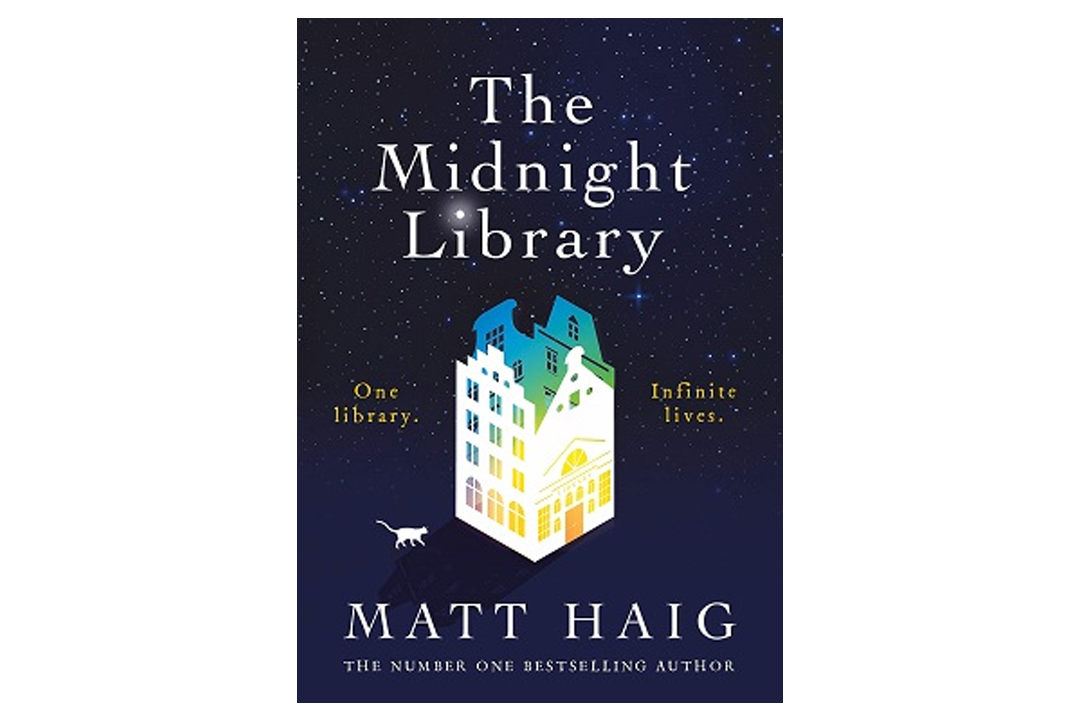
The Midnight Library – Matt Haig: Book Summary
Beverly Ashford • 11 Mar 2026 • 76 views • 3 min read.Let me tell you about the book that asks the question we've all wondered at 3 AM. What if you'd made different choices? What if you'd stayed with that person, taken that job, moved to that city, pursued that dream? Would you be happier? Would your life have meaning? Matt Haig takes this question literally. He creates a place between life and death where a woman can try on alternate lives like clothes in a fitting room. It sounds like fantasy wish fulfillment. It becomes something more painful and more honest. Because every life—even the ones that look perfect from outside—has its disappointments. And every choice that opens one door closes another.
The Midnight Library – Matt Haig: Book Summary
Quick Summary:
- A woman between life and death discovers a library of alternate lives she could have lived
- Each book represents a different choice, a different path not taken
- She must decide whether any life is worth living—including her own
- Published in 2020, it became a global bestseller about regret, depression, and hope
The Setup
Nora Seed is having the worst day of her life.
Her cat has died. She's been fired from her job at a music store. Her brother won't return her calls. Her elderly neighbor, the last person who seemed to care about her, has passed away. A student she was supposed to tutor doesn't need her anymore.
Everything she touches falls apart. Everyone she's connected to seems better off without her.
At midnight, Nora takes an overdose of pills.
But she doesn't die. At least, not immediately.
She wakes up in a library. An infinite library filled with green-covered books stretching in every direction. Behind the desk sits Mrs. Elm—her school librarian from childhood, somehow the same age as she always was.
Mrs. Elm explains: This is the Midnight Library. It exists between life and death. Each book contains a different version of Nora's life—every life she could have lived if she'd made different choices.
The books aren't fiction. They're doorways. Nora can enter any life and live it. If she finds a life she wants to stay in, she can remain there permanently. If she feels disappointment, she returns to the library to try again.
If she can't find any life worth living, she'll die for real.
The Lives Nora Tries
The Rock Star Life
Nora was once in a band with her brother Joe. She quit before they got famous. In one alternate life, she stayed. The band, The Labyrinthes, became huge.
Nora enters this life and finds herself a celebrity—wealthy, successful, living the dream she abandoned. But she's also exhausted, medicated, estranged from her brother, and deeply unhappy. Fame isn't what she imagined. The disappointment returns her to the library.
The Olympic Swimmer Life
Nora was a competitive swimmer as a teenager. She quit. In one life, she didn't. She became an Olympic medalist.
This life has its rewards—physical health, achievement, discipline. But Nora also missed other things. Her father died while she was at a competition, and she never got to say goodbye. Success cost her something irreplaceable.
The Married Life
Nora was engaged to Dan. She called it off. In one life, they married. She has a comfortable home, a reliable husband, a life that looks stable from outside.
Inside, she's suffocating. The relationship lacks passion. She made herself smaller to fit into the marriage. This version of Nora isn't more herself—she's less.
The Philosopher Life
In this life, Nora became an academic philosopher, pursuing a Cambridge education to its conclusion. She's accomplished and respected.
But she's also lonely, living far from anyone who truly knows her, having traded connection for achievement.
The Arctic Researcher Life
This is the life that almost works. Nora is a glaciologist in Svalbard—the dream career she once considered. She has meaningful work, breathtaking surroundings, and a sense of purpose.
But even this life has losses. Relationships she never made. Places she never saw. There's no version of life without trade-offs.
Key Characters
| Character | Role | Represents |
|---|---|---|
| Nora Seed | Protagonist | Depression, regret, the search for meaning |
| Mrs. Elm | Librarian | Guidance, wisdom, the unconscious mind |
| Joe Seed | Nora's brother | Family estrangement, roads not taken |
| Dan | Nora's ex-fiancé | Safety vs. authenticity |
| Izzy | Nora's old friend | Friendships lost to time |
| Hugo Lefèvre | Fellow traveler | Someone else navigating the library |
The Philosophy
Haig draws explicitly on philosophy and science throughout.
Quantum possibility. The library literalizes the many-worlds interpretation of quantum mechanics—every possible outcome exists somewhere. Mrs. Elm quotes Schrödinger and Thoreau interchangeably.
The problem of grass. It's always greener somewhere else. Every life Nora tries has problems she couldn't see from outside. The fantasy of the better choice is always partial—it shows the gains without the losses.
Depression's distortions. Nora's starting point isn't objective reality. She sees herself as worthless, believes everyone would be better without her. The library gently corrects this—showing her that her presence mattered in ways she couldn't perceive.
Choosing life. The book's arc moves from "no life is worth living" to "this life is worth living." Not because Nora's circumstances change dramatically, but because her perception shifts.
The Ending
Nora eventually finds a life she wants to keep.
She's in Bedford, her original town, but in a life where she made slightly different choices. She has a dog, a job she tolerates, connections she's maintained. It's not glamorous. It's not her childhood dreams realized.
But it's real. It's hers. It has possibility.
Then the library starts collapsing. Her physical body in the original world is dying. She has to choose: stay in this alternate life or return to her original life.
She chooses to return.
Not because her original life is wonderful, but because she finally wants it. She wants the possibility of living rather than the certainty of dying. She wants to see what happens next.
She survives her suicide attempt. The book ends with her beginning—damaged, recovering, but present. Alive.
What the Book Is Really About
Depression lies. Nora's certainty that she has nothing to offer is the illness talking. The library shows her that she matters in ways depression made invisible.
Regret is a trap. Every alternate life has its own regrets. There's no choice that leads to a life without loss. Freedom comes from accepting this rather than fantasizing about the perfect path.
Root lives. Nora's original life is her "root life"—the one most truly hers. The alternate lives feel borrowed. Eventually, she wants to return to herself, flaws and all.
Living is active. The choice to live isn't made once. It's made repeatedly, daily. Nora doesn't find happiness in the library. She finds the willingness to pursue it.
Frequently Asked Questions
Is this book about suicide?
Yes, explicitly. It begins with a suicide attempt and deals directly with suicidal ideation and depression. If this is triggering for you, approach with care. The book ultimately argues for living, but the content may be difficult.
Is the library real or is Nora hallucinating?
The book doesn't definitively answer this. It could be a near-death experience, a coma dream, or something supernatural. The ambiguity is intentional—the meaning matters more than the mechanism.
Is this preachy about mental health?
Some readers find it so. Haig is openly recovering from depression and his perspective shapes the book. If you want oblique literary treatment of these themes, this may feel too direct. If you want compassionate accessibility, it delivers.
Who should read this?
People struggling with regret, depression, or "what if" thinking. People who like high-concept premises with emotional payoffs. People who need hope without toxic positivity.
How does this compare to Haig's other books?
Haig has written memoir (Reasons to Stay Alive, Notes on a Nervous Planet) and other fiction. This is his most commercially successful novel, combining his mental health themes with a fantastical structure.
Is there a movie coming?
Film rights have been acquired, but as of 2026, no release has been confirmed.
The Bottom Line
Here's what Matt Haig achieved.
He wrote a book about suicide that's ultimately about choosing life. He created a fantasy premise that explores a real psychological trap—the belief that other choices would have made us happy.
The Midnight Library argues gently but firmly: there is no perfect life waiting behind the doors you didn't open. Every path has losses. Every choice closes possibilities.
But here's the other side: every path has gifts too. Every life has something worth staying for. The life you have isn't the wrong one—it's just the one you haven't fully inhabited yet.
Nora Seed starts the book wanting to die. She ends it wanting to live—not because her circumstances improved dramatically, but because she finally sees what was always there.
That shift is the whole book. It's also, maybe, the whole point of living.