
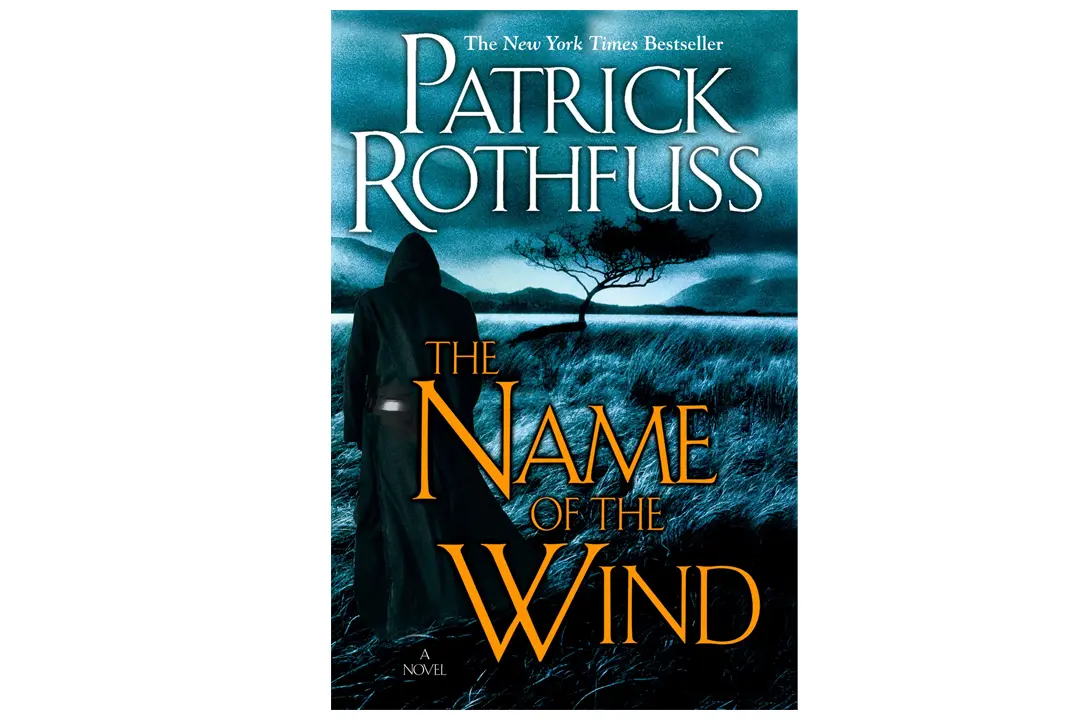
The Name of the Wind by Patrick Rothfuss: Book Summary
Beverly Ashford • 27 Feb 2026 • 93 views • 3 min read.Let me tell you about the fantasy novel that made readers who do not read fantasy read fantasy — and made fantasy readers argue for years about whether its author is a genius, a perfectionist, or both in equal and inconvenient measure. Patrick Rothfuss published The Name of the Wind in 2007. He had been writing it for ten years. His editor at DAW Books received a manuscript of roughly 250,000 words and asked him to cut it. He did. The published version runs about 662 pages, which means what he cut would have been a separate novel. The result is the first volume of the Kingkiller Chronicle — a trilogy whose second book appeared in 2011 and whose third book has not yet been published as of this writing, a fact that the internet has opinions about. What the first two books established is a standard of prose craftsmanship and character complexity that most fantasy does not attempt.
The Name of the Wind by Patrick Rothfuss: Book Summary
Quick Summary:
- The most legendary man in the world is living in hiding as an innkeeper — and agrees to tell his real story to a traveling chronicler over three days
- Published in 2007 after ten years of writing and revision, it became the most celebrated fantasy debut of its generation
- Rothfuss's central achievement: prose so careful and character work so deep that the novel functions as literary fiction wearing fantasy clothing
- A book about the distance between legend and reality, the seductiveness of storytelling, and whether a narrator can ever be trusted to tell the truth about himself
The Frame Story
The novel opens not with magic or adventure but with silence. A village called Newarre. An inn called the Waystone. A man called Kote, the innkeeper, who moves with a kind of careful deliberateness that suggests someone containing something larger than his current life.
Kote is Kvothe — pronounced roughly like Quothe — once the most famous man in the world. Warrior. Wizard. Musician. The man who called down lightning, killed a king, slept with a fairy queen, and burned down the town of Trebon. The man whose name is used to frighten children in three kingdoms. He is now thirty years old and pouring drinks for farmers and doing it very quietly.
A traveling Chronicler — a man who records history — recognizes him and asks to write his story. Kvothe agrees, on the condition that it take three days and that the Chronicler write only what Kvothe tells him. What follows is Kvothe narrating his own life in first person, which is both the novel's greatest strength and its most interesting structural complication: the man telling the story is unreliable in ways he almost certainly knows and possibly intends.
Kvothe's Childhood
Kvothe was born into the Edema Ruh — a traveling performance troupe, something between Romani culture and a wandering circus — and raised by parents who were genuinely brilliant and genuinely in love with each other and with their craft. His childhood is warm, intellectually stimulating, and idyllic in the specific way that makes its ending worse.
His father Arliden is writing a song about the Chandrian — ancient beings of myth and malevolence — and asks too many questions to the wrong sources. The Chandrian come for the troupe. Kvothe survives by accident, hidden in the woods. He returns to find his family dead. He is eleven years old.
He spends three years as a street orphan in the city of Tarbean — the novel's darkest section, written with unglamorous specificity about what survival looks like when you are small and alone and in a city that does not care. Rothfuss does not romanticize this. He also does not dwell on it beyond what the story requires.
The University
The novel's longest and most celebrated section follows Kvothe's admission to the University — the greatest center of learning in the world, where the Arcanum teaches sympathy, a form of magic based on the principle that two linked objects can affect each other. Kvothe is twelve years old, dramatically underfunded, and entering an institution that normally admits students at fifteen or sixteen.
The University sections are where Rothfuss's prose finds its full range. Sympathy is explained with enough internal logic that it feels like a real discipline rather than a convenient plot device — it requires concentration, clarity of thought, and the ability to hold two competing mental images simultaneously. The harder the action, the more mental split required, and a split above a certain level risks backlash that can kill the practitioner.
Kvothe is prodigiously gifted and financially desperate in roughly equal measure. He earns money through music — his lute playing is another area of genuine mastery — navigates the social hierarchies of the University, makes an enemy of a noble student named Ambrose who has resources Kvothe does not, and pursues his obsession with the Chandrian through the University's archives with the specific focus of someone who has not forgotten what they are looking for.
Elodin is the Master Namer — the teacher of the highest and most mysterious form of magic, the ability to know the true name of things and thereby command them. He is also apparently insane, teaches by methods that make no conventional sense, and is possibly the most interesting secondary character in the novel. His scenes with Kvothe suggest a relationship between student and teacher that will become more important than it currently appears.
Denna
Kvothe meets Denna in multiple places before either of them understands that they keep finding each other. She is beautiful in ways he catalogues at length, independent in ways the world does not easily accommodate for women of her time, and surrounded by a rotating series of patrons and suitors and complicated arrangements that keep her financially viable while costing her things Kvothe cannot fully see.
Their relationship is the novel's most discussed element among readers who find it frustrating and among readers who find it true. They connect deeply and fail to connect completely. They are honest about some things and unable to be honest about others. The specific way they miss each other — repeatedly, at angles, with genuine feeling on both sides — is either beautifully rendered romantic tragedy or the most annoying will-they-won't-they in fantasy literature, depending on your patience for the form.
Rothfuss is doing something specific with Denna: she is one of the few characters in Kvothe's story that his narration cannot fully control. He loves her and therefore cannot see her clearly. The reader can see things about Denna that Kvothe cannot. This is deliberate and is one of the novel's more sophisticated structural choices.
Magic Systems Compared
| System | Underlying Principle | Requirements | Limitations | Who Teaches It |
|---|---|---|---|---|
| Sympathy | Two linked objects affect each other | Mental clarity, split concentration, alar | Backlash if concentration breaks — can kill | Kilvin, Master Artificer |
| Naming | Knowing the true name of things grants command over them | Deep understanding, altered consciousness | Extremely difficult, unpredictable, rare talent | Elodin, Master Namer |
| Sygaldry | Runes that bind sympathetic connections permanently | Technical skill, precision | Requires materials, time, cannot be improvised | Kilvin, Master Artificer |
| Alchemy | Transformation of materials through understood processes | Knowledge, materials, patience | Limited to physical transformation | Mandrag, Master Alchemist |
| Glamourie | Fae magic — illusion and appearance | Fae blood or teaching | Not available to most humans | Felurian (in Book Two) |
Frequently Asked Questions
Is this actually a trilogy and when does the third book come out?
The Kingkiller Chronicle is planned as a trilogy. The Wise Man's Fear — the second volume — was published in 2011. The third volume, The Doors of Stone, has not been published as of early 2026. Rothfuss has said publicly that he will not publish it until it is ready. The wait has become one of fantasy literature's most discussed ongoing situations.
Is the narrator reliable?
This is the most interesting question the novel raises. Kvothe is telling his own story, controlling what the Chronicler records, and has every reason to shape the narrative toward the legend rather than the reality. Several moments in the text suggest that Kvothe is leaving things out, softening others, and possibly constructing a version of events that serves purposes the reader cannot yet see. The frame story — present-tense Kvothe in his inn, broken and hiding — contradicts the confidence of the narrator telling his story. The gap between them is where the series' deepest questions live.
How does this compare to other epic fantasy series?
Tolkien and Jordan built worlds. Rothfuss built a voice. The Name of the Wind is less interested in world-building breadth than in psychological depth and prose precision. Readers who primarily value the former sometimes find it frustrating. Readers who primarily value the latter consider it the best fantasy writing since Tolkien's prime. Brandon Sanderson's work offers the most useful contrast — systematically constructed magic, enormous scope, different priorities.
Does the novel work as a standalone?
It ends at a natural stopping point — the first day of Kvothe's three-day account is complete. The story continues in The Wise Man's Fear and will continue in the third volume. The ending is not a cliffhanger but it is genuinely incomplete. Readers who finish it and love it immediately want the second book.
Is the Denna storyline worth the frustration?
Most readers who finish the trilogy report yes — that Denna's role and the specific shape of their relationship becomes clearer and more meaningful across all three books. Readers who stop after the first book sometimes find her storyline unresolved in unsatisfying ways. The honest answer is that judgment should probably be reserved until the series is complete, which requires patience the publishing timeline has tested significantly.
What should I read next?
The Wise Man's Fear is the immediate continuation and is required reading. For fantasy with comparable prose ambition, Jonathan Strange and Mr Norrell by Susanna Clarke is the closest analogue in literary quality and seriousness. The Lies of Locke Lamora by Scott Lynch covers similar ground of a brilliant young man navigating a dangerous world with intelligence and charm at a faster pace with less psychological interiority.
The Bottom Line
Here is what Patrick Rothfuss actually built over ten years of writing and revision.
Not a fantasy adventure, though it contains one. A novel about storytelling itself — about the gap between the legend a man becomes and the person who lived the events the legend is built from, about whether a narrator telling his own story can ever be trusted, about what it costs to be exceptional in ways the world will not leave alone.
Kvothe is sitting in his inn at thirty years old, deliberately ordinary, surrounded by silence where there used to be music. He is telling his story to a Chronicler. He controls what gets written.
What he cannot control is what the reader notices in the spaces between what he says.
The prose is beautiful. The magic is coherent. The character work is deep enough to sustain rereading.
And the story that Rothfuss is actually telling — about the distance between who we are and who we let others believe we are, about the seductiveness of our own legend, about what we lose when the legend becomes more real than the person — is more ambitious than any of the dragons and demons and university examinations that carry it forward.
The name of the wind is something Kvothe knows.
What it costs him to know it is what the trilogy is about.