
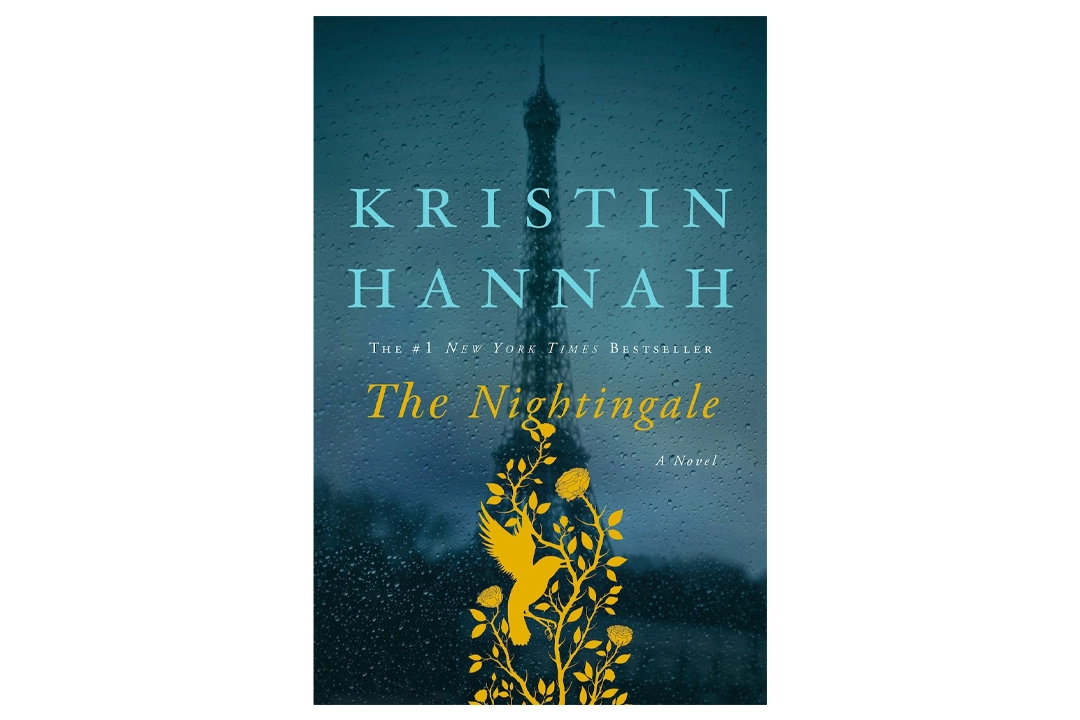
The Nightingale – Kristin Hannah: Book Summary
Beverly Ashford • 12 Mar 2026 • 72 views • 2 min read.Let me tell you about the book that made people realize women had their own war stories. Kristin Hannah wrote The Nightingale to explore a question: What happened to the women during World War II? Not the nurses or the Rosie the Riveters—the ordinary women in occupied territories who had to survive, protect their children, and decide every day whether to resist or comply. The result was a phenomenon. The book sold over 4 million copies. It spent years on bestseller lists. It showed that historical fiction about women's wartime experiences could be just as gripping as any battle narrative. The Nightingale is about two sisters. One is bold; one is cautious. Both are heroes.
The Nightingale – Kristin Hannah: Book Summary
Quick Summary:
- Two sisters in Nazi-occupied France resist in very different ways
- One joins the underground; the other survives by seeming to comply
- Both discover courage they didn't know they had
- Published in 2015, it became a massive bestseller about women's hidden heroism in WWII
The Sisters
Vianne Mauriac is the older sister. She's conventional, careful, a rule-follower. She lives in the small town of Carriveau with her husband Antoine and their daughter Sophie. She teaches school. She tends her garden. She doesn't make waves.
When war comes, Antoine goes to fight. Vianne is left alone with Sophie, trying to maintain normalcy while the world collapses.
Isabelle Rossignol is the younger sister by ten years. She's impulsive, passionate, and has been expelled from every school that tried to contain her. Their mother died when Isabelle was young. Their father, broken by grief and the previous war, abandoned both daughters. Vianne raised Isabelle—and resented it.
The sisters are estranged when war begins. They barely speak.
By the end, they'll have saved each other's lives.
The Occupation
France falls to Germany in 1940. The Nazis occupy the north; a puppet government controls the south.
Vianne's war is quiet and terrifying. A German captain, Wolfgang Beck, is billeted in her home. She must house the enemy, feed him, pretend civility while her husband is in a POW camp.
Beck is not a monster—he's polite, even kind. This makes everything more confusing. Can she hate someone who helps her daughter with homework?
As the occupation continues, Vianne faces impossible choices. Her Jewish neighbors are taken. Her best friend Rachel begs her to hide Rachel's children. Vianne is terrified—hiding Jews means death for her and Sophie.
She does it anyway. She begins forging documents, hiding children, pretending compliance while secretly resisting.
Isabelle's war is loud and dangerous. She joins the Resistance immediately. She distributes flyers. She guides downed Allied airmen over the Pyrenees into Spain—a route that will eventually save over 100 lives.
She takes the code name "The Nightingale."
The Two Paths of Resistance
| Vianne's Resistance | Isabelle's Resistance |
|---|---|
| Hidden in plain sight | Active and dangerous |
| Saving children | Saving airmen |
| Forging papers | Mountain crossings |
| Survives by appearing compliant | Survives by disappearing |
| Protects through domesticity | Protects through action |
| Quiet courage | Bold courage |
The novel argues that both paths are heroic. Vianne's survival and small acts of defiance are just as important as Isabelle's dramatic rescues. History remembers the bold; the quiet resisters are often forgotten.
Key Characters
| Character | Role | Represents |
|---|---|---|
| Vianne | Older sister, mother | Survival, quiet resistance |
| Isabelle | Younger sister, Nightingale | Bold resistance, sacrifice |
| Antoine | Vianne's husband | The absent men of war |
| Captain Beck | German officer | The "good" enemy, complexity |
| Von Richter | Nazi commander | True brutality, danger |
| Gaëtan | Resistance fighter | Isabelle's love, inspiration |
| Julien | Their father | Broken men, eventual redemption |
The Horrors
The Nightingale doesn't sanitize the occupation.
The deprivation is constant. Food is rationed. Winter means no heat. Children are hungry. Survival itself is resistance.
The danger escalates. As the war continues, the Nazis become more brutal. Reprisals for Resistance actions kill innocent civilians. Jews are rounded up and deported. The costs of hiding people grow.
Vianne is raped. When the relatively decent Beck is replaced by the cruel Von Richter, Vianne has no protection. Von Richter assaults her repeatedly. She becomes pregnant.
Hannah handles this with care but doesn't hide it. Sexual violence was a reality of occupation. Vianne's survival of this trauma—and her continued resistance despite it—is part of her heroism.
Isabelle is captured. Eventually, her work catches up with her. She's sent to Ravensbrück, the women's concentration camp. The final section of the book follows her suffering and survival there.
The Frame Story
The novel begins and ends in 1995.
An elderly woman in Oregon is dying. She's been invited to France to be honored for wartime heroism. Her son doesn't know her story.
We don't know which sister is speaking. This mystery runs through the book—is the narrator Vianne or Isabelle? Both seem possible at different moments.
The reveal at the end reframes everything we've read. The narrator is Vianne. Isabelle died shortly after liberation, her body destroyed by Ravensbrück.
Vianne has carried their story for fifty years, never speaking of it until now.
The Ending
Isabelle survives the concentration camp but barely. She's skeletal, ill, broken. Vianne finds her after liberation and brings her home.
Isabelle dies shortly after, but she dies free. She dies having saved over 100 airmen. She dies in her sister's arms.
The reconciliation between the sisters happens before Isabelle's death. Years of distance and resentment dissolve. Vianne finally sees Isabelle's courage clearly. Isabelle finally sees that Vianne's quiet endurance was its own heroism.
In 1995, Vianne is finally ready to be honored. She attends the ceremony in France, tells her son everything, and prepares to die having spoken the truth at last.
What the Book Is Really About
Women's forgotten heroism. The Resistance is often portrayed as men with guns. The Nightingale shows women who hid children, forged papers, guided escapes, and survived violation while protecting others.
Different kinds of courage. Isabelle's courage is cinematic—mountain crossings, narrow escapes. Vianne's courage is domestic—enduring abuse to protect hidden children. Both are valid. Both saved lives.
The costs of survival. Surviving occupation wasn't just about not dying. It was about the choices you made, the compromises you accepted, the things you witnessed. Vianne carries guilt and trauma for fifty years.
Sisterhood. The sisters represent two responses to the same circumstances. Their reconciliation argues that these responses complement rather than compete.
Frequently Asked Questions
Is this based on true stories?
The characters are fictional, but the historical details are accurate. There were real women who guided airmen over the Pyrenees. There were real women who hid Jewish children. Hannah researched extensively.
Is this appropriate for young readers?
There's sexual violence (not graphic but clear), concentration camp horrors, and general wartime brutality. Most readers 15+ can handle it, but it's not light reading.
How does the movie compare?
As of 2026, a film adaptation has been in development for years but hasn't been released. The book remains the definitive version.
Should I read Hannah's other books?
The Great Alone (Alaska survival) and Winter Garden (Soviet Russia) cover similar themes of women's resilience. Hannah is consistent—if you like one, you'll likely enjoy others.
Why is this different from other WWII novels?
The focus on domestic survival and quiet resistance distinguishes it. Most WWII fiction centers battles, espionage, or the Holocaust from outside. This is inside—in the homes, in the daily terror.
The Bottom Line
Here's what Kristin Hannah achieved.
She wrote a WWII novel that centers women's experiences without diminishing the war's horror. She created two sisters whose different paths to resistance complement each other. She showed that survival itself can be heroic.
The Nightingale argues that history's spotlight misses most of its heroes. The women who hid children, endured violation, and kept families alive through starvation and terror—they fought the war too.
Vianne and Isabelle are both the Nightingale—one who sang loudly, one who sang quietly, both who refused to be silenced.