
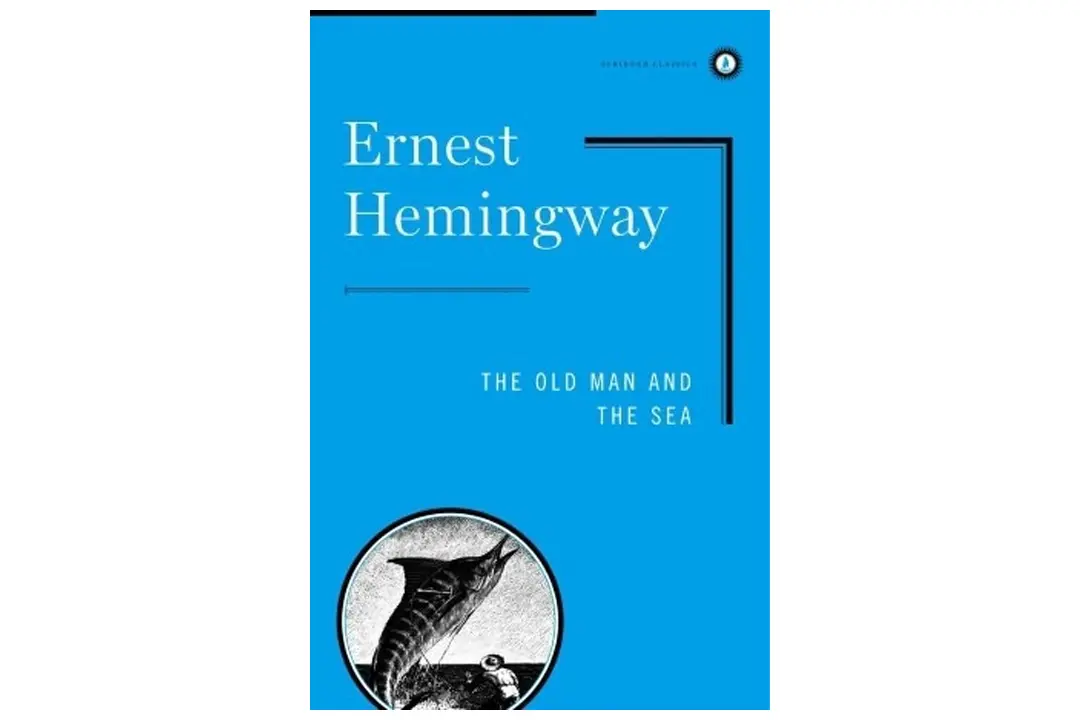
The Old Man and the Sea by Ernest Hemingway: Book Summary
Beverly Ashford • 13 Feb 2026 • 87 views • 3 min read.Let me tell you about the novel that Hemingway said contained everything he had learned in forty years of writing — compressed into under thirty thousand words, built around one old man, one fish, and three days on the Gulf Stream. Ernest Hemingway published The Old Man and the Sea in 1952. He had been struggling for years — his previous novels had been received poorly, his reputation was in decline, and a lot of people had decided that his best work was behind him. He wrote this novella in eight weeks, knew when he finished it that it was the best thing he had ever written, and sent it to Life magazine, which published the complete text in a single issue. Five million copies of that issue sold in two days. The Nobel Committee cited the book specifically when they awarded him the Prize in 1954. Hemingway was too ill to collect it in person. He sent a speech that said, in part, that a writer's life is spent trying to do something that has never been done or that others have tried and failed — and that sometimes, with great luck, he succeeds. He knew he had succeeded with this one.
The Old Man and the Sea by Ernest Hemingway: Book Summary
Quick Summary:
- An aging Cuban fisherman who has gone eighty-four days without catching a fish hooks the largest marlin he has ever seen and spends three days alone at sea fighting to bring it in
- Published in 1952, it won the Pulitzer Prize in 1953 and contributed to Hemingway's Nobel Prize in Literature in 1954
- Hemingway's central argument: a man can be destroyed but not defeated — and the struggle itself, regardless of outcome, is where dignity lives
- A short novel of enormous compression that works as adventure story, as meditation on aging and pride, and as one of literature's most sustained arguments about what it means to endure
Santiago
Santiago is an old Cuban fisherman who has fished the waters of the Gulf Stream his entire life. He is described as thin and gaunt, with deep wrinkles and brown blotches from the sun, his hands scarred from the ropes. His eyes are the color of the sea — cheerful and undefeated.
He has gone eighty-four days without catching a fish. His young companion Manolin — who has fished with him since he was five years old, who loves him as a grandfather — has been taken off his boat by his parents after the fortieth day of bad luck. The other fishermen in the village pity Santiago. Some ridicule him. The word for unlucky in Spanish — salao, the worst form of unlucky — is what they use for him.
Santiago does not accept this assessment. He knows the difference between bad luck and being finished. He has not finished yet.
The Fish
On the eighty-fifth day, alone, Santiago rows far out into the Gulf Stream — further than the other fishermen go. He sets his lines with the precision of someone who has been doing this for fifty years, each bait hanging at its exact designated depth, everything done correctly. He hooks something enormous.
The marlin does not surface. It simply pulls — steadily, powerfully, drawing the skiff north and west through the afternoon and into the night. Santiago cannot haul in the line. He holds it, the line across his back and shoulders, and waits.
This standoff lasts three days. The fish pulls. Santiago holds. He eats raw tuna he catches on secondary lines. He drinks water. He talks to the fish, to the birds, to himself. He talks to his cramped left hand, which has locked up, and coaxes it back to usefulness. He thinks about baseball and about Joe DiMaggio, who played with a bone spur and never showed the pain — and whether he himself is showing anything like DiMaggio's quality.
Hemingway renders this waiting with almost unbearable specificity. The physical details are precise: the line cutting into skin, the exact angle of holding, the way Santiago braces his feet against the planking. The interior monologue is equally precise: the thoughts of a man who has been alone for a long time, who is running on very little food and less sleep, who is in genuine pain, and who will not let go.
The Kill and the Return
On the third day, the marlin surfaces. It is the largest Santiago has ever seen — longer than his skiff. Beautiful. He feels something for the fish that is close to love — genuine respect for an adversary that has tested him as nothing has tested him in years.
He kills it. The harpoon stroke requires everything he has left. He lashes the marlin alongside the skiff and turns for home.
The sharks come for the marlin's blood. Santiago fights them with the harpoon, then with a knife lashed to an oar, then with the oar itself, then with the tiller. He kills several. He cannot kill all of them. By the time he reaches the harbor, the marlin has been stripped to the skeleton — bones and tail and head, eighteen feet of what was once the greatest fish he had ever seen.
He ties up the skiff. He walks to his shack, carrying the mast on his shoulder, falling and resting and rising and continuing. He falls onto his bed and sleeps.
In the morning, other fishermen measure the skeleton. The tourists at the nearby restaurant ask what it is. Manolin brings Santiago coffee. They talk about fishing again together. Santiago sleeps, and in his sleep he dreams of lions on the beaches of Africa — the dream he has always had, the dream of youth and power and possibility.
Key Themes Compared
| Theme | How It Appears | What Hemingway Argues | The Counter-Reading |
|---|---|---|---|
| Endurance | Three days holding the line against a fish stronger than him | Endurance itself is the achievement regardless of outcome | Some critics argue endurance without result is just suffering |
| Pride | Santiago goes further out, refuses to accept he is finished | Pride in craft and capability is the dignified response to age | Pride also led him to take a fish he could not protect home |
| Nature | The marlin, the sharks, the sea as adversary and partner | The natural world operates without malice — it simply is | The indifference of nature makes human struggle more poignant not less |
| Age | Santiago is old, unlucky, past his productive peak | Age does not determine worth or capacity for greatness | The other fishermen's assessment of Santiago is not entirely wrong |
| Success vs Failure | He catches the marlin; the sharks take it | The distinction between success and failure is less important than quality of effort | He still comes home with nothing |
| Solitude | Three days completely alone | Solitude clarifies what a person is made of | Isolation also produces the hallucinations and self-talk of desperate loneliness |
Frequently Asked Questions
What does the marlin represent?
Hemingway resisted symbolic readings of the novel, insisting the marlin was a marlin. Readers and critics have found it impossible to resist — the marlin as worthy adversary, as something beautiful that Santiago is simultaneously trying to catch and genuinely respects, as the test that reveals what the old man is made of. Both readings coexist. The marlin is a real fish. It is also the greatest challenge Santiago will ever face, arrived late, and that is not nothing.
Why does the ending matter if he loses the fish?
This is the novel's central question and the answer is the novel itself. Hemingway's argument — visible in the iceberg theory that governs his prose, in the submerged meaning beneath the plain surface — is that Santiago did not lose. He caught the fish. He held the line for three days against something he could not overpower through strength alone. The sharks took the flesh. They could not take what the catching cost him or what it demonstrated about him. Manolin's response — immediately planning to fish with him again, bringing coffee, treating him as a man who has done something extraordinary — is the novel's answer to whether Santiago won or lost.
Is the novel Christian allegory?
Santiago's wounds from the fishing line — on his palms, from the line cutting into his hands — and his stumbling walk home with the mast across his shoulders have been read as crucifixion imagery by generations of critics. Hemingway did not deny or confirm this reading. The imagery is present. Whether it is structural to the meaning or incidental is a genuine scholarly debate. The novel works without the allegory. It may work with more depth with it.
How long is it and how quickly can it be read?
The novel runs approximately twenty-seven thousand words — most editions print it at under one hundred thirty pages. Most readers finish it in two to three hours of sustained reading. It rewards slow reading: Hemingway's compression means that sentences doing more work than they appear to be doing appear on almost every page.
Why did Hemingway's previous work receive poor reception in his later years?
Across the River and into the Trees, published two years before The Old Man and the Sea, was widely considered a self-parody — the Hemingway style imitating itself without the substance that made the early work great. The critical consensus in the early 1950s was that Hemingway was finished. The Old Man and the Sea reversed that consensus so completely that it contributed to a Nobel Prize. The reversal is one of literary history's more dramatic.
What should I read next?
A Farewell to Arms and The Sun Also Rises are Hemingway's other major novels — both worth reading for how the style and the emotional concerns of The Old Man and the Sea developed. For thematic companions on endurance and the sea, Moby Dick by Melville covers related territory at vastly greater length with more explicit symbolic ambition. For short masterworks of compression, Chekhov's short stories are the essential companion — Hemingway himself identified Chekhov as the primary influence on his approach to leaving things out.
Here is what Ernest Hemingway built in eight weeks after years of struggle.
Not an adventure story about fishing, though it is also that. An argument about what defeat actually is — and whether bringing home the skeleton of the greatest fish you ever caught, after three days of holding on alone at sea, should be called defeat at all.
Santiago rows out further than the other fishermen. He sets his lines with decades of precision. He hooks something magnificent and does not let go. He fights alone for three days against a fish that pulls him through the night. He kills it beautifully and he loses it to the sharks and he walks home with the mast on his shoulders and falls into his bed.
In the morning Manolin brings him coffee.
The lions are on the beach in his dream.
The skeleton in the harbor is eighteen feet long.
A man can be destroyed.
Hemingway spent his whole career writing about men who understood what could not be taken from them even when everything else was gone.
He was also writing about himself, which is what writers do.
Santiago is the best version of that argument.
He endures.
That is enough.
That has to be enough.