
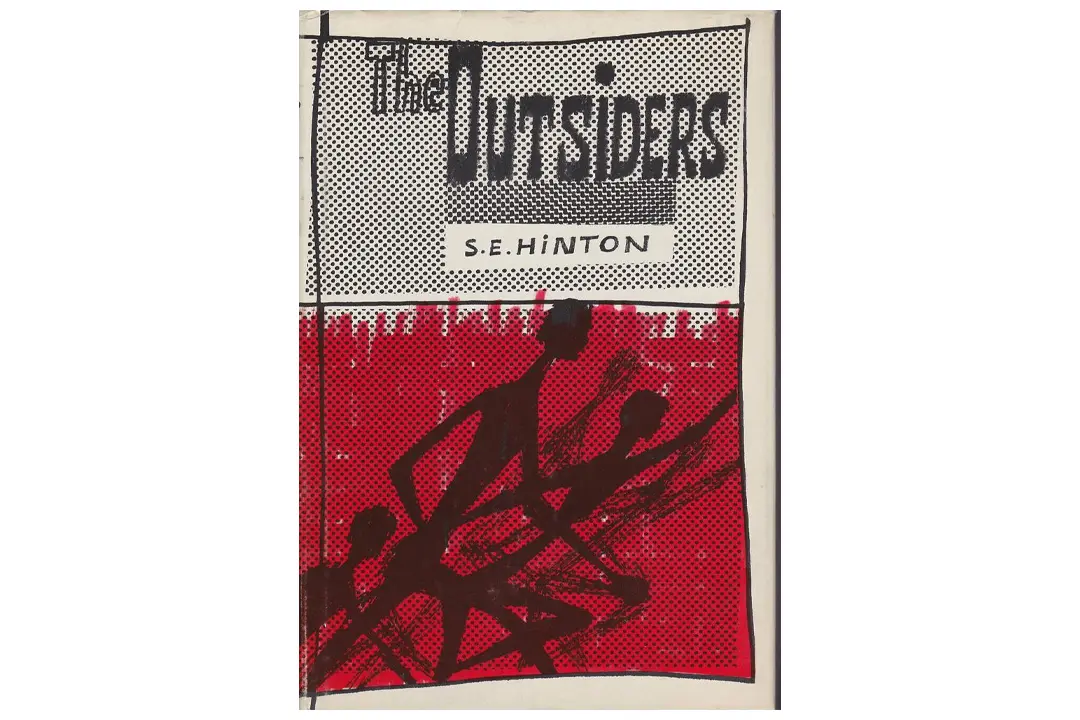
The Outsiders by S.E. Hinton: Book Summary
Beverly Ashford • 19 Feb 2026 • 90 views • 3 min read.Let me tell you about the novel that a sixteen-year-old girl wrote because she was angry about how teenagers were portrayed in fiction and wanted to tell a story that felt true — and accidentally invented an entire literary genre in the process. Susan Eloise Hinton published The Outsiders in 1967 when she was seventeen years old. She had started writing it at fifteen, angry at the social divisions in her Tulsa high school, frustrated that fiction for teenagers was either sanitized romance or adventure with no connection to the actual texture of adolescent life. She wanted to read something real. When she could not find it, she wrote it. She published under S.E. Hinton because her publisher was concerned that readers would not take a female author seriously writing about male gang members. The initials strategy worked. For years, most readers assumed the author was male. The novel has never gone out of print. It has sold over fourteen million copies. It is taught in middle schools across America and has been credited, along with Go Ask Alice and A Wreath for Udolpho, with establishing that young adult fiction could address violence, death, class, and genuine social reality rather than confining itself to safe topics.
The Outsiders by S.E. Hinton: Book Summary
Quick Summary:
- A fourteen-year-old greaser in 1960s Tulsa navigates gang rivalry, class conflict, and the violent deaths of people he loves — and tries to understand why the world is divided into people who have everything and people who have nothing
- Written when the author was sixteen years old and published in 1967, it became the founding text of young adult fiction as a serious literary form
- Hinton's central argument: class divides people who have more in common than either side can see, and the violence that results destroys the people it was supposed to protect
- A novel about loyalty, loss, and the specific grief of watching people you love die before they had any real chance at life
The World of the Greasers
Ponyboy Curtis is fourteen years old and lives in the East Side of Tulsa with his two older brothers — Darry, twenty, who works construction and has been his legal guardian since their parents died in a car accident; and Sodapop, sixteen, who dropped out of school to work at a gas station and is the most genuinely happy person in the family.
Ponyboy is a greaser — the East Side boys who wear their hair long and greased back, who are working class or poor, who are defined in opposition to the Socs, the West Side kids with money, nice cars, and the social permission to do whatever they want without consequences.
The conflict between greasers and Socs is both genuinely dangerous — the violence is real, the injuries are real, the deaths are real — and genuinely absurd in the way that Ponyboy is old enough to perceive but not old enough to fully articulate. The greasers are not poor because they are inferior. The Socs are not better because they are rich. The two groups exist in opposition because that opposition is the structure both sides have been handed, and neither has the resources or the authority to refuse it.
Ponyboy's gang includes Johnny Cade — small, quiet, permanently frightened, carrying the specific damage of a home where his parents beat him and nobody came; Two-Bit Matthews, who owns a switchblade and makes jokes compulsively; Steve Randle, Sodapop's best friend; Dally Winston, who has been in and out of reform school and carries a coldness that covers something Ponyboy cannot quite name; and the rest of a group that is, whatever its flaws, the closest thing to family most of them have.
The Night Everything Changes
Ponyboy and Johnny are jumped by a group of Socs after Ponyboy walks home from the movies alone — which he was not supposed to do. The attack escalates. Johnny, who was beaten nearly to death by Socs months earlier and has never recovered psychologically from it, kills one of the attackers with a switchblade to stop him from drowning Ponyboy in a fountain.
They run. Dally gives them money and a gun and tells them to hide in an abandoned church in the country outside Windrider. They stay there for five days, reading Gone with the Wind and eating baloney sandwiches, watching sunsets, and existing in a kind of suspended quiet that Hinton writes with genuine tenderness.
When they return, the church is on fire. Children from a school field trip are trapped inside. Ponyboy and Johnny go in without discussing it. They get the children out. A burning beam falls on Johnny. He is carried out alive but with a broken back and severe burns. He will not recover.
The Rumble and What Follows
The greasers win the rumble — the organized fight between the two groups that was supposed to settle things, which settles nothing. Ponyboy goes to tell Johnny they won. Johnny dies before he can finish hearing it. Dally, who loved Johnny more completely than he had ever loved anything, runs from the hospital, robs a store, pulls an unloaded gun on the police, and is shot dead in the street.
Ponyboy is fourteen years old and has watched two of his closest friends die in the same night.
The novel's final section follows Ponyboy through the aftermath — the hearing about the killing, the slow return to school, the specific numbing that follows concentrated grief. His grades fall. He cannot concentrate. He gets into a fight he barely remembers. Darry, who has been rigid and demanding throughout the novel in ways Ponyboy has read as not caring, turns out to have been rigid and demanding because he is twenty years old and terrified of failing the brothers he is responsible for.
Johnny's Letter
Johnny left a note for Ponyboy that he wrote while he was dying. He tells Ponyboy that he does not regret saving the children — that it was worth it. He tells him to stay gold — a reference to the Robert Frost poem that Ponyboy had recited to him in the church while watching sunrises. Nothing gold can stay. The poem is about innocence and how it ends. Johnny is telling Ponyboy to fight to keep his.
Ponyboy's response to the note is the novel. He decides to write down everything that happened, starting from the beginning, so that other kids like them — kids on the outside of everything — will know that someone understood what their life was like.
The first line of his account is the first line of the novel.
The Two Worlds Compared
| Dimension | Greasers | Socs |
|---|---|---|
| Economic position | Working class and poor, East Side | Affluent, West Side |
| Social permission | None — any violence they commit is prosecuted | Significant — their violence is treated as boys being boys |
| Defining characteristic | Greased hair, loyalty to the group | Madras shirts, cars, money |
| What they fight for | Survival, territory, pride | Entertainment, dominance, boredom |
| What unifies them | Shared poverty and the threat of the Socs | Shared wealth and contempt for greasers |
| What they have in common | More than either side recognizes | More than either side recognizes |
| Cost of the conflict | Deaths, prison, futures foreclosed | Mostly none — the system absorbs their violence |
Frequently Asked Questions
Why did Hinton publish under initials?
Her publisher Viking Press suggested it — the concern was that male readers and male gatekeepers in the late 1960s would not take a female author writing about male gang violence seriously. The strategy worked commercially. Hinton has been public about this history and has discussed it as both a practical decision that helped the book reach its audience and an example of the gender dynamics that shaped publishing at the time.
Is this appropriate for young readers?
It is typically taught in grades six through eight — ages eleven to fourteen. The violence is present and not sanitized: characters are beaten, stabbed, and shot. The deaths of Johnny and Dally are handled with emotional directness. Most educators and parents consider the content appropriate for middle school given the seriousness with which it treats its subject matter and the absence of gratuitous detail.
How does the 1983 Francis Ford Coppola film compare?
The film is unusually faithful — Coppola shot the entire novel and then released two versions, a theatrical cut and The Outsiders: The Complete Novel version restored in 2005. The ensemble cast — Tom Cruise, Patrick Swayze, Matt Dillon, Rob Lowe, Emilio Estevez, Ralph Macchio, C. Thomas Howell — became one of the defining Hollywood moments for that generation of young actors. Both the film and the novel reward engagement.
What does stay gold mean?
It is Ponyboy's quotation of Robert Frost's poem Nothing Gold Can Stay — about how the first green of spring is gold, how Eden sank to grief, how dawn fades into day. Nothing gold can stay. Johnny uses it to tell Ponyboy to hold onto his sensitivity and his capacity for wonder — the qualities that distinguish him from the hardness that survival in their world requires. It is the novel's central instruction and its deepest hope.
Is the Socs versus greasers conflict dated?
The specific 1960s Tulsa markers are period-specific. The dynamic — two groups defined in opposition by class, each blaming the other for violence that the system generates, each unable to see across the divide clearly enough to recognize their common ground — is not dated at all. Readers in every decade have found the class conflict immediately recognizable regardless of the specific surface details.
What should I read next?
That Was Then, This Is Now is Hinton's follow-up novel, continuing into the aftermath of The Outsiders with Ponyboy's world and Sodapop's best friend. Rumble Fish, also by Hinton, is darker and more formally experimental. A Separate Peace by John Knowles covers similar territory — adolescent male friendship, violence, the loss of innocence — in a different class register. The Perks of Being a Wallflower by Stephen Chbosky is the novel that picks up the YA tradition Hinton established and carries it into the 1990s.
The Bottom Line
Here is what a fifteen-year-old girl in Tulsa actually understood and put on paper.
Not a gang novel. Not a nostalgia piece about 1960s adolescence. A novel about what class does to young people who did not choose their position in the hierarchy and have no mechanism to leave it — and about the violence that results when the only available response to being on the wrong side of every system is to be harder than the system requires you to be.
Johnny Cade was gentle. The world he was born into had no use for gentle. He was beaten by his parents and nearly beaten to death by Socs before he died at sixteen with a broken back in a hospital, telling Ponyboy to stay gold.
Dally Winston was hard in the way that survival had made him hard. When the one thing he loved was gone, the hardness had nothing left to protect.
Ponyboy Curtis is fourteen years old and writing it all down because Johnny told him to, because someone has to say that the kids on the outside were real and their lives mattered and the gold they carried was worth something even if the world they lived in could not see it.
Stay gold.
Hinton was sixteen when she wrote that.
She was right.