
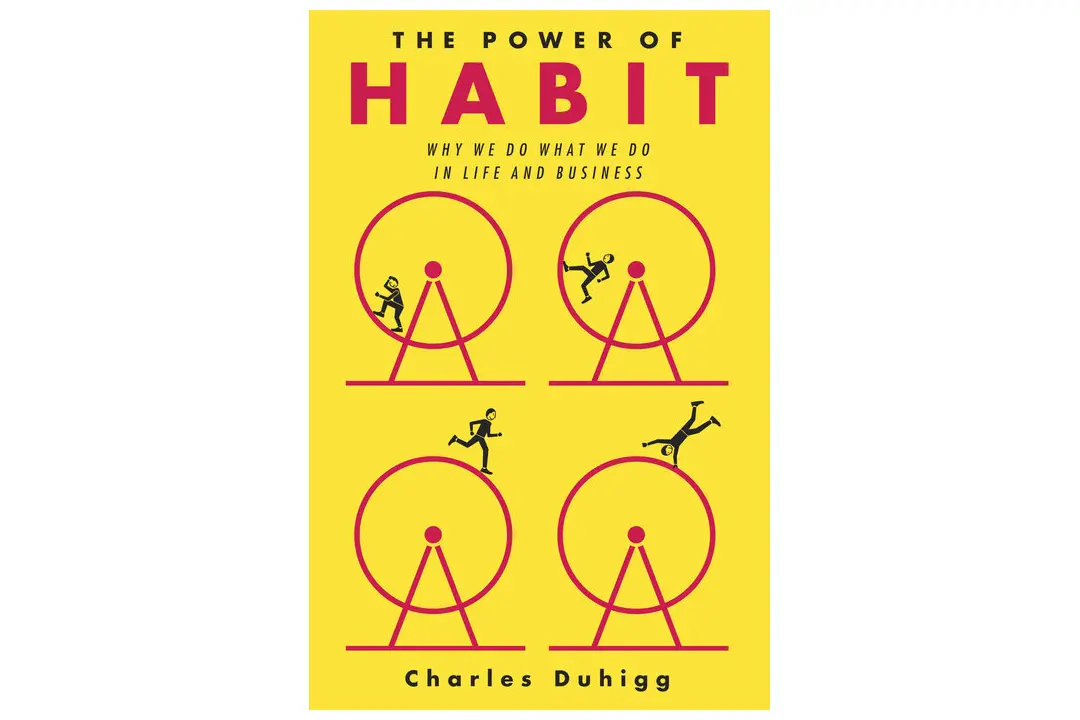
The Power of Habit by Charles Duhigg: Book Summary
Beverly Ashford • 13 Mar 2026 • 72 views • 3 min read.Let me tell you about the book that will make you look at your afternoon cookie, your morning scroll, and your evening glass of wine completely differently — and give you an actual mechanism for changing them rather than just feeling guilty. Charles Duhigg published The Power of Habit in 2012. He is an investigative journalist who spent years at The New York Times covering business and science. He got interested in habits while reporting from Iraq, where he learned that military officers were using habit research to reduce violence in cities. That combination — neuroscience, military strategy, and behavior change — sent him down a research path that became this book. What Duhigg found is that habits are not mysterious or willpower-dependent in the way most people assume. They are mechanical. They follow a specific neurological pattern that the brain uses to conserve energy. And once you understand the pattern, you can work with it rather than against it.
The Power of Habit by Charles Duhigg: Book Summary
Quick Summary:
- A Pulitzer Prize-winning journalist explains the neurological loop that drives every habit — and how to rewire it
- Published in 2012, it translated decades of behavioral science into one of the most practical frameworks for personal change ever written
- Duhigg's central claim: habits are not character flaws or willpower failures — they are neurological patterns that can be understood and deliberately changed
- A book that covers individual habits, organizational habits, and societal habits with equal clarity and equal ambition
The Habit Loop
Everything in the book builds on one foundational concept: the habit loop. Every habit — without exception — follows a three-part structure.
The cue is the trigger that initiates the habit. It can be a time of day, a location, an emotional state, the presence of certain people, or a preceding behavior. The cue is what tells the brain to run the habit routine automatically.
The routine is the behavior itself — the action, physical or mental, that the habit produces. This is the part people usually think of when they think about habits. But Duhigg argues the routine is actually the least important element for understanding how to change habits.
The reward is what the brain receives at the end of the routine — the signal that tells it the loop is worth running again. Rewards can be physical (food, pleasure, relief from pain), emotional (sense of accomplishment, belonging, power), or neurochemical (dopamine release).
The brain records successful loops — cue, routine, reward — and gradually automates them. Over time, the loop becomes so ingrained that the cue alone triggers craving for the reward, and the routine runs automatically without conscious decision. This is why habits are so persistent and why willpower-based attempts to stop them usually fail: you are fighting a neurological automation, not a conscious choice.
The Golden Rule of Habit Change
The most practical insight in the book comes from research on habit reversal. You cannot extinguish a habit. The neurological pathway, once formed, does not disappear. What you can do is reroute it.
Duhigg calls this the Golden Rule: keep the cue and the reward the same, and change only the routine.
This works because the cue-reward relationship is what maintains the loop. The craving the cue triggers is a craving for the reward, not for the routine specifically. If a new routine delivers the same reward in response to the same cue, the brain accepts the substitution.
He illustrates this with Alcoholics Anonymous, which he argues works — to the extent it works — not through willpower or moral instruction but through habit substitution. AA provides a community and a meeting structure (new routine) that delivers belonging, acknowledgment, and stress relief (same rewards) in response to the same emotional triggers (same cues) that previously led to drinking. The underlying craving is not for alcohol. It is for whatever the alcohol was providing. Find a new routine that provides it and the loop can be rerouted.
Keystone Habits
Not all habits are equal. Duhigg introduces the concept of keystone habits — habits that, when changed, trigger cascading changes in other areas of life without direct effort.
Exercise is the most well-documented keystone habit. Research consistently shows that people who begin exercising regularly — even modestly — tend to eat better, sleep more consistently, procrastinate less, and feel more patient with coworkers and family. Nobody told them to make these changes. The exercise habit, by changing how they felt and how they saw themselves, made the other changes more likely.
For organizations, keystone habits operate similarly. Duhigg's most compelling organizational case study involves Paul O'Neill, who became CEO of Alcoa in 1987 and announced — to the horror of investors expecting a cost-cutting strategy — that his single focus would be worker safety. Safety was his keystone habit for the entire organization. Pursuing it required changing communication patterns, accountability structures, and operational processes throughout the company. These changes, made in service of safety, happened to also transform Alcoa's efficiency and profitability. Within a year the company had record profits. Within a decade it was one of the most valuable in the world.
The keystone habit approach works because it creates small wins — early successes that generate the belief that change is possible and establish the infrastructure for more change. You do not fix everything. You find the one habit that, if changed, makes fixing everything else more likely.
Willpower as a Habit
The book's treatment of willpower is one of its most counterintuitive sections. Duhigg draws on research showing that willpower is a finite resource — it depletes with use, like a muscle that fatigues. People who exercise high willpower in one domain have less available in others, which is why decision fatigue is real and why good behavior in the morning often deteriorates by evening.
But — and this is the key insight — willpower can be trained like a muscle. And the most effective way to train it is not through brute force resistance but through building habits that make willpower unnecessary. When the right behavior is automatic, willpower is not required. The goal is to build enough habits that your default behaviors are the ones you actually want.
The research on implementation intentions — specific if-then plans for handling anticipated obstacles — shows significant improvement in willpower outcomes. People who decide in advance exactly what they will do when faced with a specific temptation or setback are dramatically more successful than people who simply resolve to resist. The plan replaces the in-the-moment willpower requirement with a pre-made decision.
Habit Loop Components Compared
| Element | What It Is | Example: Morning Coffee | Example: Evening Snacking | How to Change It |
|---|---|---|---|---|
| Cue | Trigger that starts the habit | Alarm goes off, feet hit floor | Sitting on couch after dinner | Identify precisely — time, emotion, location |
| Routine | The automatic behavior | Grind beans, brew, drink | Walk to kitchen, find snacks | The only element you can substitute |
| Reward | What the brain receives | Alertness, warmth, ritual comfort | Distraction from stress, taste pleasure | Understand what you actually crave |
| Craving | What connects cue to routine | Anticipation of alertness begins at alarm | Stress relief craving begins when sitting | The engine driving the loop |
| Belief | Required for lasting change | Believing routine can change | Believing alternatives can satisfy | Often requires community or identity shift |
Frequently Asked Questions
How is this different from Atomic Habits by James Clear?
Atomic Habits is more prescriptive — Clear provides a specific system for building and breaking habits. The Power of Habit is more explanatory — Duhigg wants you to understand the mechanism before prescribing solutions. They complement each other well. Read Duhigg first to understand the why, then Clear for the how.
How long does it actually take to form a habit?
Duhigg does not give a specific number because the research does not support one — the popular claim of twenty-one days comes from a misreading of a 1960 plastic surgery study. More rigorous research suggests the range is forty to sixty-six days for simple habits, longer for complex ones, with enormous individual variation. The consistency of the loop matters more than the calendar duration.
Does this work for serious addictions?
Duhigg discusses addiction specifically. The habit loop framework applies — addictions are deeply ingrained habit loops with powerful neurochemical rewards — but serious addiction involves additional physiological dependencies that require clinical support beyond habit substitution. He is not arguing that understanding the loop is sufficient for addiction recovery. He is arguing that it is necessary.
What if I cannot identify my cue or reward?
Duhigg provides a practical diagnostic. For cues, track five elements at the moment the habit impulse strikes: location, time, emotional state, other people present, and the preceding action. Patterns emerge quickly. For rewards, experiment with substitutions that satisfy different underlying needs — if the reward is stress relief, test alternatives that provide stress relief. If it is social connection, test alternatives that provide connection. The one that reduces craving reveals the actual reward.
Can organizations really have habits?
Duhigg argues yes and devotes significant attention to organizational habit research. Organizational habits are the routinized patterns — how decisions get made, how information flows, how conflict gets handled — that operate automatically without deliberate choice. They emerge from repeated patterns and become as resistant to change as individual habits. The most effective organizational change, his research suggests, works through the same cue-routine-reward substitution that individual habit change requires.
What should I read next?
Atomic Habits by James Clear is the natural follow-up for a practical implementation system. Thinking, Fast and Slow by Kahneman contextualizes habit within the broader System 1 and System 2 framework. The Willpower Instinct by Kelly McGonigal goes deeper on the science of self-control that Duhigg introduces.
The Bottom Line
Here is what Charles Duhigg actually discovered.
You are not your habits. But your habits are shaping you — automatically, neurologically, without your conscious participation — for the majority of your waking hours.
The brain automates repeated patterns to conserve energy. This is efficient and largely useful. It is also why change is hard: you are not fighting a decision. You are fighting an automation built over months or years of repetition.
The good news is that the automation follows rules. Cue, routine, reward. The cue triggers craving for the reward. The routine delivers it. Change the routine, keep the cue and reward, and the loop reroutes.
This does not make change easy. It makes it possible in a way that willpower and motivation alone cannot sustain.
You cannot want your way out of a habit loop.
But you can understand it, work with its structure, and redirect it toward something you actually chose.
That is the difference between hoping to change and actually changing.