
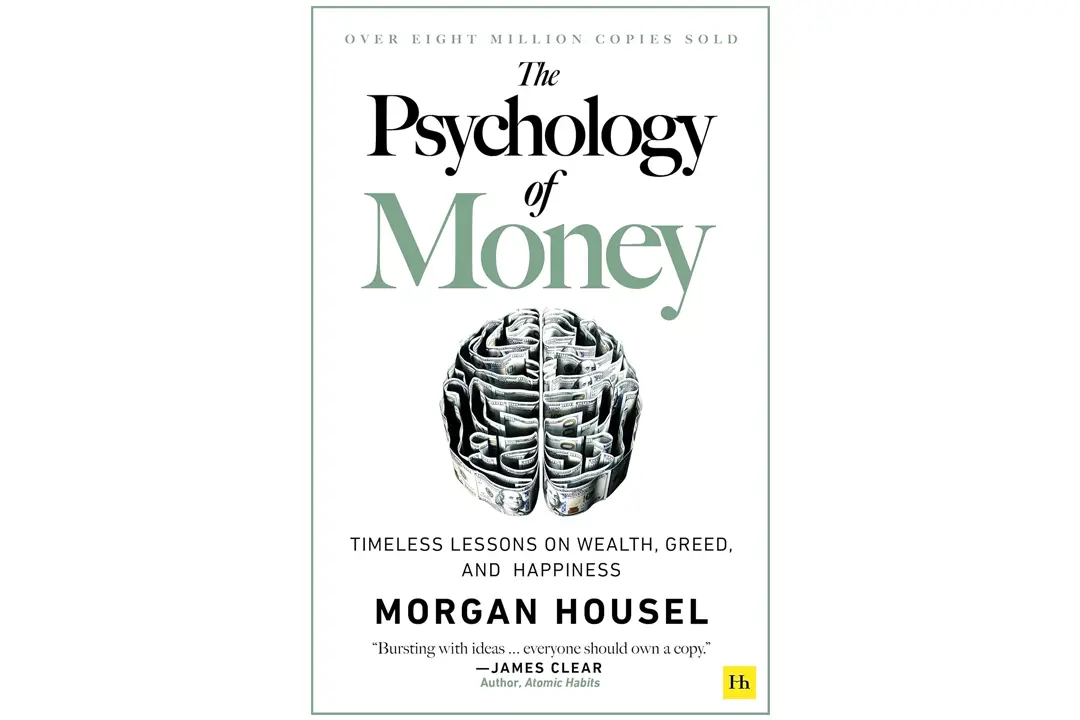
The Psychology of Money – Morgan Housel: Book Summary
Beverly Ashford • 11 Mar 2026 • 75 views • 3 min read.Let me tell you why this book changed how I think about money. Morgan Housel didn't write another investment guide. He wrote a book about people—how they think, feel, and make decisions about money. The insight isn't that you need better spreadsheets. It's that you need to understand your own psychology. Financial advice usually assumes humans are rational calculators. We're not. We're emotional, inconsistent, shaped by our histories in ways we barely understand. Until you acknowledge that, no amount of financial literacy helps. This is the book that takes human irrationality seriously.
The Psychology of Money – Morgan Housel: Book Summary
Quick Summary:
- Financial success is more about behavior than intelligence
- Your personal history shapes how you think about money
- Wealth is what you don't see—what you don't spend
- Published in 2020, it became the most recommended finance book of the decade
The Core Insight
Here's Housel's fundamental point: Doing well with money has little to do with how smart you are and everything to do with how you behave.
A genius who can't control impulses will underperform. A person of average intelligence who understands patience and risk will outperform. The behavioral game matters more than the intellectual one.
This explains why financial success is so unpredictable. It's not about finding the right formula. It's about maintaining the right behavior through decades of temptation, fear, and boredom.
The book is organized into 20 short chapters, each exploring a different aspect of money psychology. Here are the ideas that matter most.
Nobody's Crazy
Your personal history shapes your financial worldview in ways you can't fully see.
Someone who grew up during the Great Depression has different instincts than someone who came of age during the 1990s boom. A person raised in poverty has different risk tolerance than someone raised wealthy. None of these perspectives are "right"—they're just different.
The implication: Stop judging others' financial decisions. Their experience taught them something different than yours taught you. What looks crazy from outside often makes sense from inside.
The extension: Examine your own assumptions. Your financial instincts come from somewhere. They might not serve your current situation.
Luck and Risk
Bill Gates went to one of the only high schools in the world with a computer in 1968. Kent Evans, his equally talented classmate, died in a mountaineering accident before graduating.
Luck and risk are siblings. They're both acknowledgments that outcomes aren't entirely determined by effort and intelligence. Every successful person benefited from luck. Every failure was touched by risk.
The danger: We attribute others' success to luck and our own to skill. We attribute others' failures to their mistakes and our own to bad luck. Both directions are wrong.
The application: Be careful who you idolize and who you look down on. Be humble about your successes. Be forgiving about your failures.
Never Enough
Rajat Gupta was worth $100 million and went to prison for insider trading to make more. Bernie Madoff had more money than he could spend and destroyed thousands of lives for more.
The goalpost moves. No amount is ever enough for some people.
The lesson: Know when you have enough. Moving the goalpost is the only guaranteed way to never be satisfied. Happiness requires stopping at some point and saying "this is enough."
The risk: Social comparison is poisonous. Your neighbor, your classmate, the person on Instagram—there will always be someone with more. Comparison destroys contentment faster than money creates it.
The Key Concepts
| Concept | What It Means | Why It Matters |
|---|---|---|
| Behavior > Intelligence | Doing well with money is behavioral | Stop looking for smarter strategies; develop better habits |
| Luck and Risk | Outcomes aren't fully deserved | Stay humble about success, forgiving about failure |
| Never Enough | Goalposts always move | Define "enough" or never be satisfied |
| Compounding | Time matters more than returns | Start early, stay patient |
| Wealth vs. Rich | Rich is current income; wealth is accumulated | What you don't spend determines freedom |
| Tail Events | A few moments determine most outcomes | Survive the downturns, capture the upturns |
| Room for Error | Plan for things going wrong | Margin of safety prevents forced decisions |
| Reasonable > Rational | Be sustainable, not optimal | Do what you can stick with |
Confounding Compounding
Warren Buffett's wealth isn't just about his returns—it's about his time.
He's been investing for over 75 years. If he'd started at 30 instead of 10, with the same returns, he'd have 99% less money. The compounding happened over decades, not through genius stock picks.
The math: A decent return compounded for decades beats an excellent return compounded for a few years. Time is the variable most under your control.
The implication: Start now. Stay invested. Don't interrupt compounding. The best financial decision you can make is simply to give your money more time.
Getting Wealthy vs. Staying Wealthy
Getting wealthy requires optimism, risk-taking, and putting yourself out there.
Staying wealthy requires pessimism, humility, and fear that what you've made can be taken away.
These are contradictory skills. Many people who are great at getting money are terrible at keeping it. They take the same risks that made them wealthy, eventually landing on the wrong side of probability.
The insight: Survival is its own skill. It requires room for error, flexibility, and avoiding single points of failure. Compounding only works if you're still in the game.
Tails, You Win
The majority of outcomes are determined by a tiny number of events.
In investing, most stocks fail. A few become enormous winners. Your success depends on capturing those tail events while surviving the many failures.
In life, a few key decisions—where to live, who to marry, which job to take—determine most of your outcomes. Daily decisions matter less than we think.
The application: Accept that most of what you try won't work. That's fine. You're not trying to be right every time. You're trying to capture the rare wins that define everything.
Freedom
The highest form of wealth isn't stuff—it's control over your time.
Being able to do what you want, when you want, with whom you want, for as long as you want—that's what money should buy. Everything else is inferior.
The trap: Trading money for stuff that impresses others. That new car doesn't give you freedom. It ties you to payments and expectations.
The goal: Use money to buy independence, not accessories. Enough invested that your time becomes yours—that's wealth.
Wealth Is What You Don't See
Rich is easy to see. Nice cars, big houses, expensive clothes.
Wealth is invisible. It's the money not spent. The investment account that doesn't translate into consumption. The assets that compound quietly.
The problem: We want to be wealthy but we measure ourselves against the rich. So we spend to look rich, which prevents us from becoming wealthy.
The insight: Every dollar you spend to look rich is a dollar not working to make you actually wealthy. The tension is unavoidable but worth understanding.
Reasonable > Rational
The mathematically optimal strategy is often not the best strategy.
Why? Because you won't stick with it. A perfectly optimal investment approach that you abandon after six months loses to a suboptimal approach you maintain for thirty years.
The application: Don't try to be perfect. Try to be reasonable. Pick strategies you can stick with through boredom, fear, and temptation. Sustainability beats optimization.
Frequently Asked Questions
Is this a practical investment guide?
No. It's about psychology, not tactics. You won't learn which stocks to buy or how to allocate assets. You'll learn how to think about money.
Who should read this?
Anyone who earns, spends, or saves money—so everyone. It's particularly valuable for people who've felt confused about why they make certain financial decisions.
Is this better than Rich Dad Poor Dad?
Different purposes. Rich Dad Poor Dad shifts mindset about income and assets. Psychology of Money addresses behavior and emotions. Both are valuable; this one is more grounded.
What if I've already read a lot about finance?
You'll still benefit. Housel addresses the emotional layer that technical books ignore. Knowing what to do is easy; knowing how to behave is hard.
Is the writing accessible?
Extremely. Each chapter is short and self-contained. The stories are engaging. You can read the whole book in a few hours.
What should I read after this?
For investing specifics: The Simple Path to Wealth (JL Collins). For behavioral economics: Thinking, Fast and Slow (Kahneman). For habits: Atomic Habits (Clear).
The Bottom Line
Here's what Morgan Housel achieved.
He wrote a finance book that's really about being human. The insights aren't about spreadsheets and returns. They're about patience, humility, survival, and knowing when you have enough.
The single most valuable idea: Wealth is built by the money you don't spend. Freedom comes from assets that compound quietly while you're not trying to impress anyone.
That's counterintuitive in a culture that celebrates spending. But it's true. And understanding why it's true—why we have such trouble with it—is what this book offers.
Financial success isn't about being smarter. It's about behaving better.
Now you know. The hard part is doing it.