
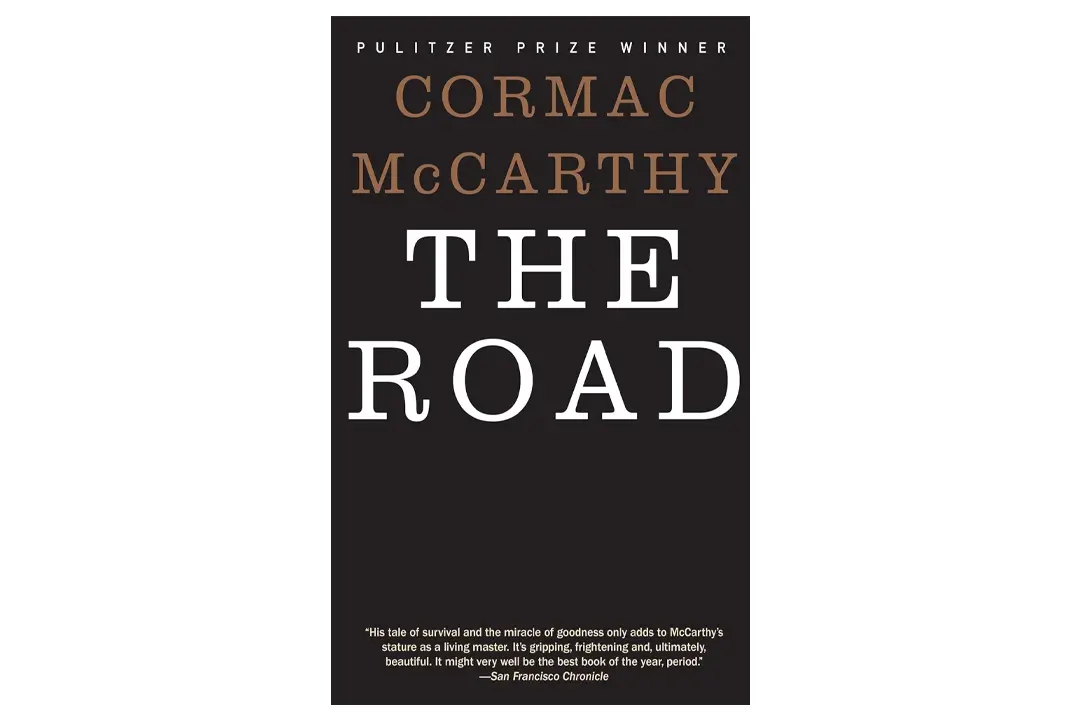
The Road – Cormac McCarthy: Book Summary
Beverly Ashford • 11 Mar 2026 • 74 views • 3 min read.Let me tell you about the most devastating love story ever written. Cormac McCarthy wrote The Road in his seventies, thinking about his young son. He'd built a career on violent, beautiful novels set in the American West. Then he wrote this—a book about a father who would do anything to protect his child in a world that has ended. It's not a fun read. It's frequently horrifying. But it's also, somehow, one of the most hopeful books about human nature ever written. In a world where everything has been taken, love persists. The book won the Pulitzer Prize. Oprah selected it for her book club. Grown men admitted to crying. Here's what you're getting into.
The Road – Cormac McCarthy: Book Summary
Quick Summary:
- A father and son walk through a dead world after an unnamed apocalypse
- They carry "the fire"—hope and moral goodness in absolute darkness
- The novel strips existence down to what matters: love and survival
- Published in 2006, it won the Pulitzer Prize and became McCarthy's most acclaimed work
The World
Something happened. We never learn what—nuclear war, asteroid impact, supervolcano. The cause doesn't matter. The result does.
The world is dead. Trees are burned and fallen. Ash covers everything. The sun barely penetrates the gray sky. Nothing grows. Animals are gone. The ocean is gray and lifeless.
Most humans are dead. Those who survive have become something worse than dead. With no food sources, some have turned to cannibalism. Gangs hunt survivors. People are kept as livestock.
The man and the boy walk south through this wasteland, pushing a shopping cart with their possessions. They're heading toward the coast, hoping the ocean will offer something better. They probably know it won't.
The man is sick. He coughs blood. He's dying. The boy was born after the apocalypse—he's never known the old world. His mother killed herself rather than face what was coming.
They have a pistol with two bullets. One for each of them, if necessary.
The Journey
The novel has no chapters—just scenes separated by white space. Time flows in fragments, like consciousness in trauma.
They scavenge. Abandoned houses, crashed trucks, old stores. Most have been picked clean. Finding food is rare and precious. An underground bunker stocked with canned goods becomes a temporary paradise.
They hide. Other survivors are almost always dangerous. The man won't take chances. They watch roads from cover. They sleep in shifts. They avoid fires that might attract attention.
They encounter horrors. A basement full of people being kept for food. A baby roasting on a spit. A man struck by lightning. Human teeth in the road. McCarthy doesn't linger on these images, but they accumulate.
They have each other. This is the book's center. Their conversations are sparse but full of tenderness. The man tells the boy stories. He promises to protect him. He calls the boy his "warrant"—his reason to continue.
The Characters
| Character | Role | Represents |
|---|---|---|
| The Man | Father, protector | Will, love, mortality |
| The Boy | Son, moral compass | Innocence, hope, "the fire" |
| The Mother | Deceased (flashbacks) | Despair, reasonable surrender |
| The Veteran | Encounter on road | What humanity becomes |
| The Thief | Steals their cart | Desperation, moral testing |
| The Family | End of book | Possibility of community |
The characters have no names. They're archetypes—any father, any son. This universality is deliberate.
"Carrying the Fire"
The central metaphor runs throughout the book.
The boy asks if they're "the good guys." The man says yes. The boy asks how they know. The man says they're "carrying the fire."
The fire is never defined. It's hope. It's moral conscience. It's the refusal to become monsters even when monstrousness offers survival advantages.
The man sometimes fails this standard. He makes a thief strip naked and takes all his possessions—a potential death sentence. The boy objects. The boy, raised in apocalypse, has purer moral instincts than his father.
The boy is the fire. He wants to help strangers. He shares food when they have almost none. He's traumatized but not corrupted. The man's job isn't just to keep the boy alive—it's to protect this goodness so it can exist in whatever comes next.
The Prose
McCarthy's style in The Road is stripped down, almost biblical.
No quotation marks for dialogue. Minimal punctuation. Short sentences. Long passages without traditional paragraph breaks.
The effect is hypnotic and disorienting—you're pushed forward through the ash with them.
Example: "He walked out in the gray light and stood and he saw for a brief moment the absolute truth of the world. The cold relentless circling of the intestate earth. Darkness implacable. The blind dogs of the sun in their running. The crushing black vacuum of the universe."
The prose is both spare and rich. McCarthy finds beauty in devastation. The burned world has its own terrible poetry.
The Ending
The man dies.
He's been dying throughout the book—the cough, the blood, the weakening body. He holds on long enough to get the boy as far as he can.
When the man stops moving, the boy stays with his body for three days. He talks to him. He covers him with a blanket.
Then a family appears. A man, a woman, two children. They've been following the man and boy. They offer to take the boy with them.
The boy asks if they're the good guys. The man says yes.
The boy asks if they carry the fire. The man says yes.
The boy goes with them.
The final paragraph is about trout that used to exist in mountain streams—lives that smelled of moss and hummed with mystery. It's a lament for what's been lost and a reminder that beauty existed once and might again.
What the Book Is Really About
Parenthood. The Road is about what parents carry—the terror of being responsible for someone else's survival, the love that makes you continue when you'd rather stop.
Moral survival. Can you stay good in a world that punishes goodness? The man sometimes can't. The boy always does. The book suggests that morality is worth preserving even when it's costly.
Why go on? The mother asks this and concludes there's no reason. She opts out. The man keeps going—for the boy, for the fire, for something beyond calculation.
Hope without evidence. Nothing in the book suggests the world will recover. The family at the end might not last. But the fire continues. That's the only hope offered—and it's enough.
Frequently Asked Questions
What caused the apocalypse?
McCarthy deliberately doesn't say. The cause is irrelevant to the experience. The focus is on aftermath, not origin.
Is this appropriate for teenagers?
It contains extreme violence, including cannibalism and infanticide (implied). The themes are mature. Some teenagers can handle it; many adults struggle. Know your reader.
Should I watch the movie?
The 2009 film is faithful and well-acted (Viggo Mortensen). But the book's power is in McCarthy's prose. Read first.
Is this nihilistic or hopeful?
Both and neither. The world is destroyed. Most people become monsters. But the fire survives. The ending is ambiguous but not despairing.
How does this compare to McCarthy's other books?
It's more accessible than Blood Meridian, more contemporary than the Border Trilogy. It's his most emotionally direct work.
Why would anyone read something this bleak?
Because it's also beautiful. Because the love at its center is real. Because facing the worst helps clarify what matters. Many readers find it affirming rather than depressing.
The Bottom Line
Here's what Cormac McCarthy achieved.
He wrote about the end of the world and made it about the beginning of love. He stripped existence to its essence—a parent and child moving through darkness—and found meaning there.
The Road argues that goodness doesn't require hope. You carry the fire because it's right, not because you expect reward. You protect innocence even when innocence seems pointless. You continue even when continuation is agony.
The boy asks if they're going to die.
The man says: "Sometime. Not now."
That's enough.