
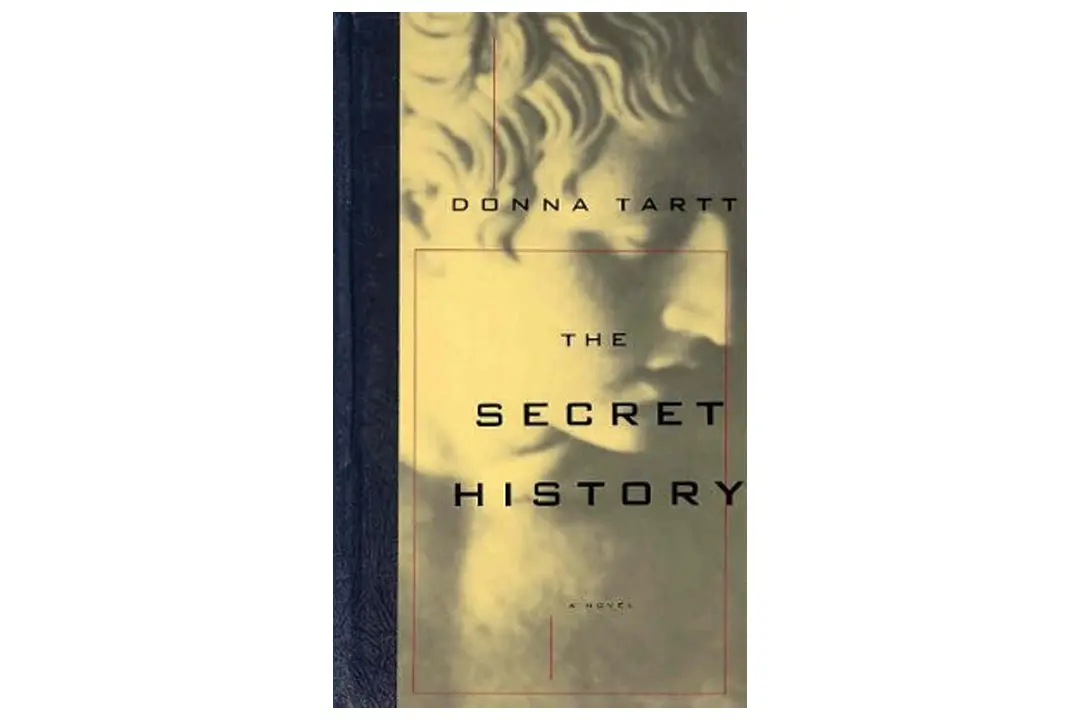
The Secret History by Donna Tartt: Book Summary
Beverly Ashford • 13 Mar 2026 • 90 views • 2 min read.Let me tell you about the book that made brooding intellectuals in oversized coats feel like a personality. Donna Tartt spent ten years writing The Secret History and published it in 1992. It follows a small group of Greek students at an elite Vermont college who are convinced they are smarter, more refined, and more morally evolved than everyone else. They are wrong. And the consequences are devastating. This is not a thriller in the conventional sense. You know who dies and roughly how from the first pages. What Tartt is interested in — and what makes the novel genuinely brilliant — is the long, slow unraveling of people who thought beauty and intellect put them above ordinary consequences.
The Secret History by Donna Tartt: Book Summary
Quick Summary:
- A group of elite college students study ancient Greek — and commit a murder
- You know about the murder from page one; the book explains why
- Published in 1992, it invented the "dark academia" aesthetic
- A slow-burn psychological novel about beauty, guilt, and moral collapse
The Setup
Richard Papen is from a dull California suburb and desperate to be someone else. He transfers to Hampden College in Vermont and discovers a small, exclusive circle of Greek students taught by Julian Morrow — a charismatic, manipulative professor who treats his classroom like a private salon and his students like disciples.
The group includes Henry, cold and methodical; the twins Charles and Camilla; the sloppy and increasingly dangerous Bunny; and the sensitive Francis. Richard works his way in. He wants what they have: elegance, mystery, a sense of living inside something meaningful.
What he slowly learns is that they are already carrying a secret. During a Dionysian ritual experiment — an attempt to achieve the ecstatic madness the ancient Greeks wrote about — a local farmer was killed. Not murdered exactly. It happened in a frenzy. But someone died, and the group buried it.
The Real Plot
Bunny found out about the farmer. He has been using that knowledge as casual, grinding leverage ever since — borrowing money, making demands, getting more reckless and unpredictable. The group concludes he cannot be managed anymore.
So they push him off a cliff. Early in the book.
This is where Tartt's real interest begins. The murder of Bunny is not the climax. It is the starting point. The rest of the novel follows what guilt, paranoia, shared complicity, and the collapse of trust do to five people who believed they were exceptional. The answer is: everything. It does everything to them.
What the Book Is Really About
The Secret History is a sustained argument against the idea that intelligence exempts you from consequence. Julian's teaching — that beauty and goodness are the same, that the pursuit of aesthetic and intellectual perfection is a moral act — is genuinely seductive. Henry takes it literally. If beauty justifies everything, murder can be rationalized if the thinking is elegant enough.
It does not hold up. The rationalizations crack. The friendships collapse under pressure. Charles drinks himself to pieces. Camilla becomes unreachable. Henry makes one final decision that is equal parts logical and devastating. Richard ends the book alone, having gained entry to something that destroyed everything it touched.
The class anxiety running underneath everything is equally important. Richard has been performing since before the novel starts. He invented a better version of his background, his family, his past. He is an unreliable narrator partly because he cannot stop lying — even to himself, even at the end.
The Dark Academia Blueprint
If you have ever seen the aesthetic — rainy libraries, Greek philosophy, candles, morally questionable decisions dressed up as intellectual rigor — this book created it. Everything from the tortoiseshell glasses to the obsession with classical antiquity flows directly from Tartt's novel.
That aesthetic is beautiful and the book knows it. It also knows the aesthetic is a trap.
Character Comparison Table
| Character | Role | Fatal Flaw | Fate |
|---|---|---|---|
| Richard Papen | Narrator, outsider | Self-deception, passivity | Survives, isolated |
| Henry Winter | The ringleader | Believes he is above morality | Dies by own hand |
| Bunny Corcoran | The victim | Recklessness and cruelty | Murdered by the group |
| Charles Macaulay | The twin | Cannot handle guilt | Alcoholism and breakdown |
| Camilla Macaulay | The other twin | Loyalty to Henry over herself | Survives, emotionally destroyed |
| Francis Abernathy | The peripheral one | Weakness and compliance | Survives, broken |
| Julian Morrow | The professor | Cowardice dressed as elegance | Disappears when confronted |
Frequently Asked Questions
Is this a mystery novel?
Not in the traditional sense. You know who dies and who did it from the opening pages. The book is psychological fiction — closer to a character study of moral collapse than a whodunit.
Is it slow?
Yes, intentionally. Tartt is building atmosphere and dread. The first hundred pages feel like setup. The payoff is real, but impatient readers sometimes bounce. Give it time.
What is dark academia and did this book really start it?
Dark academia is an aesthetic and literary genre built around elite academic settings, classical learning, and moral ambiguity. The Secret History is widely credited as the founding text. If the genre interests you, this is the place to start.
Is Julian Morrow the villain?
He is partly responsible and entirely cowardly. He cultivates a cult-like environment, disappears when confronted with what his students have done, and refuses accountability. Whether that makes him a villain depends on how you define the word.
How does it compare to Tartt's other novels?
The Goldfinch won the Pulitzer Prize and is longer and more sprawling. The Little Friend is darker and less resolved. Most readers consider The Secret History her most tightly constructed work.
Should I watch or read anything alongside it?
The film Dead Poets Society covers similar territory about charismatic teachers and impressionable students, though with a very different tone. If you want more dark academia fiction, consider If We Were Villains by M.L. Rio — it is essentially a direct descendant of this novel.
The Bottom Line
Here is what Donna Tartt actually wrote.
Not a murder mystery. Not a campus thriller. A long, elegant, deeply uncomfortable argument that the most dangerous ideas are the beautiful ones — the ones that make you feel chosen, elevated, and exempt from ordinary human rules.
The Secret History is about what happens when smart people convince themselves that their intelligence is a moral quality. It is not. Intelligence is neutral. What you do with it is everything.
Richard Papen wanted to belong to something extraordinary. He got his wish.
It cost him everything that mattered.