
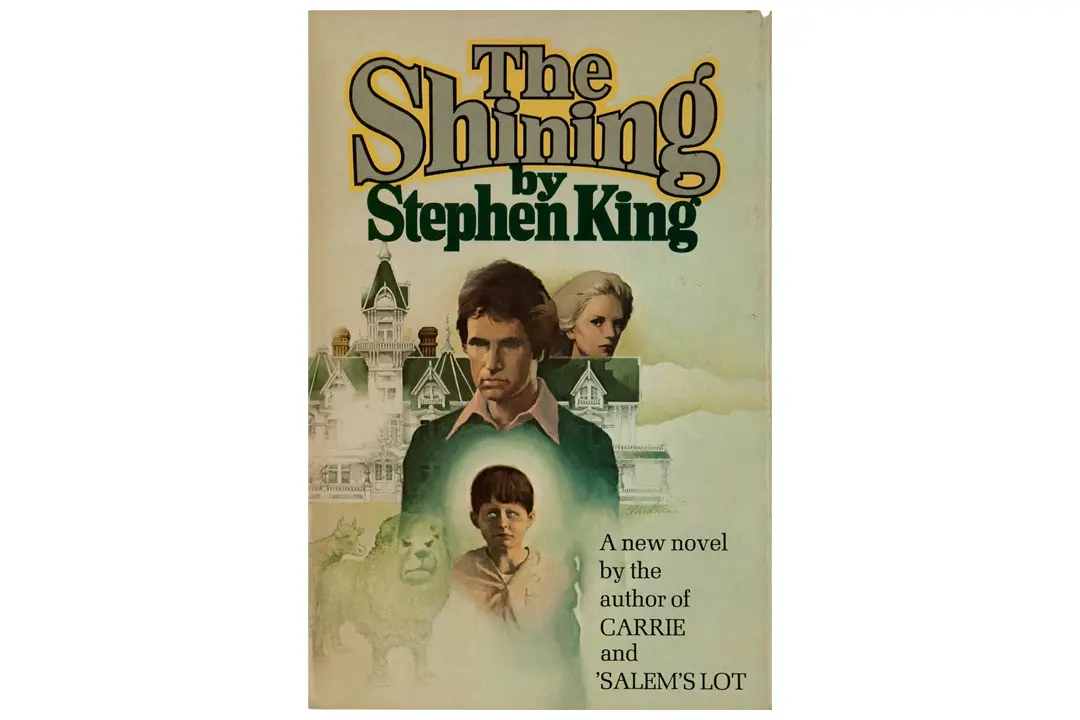
The Shining by Stephen King: Book Summary
Beverly Ashford • 02 Mar 2026 • 85 views • 3 min read.Let me tell you about the horror novel that Stephen King wrote about himself and then spent decades arguing was misunderstood by the most famous film adaptation ever made from his work. King published The Shining in 1977. He was twenty-nine years old, drinking heavily, struggling with his own capacity for rage toward his family, and aware that the line between the father he wanted to be and the father he was sometimes afraid of becoming was thinner than he liked. He took those fears, put them in a haunted hotel in the Colorado mountains, and let them run. The result is the novel that made him a serious literary figure to readers who had been dismissing him as a genre entertainer. It is also the novel that Stanley Kubrick adapted into one of the most celebrated horror films in cinema history — an adaptation King publicly disliked for reasons that, once you understand what the book is actually about, make complete sense.
The Shining by Stephen King: Book Summary
Quick Summary:
- A recovering alcoholic writer takes a winter caretaker job at an isolated Colorado hotel with his wife and five-year-old son — and the hotel wants them dead
- Published in 1977, it remains King's most psychologically complex horror novel and the book he has the most complicated feelings about
- King's central argument: the most frightening thing is not the supernatural — it is watching a good man become capable of destroying what he loves most
- A novel about addiction, abuse cycles, creative failure, and the specific terror of a child who can see things adults cannot
The Setup
Jack Torrance is a former prep school English teacher who lost his job after assaulting a student. He is a recovering alcoholic, a writer who has not finished anything in years, and a man who once broke his five-year-old son Danny's arm in a moment of drunken rage. He has been sober for over a year. He loves his family. He is also aware that something in him is capable of violence he does not want to be capable of.
He takes the job as winter caretaker of the Overlook Hotel in the Colorado Rockies — a massive resort that closes from October to May because the mountain roads become impassable. The previous caretaker, a man named Delbert Grady, went insane during the winter and killed his family with a roque mallet before killing himself.
Wendy Torrance knows about Jack's drinking and about Danny's arm. She has stayed because she believes in the man Jack is trying to be. She is not naive — she is someone who has made a specific calculation about love and risk and is living with the consequences.
Danny Torrance is five years old and has what the hotel's cook Dick Hallorann calls the shining — a psychic ability to read emotions, see the recent past and near future, and communicate telepathically. He has a dissociated alternate personality he calls Tony who appears to warn him about danger. Before the family drives to the Overlook, Tony shows Danny something in the hotel's room 217 that terrifies him so completely he cannot describe it.
The Overlook Hotel
King's hotel is one of the great locations in American horror fiction — not because it is old and dark and full of secrets, though it is all of those things, but because King gives it a specific history that makes its evil comprehensible rather than arbitrary.
The Overlook was built on a Native American burial ground. It has hosted gangsters, presidents, celebrities, and criminals. A woman died in room 217. A party in the Gold Ballroom ended in a massacre. The hedge animals on the grounds move when you are not looking directly at them. The hotel has been absorbing violence and misery for decades, and it has developed — King is explicit about this — something like an appetite.
What the Overlook wants is Danny's shine. What it needs to get Danny is Jack. The hotel does not create Jack's capacity for violence. It finds it, cultivates it, feeds it, and eventually weaponizes it. This distinction is crucial to understanding what the novel is actually about.
Jack's Deterioration
The novel's horror is almost entirely psychological in its early stages. The Overlook works on Jack through the things he already carries — his resentment of Wendy's family money and their subtle condescension, his shame about Danny's arm and his drinking, his creative failure and the sense that the novel he is supposed to write at the Overlook is going nowhere, his feeling that the world has not given him what he deserved.
The hotel offers him validation. The ghost of Delbert Grady — elegant, attentive, apparently sane — treats Jack as the most important person in the room. The bar in the Gold Ballroom produces real liquor despite being supposedly unstocked. The hotel tells Jack, in the language of his own worst impulses, that his family is the problem — that Wendy's weakness and Danny's difference are what have been holding him back, that a real man would correct this.
King shows the deterioration in Jack's internal voice — the way his thoughts shift from a man fighting his worst impulses to a man who has stopped fighting them, the specific language of self-justification that addiction and abuse produce, the way love and rage can coexist in the same person until one overwhelms the other.
Danny and Dick Hallorann
Danny's subplot is the novel's moral center. He knows something is wrong at the Overlook before anyone else does. He experiences its horrors directly — room 217, the woman in the bathtub, the fire hose that moves in the corridor — and he processes them with a five-year-old's limited framework but a psychic's complete information.
Dick Hallorann is the Overlook's cook, an older Black man from Florida who recognizes Danny's shine immediately because he has it himself. Before leaving for the winter he gives Danny the most important advice in the novel: the things you see here, most of them are like pictures in a book. They cannot hurt you. Most of them.
The exception — things that have enough power to interact with the physical world — becomes the novel's climax. Hallorann's journey back to the Overlook after receiving Danny's psychic distress call is structured as a race against time and weather that King executes with genuine suspense.
Key Characters Compared
| Character | Core Fear | What the Overlook Offers | What It Actually Does |
|---|---|---|---|
| Jack Torrance | That he is his abusive father | Validation, creative success, permission for rage | Amplifies his worst impulses until he cannot distinguish them from himself |
| Wendy Torrance | That love is not enough to save someone | Nothing — the hotel has no use for her except as obstacle | Terrorizes her to isolate Jack and Danny |
| Danny Torrance | That his father will hurt him again | Nothing — the hotel wants him, not his cooperation | Uses his shine against him while trying to claim it |
| Dick Hallorann | Irrelevance, being too far away to help | Nothing — he is outside the hotel's reach until he returns | Punishes him for returning to help Danny |
| The Overlook | Emptiness between seasons | Decades of accumulated violence and misery | Has become something that feeds on psychic energy and human suffering |
Frequently Asked Questions
Why does King dislike the Kubrick film?
King's objections are specific and consistent. Kubrick's Jack Nicholson performance presents Jack as already unhinged from the opening scenes — which removes the tragedy of a good man's deterioration and replaces it with the story of a crazy man getting crazier. Kubrick also minimized Wendy to a screaming victim and eliminated the novel's emotional core: Jack's love for his family and the genuine horror of watching that love become weaponized. King felt the film was technically brilliant and emotionally dishonest.
Is the novel scarier than the film?
They are frightening in different ways. The film's imagery — the Grady twins, the blood elevator, Room 237 — is visually iconic and produces the kind of fright that stays as images. The novel's horror is more psychological and more sustained — the dread comes from being inside Jack's deteriorating mind and from the specific texture of a child who understands more than he can process. Most readers find the novel more emotionally disturbing.
What is the significance of room 217?
In the novel it is 217, changed to 237 in the film because the real hotel used as visual reference did not want guests afraid of an actual room. The room is where a woman died — her ghost is one of the Overlook's most active — and represents the hotel's direct assault on Danny. What happens in that room is the moment the novel shifts from psychological dread to something more physically threatening.
Is The Shining autobiographical?
King has been explicit that Jack Torrance is a version of himself — the drinking, the creative struggle, the fear of his own rage, the awareness of patterns he did not want to repeat. He was sober when he wrote the novel and has said he was working through his fears about what he might become. He later addressed his own alcoholism directly in the memoir On Writing.
How does Doctor Sleep — the sequel — change the original?
Doctor Sleep follows an adult Danny Torrance who has inherited his father's alcoholism and is working through his own recovery. King uses the sequel to complete Jack's arc — the question of whether a man defined by his worst moments can be understood as more than those moments — in ways the original deliberately left unresolved. The sequel adds warmth and resolution that the original novel specifically denied.
What should I read next?
Doctor Sleep by King is the direct continuation. The Haunting of Hill House by Shirley Jackson is the literary ancestor — the haunted house novel The Shining is partly in conversation with, and considerably more restrained in its horror. Pet Sematary by King is his own scariest novel by his assessment — darker and less redemptive than The Shining, operating on grief rather than addiction.
The Bottom Line
Here is what Stephen King actually wrote in 1977 about his own worst fears.
Not a haunted house story, though it contains one. A portrait of what happens when a man who loves his family carries something broken inside him into an environment designed to find that break and widen it.
The Overlook does not make Jack Torrance violent. It finds the violence already there — the broken arm, the drinking, the rage at a world that has not given him what he felt he deserved — and it tells him that violence is not something to be ashamed of but something to be completed.
Jack loves Danny. That love is real throughout the novel, even as it becomes unrecognizable. The horror is not that a monster came for a child. It is that a father did — and that the father and the monster are the same person, and that the person never stopped being both.
Danny survives. Dick Hallorann comes. The Overlook burns.
But King does not let it end cleanly. The final image is not triumph. It is a child carrying something he will spend his life learning to live with — which is what children of alcoholics and abusive parents actually carry, and what King was afraid his own children might carry if he did not get well.
He did get well. Eventually.
The novel is what he wrote before he knew he would.