
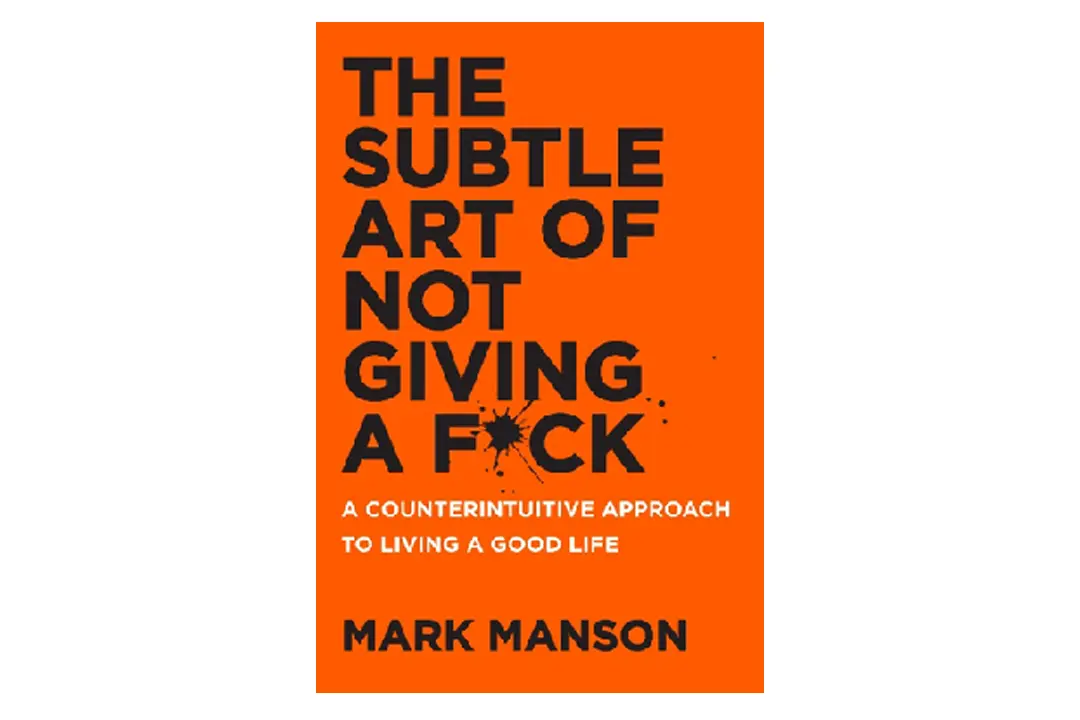
The Subtle Art of Not Giving a F*ck – Mark Manson: Book Summary
Beverly Ashford • 11 Mar 2026 • 74 views • 3 min read.Let me tell you about the self-help book that tells you to stop trying to be happy. Mark Manson wrote a book with a swear word in the title and told readers that positive thinking is overrated, that you're not special, and that pain is inevitable. It sold over 13 million copies. Why? Because people were exhausted. Exhausted by Instagram perfection. Exhausted by being told to chase their dreams and stay positive. Exhausted by the feeling that everyone else had figured out life while they were struggling. Manson said: struggle is the point. Pain is normal. You're not doing it wrong just because things are hard. That was the message millions of people needed to hear.
The Subtle Art of Not Giving a F*ck – Mark Manson: Book Summary
Quick Summary:
- A counterintuitive self-help book that rejects toxic positivity
- We have limited "f*cks" to give—choose them wisely
- Embrace struggle and accept that life involves suffering
- Published in 2016, it became a global phenomenon by telling readers what they didn't want to hear
The Core Argument
Here's Manson's fundamental insight: We only have a limited number of f*cks to give. Every time we care about something—every time we get upset, anxious, or obsessed—we're spending from a finite supply.
Most people waste their f*cks on things that don't matter: what strangers think, minor inconveniences, social media opinions, trivial dramas. They arrive at middle age exhausted, having spent all their caring on nonsense.
The solution isn't to stop caring entirely. That's nihilism. The solution is to choose carefully what deserves your caring. Give your f*cks to things that actually matter to you—and stop giving them to everything else.
This sounds simple. It's not. It requires knowing what matters to you, which most people never figure out.
The Problem With Positive Thinking
Manson opens by attacking the self-help industry he's part of.
Constant positivity is a form of avoidance. If you're always trying to feel good, you're running from anything that makes you feel bad. That includes the very challenges that would make your life meaningful.
The "feedback loop from hell": You feel anxious. Then you feel anxious about feeling anxious. Then you feel bad about feeling bad. The demand for positivity creates layers of suffering on top of original suffering.
The alternative: Accept negative emotions as part of life. Don't add suffering to suffering by demanding that you always feel good. Sometimes things suck. That's okay.
This doesn't mean wallowing. It means acknowledging reality rather than fighting it.
The Key Concepts
| Concept | What It Means | Why It Matters |
|---|---|---|
| Limited f*cks | You can only care about so much | Choose wisely what deserves your energy |
| The feedback loop | Feeling bad about feeling bad | Accepting negative emotions reduces their power |
| You're not special | Entitlement is the enemy | Realistic self-assessment enables growth |
| The responsibility fallacy | Fault vs. responsibility | You're not at fault for everything, but you're responsible for your response |
| Good values | Process-oriented, controllable | Choosing better metrics for self-worth |
| Failure is progress | Embrace struggle | Growth requires discomfort |
| Death as clarity | Mortality focuses priorities | Remembering you'll die clarifies what matters |
You Are Not Special
This chapter angers people, which is the point.
The self-esteem movement told everyone they were special, unique, destined for greatness. The problem: statistically, most people are average at most things. Telling everyone they're exceptional creates entitlement and disappointment.
The entitled mind believes either that they deserve good things without earning them, or that they deserve to feel terrible about themselves (negative entitlement is still entitlement). Both assume the person is the center of the universe.
The healthy alternative: Accept that you're probably average at most things. That's fine. Average people live meaningful lives. Being exceptional at one or two things, after years of practice, is realistic. Being exceptional at everything is fantasy.
This isn't pessimism—it's liberation. You don't have to be special to matter. You don't have to achieve greatness to have a good life.
Choosing Your Struggle
Manson reframes the "what do you want?" question.
Everyone wants a great body, fulfilling relationships, and meaningful work. Those are the easy answers. The real question is: What struggle are you willing to accept?
Do you want a great body? Then are you willing to struggle through workouts, dietary discipline, and soreness? Do you want a successful business? Are you willing to struggle through failure, long hours, and uncertainty?
Happiness isn't avoiding pain. It's finding pain worth suffering for. The person who accepts the struggle of training becomes an athlete. The person who accepts the struggle of practice becomes a musician. The pain doesn't go away—it becomes meaningful.
Your values determine which struggles feel worthwhile. Choose values wisely and the right struggles become obvious.
Good Values vs. Bad Values
Not all values are equal. Some lead to fulfillment; others lead to misery.
Bad values:
- Pleasure (chasing good feelings is endless and empty)
- Material success (never enough stuff)
- Always being right (prevents learning)
- Staying positive (denial of reality)
Good values:
- Honesty (uncomfortable but meaningful)
- Innovation (requires failure)
- Vulnerability (requires risk)
- Standing for something (requires commitment)
The difference: Good values are controllable, reality-based, and process-oriented. Bad values depend on external validation, are pleasure-focused, and never produce lasting satisfaction.
Manson argues that most of our suffering comes from having terrible values—measuring ourselves against metrics that can never satisfy.
Responsibility vs. Fault
This distinction is crucial.
Fault is about the past—who caused the problem. Responsibility is about the present—who addresses it.
They're not the same. Things can be your responsibility without being your fault. Your childhood trauma isn't your fault—but healing is your responsibility. Economic injustice isn't your fault—but navigating it is your responsibility.
The trap: Blaming others for your circumstances is seductive because it's often accurate. But even when blame is justified, it doesn't fix anything. Only taking responsibility creates change.
This isn't "just work harder" toxic positivity. It's acknowledging that no one else will save you. Even if the world is unfair, you're still the one living your life.
The Importance of Saying No
Commitment requires rejection.
Manson argues that modern life offers too many options. Every choice to do something is a choice not to do countless other things. The fantasy of keeping all options open actually prevents meaningful commitment.
Freedom isn't having unlimited options. It's choosing something and going deep. The person who commits to one career, one partner, one project builds something. The person who keeps all doors open builds nothing.
Rejection is painful. Saying no to possibilities feels like loss. But unlimited possibilities is a mirage—nobody can do everything. Accepting limits is how you actually live.
Death as Perspective
The final chapter confronts mortality.
Manson argues that accepting death clarifies life. If you're going to die—and you are—what actually matters? Most of what we stress about becomes trivial against mortality's backdrop.
The terror of meaninglessness drives most human dysfunction. We chase achievement, pleasure, and status to feel significant. But significance is simpler: you matter to specific people, in specific ways, for the time you're here.
Death isn't depressing in Manson's telling—it's focusing. It cuts away the trivial and reveals the essential.
Frequently Asked Questions
Is this just edgy self-help?
The profanity is marketing, but the ideas are substantive. Manson draws on philosophy (Stoicism, existentialism) and psychology. It's more thoughtful than the title suggests.
Does he actually have qualifications?
Manson is a blogger and author, not a psychologist or philosopher. He synthesizes others' ideas accessibly. Whether that bothers you depends on what you're looking for.
Is this for everyone?
No. If you're in crisis, see a professional. If you want step-by-step advice, this isn't it. It's a mindset book, not a practical manual.
How is this different from other self-help?
It inverts the genre. Instead of "think positive and get what you want," it's "accept suffering and choose what's worth suffering for."
Is he too negative?
Some readers think so. The tone is intentionally harsh—that's the brand. If relentless truth-telling feels cruel, the style won't work for you.
What should I read after this?
His follow-up, Everything Is F*cked: A Book About Hope, continues the themes. For deeper philosophy: Man's Search for Meaning (Frankl), The Obstacle Is the Way (Holiday).
The Bottom Line
Here's what Mark Manson achieved.
He wrote a self-help book that doesn't promise happiness. Instead, it promises clarity—clarity about what matters, what doesn't, and what you're willing to struggle for.
The message is uncomfortable: life involves suffering, you're not special, and nobody is coming to save you. But within that discomfort is freedom. If pain is inevitable, you might as well choose meaningful pain. If you can't care about everything, you might as well care about the right things.
Choose your f*cks wisely. Your supply is limited.
That's the subtle art.