
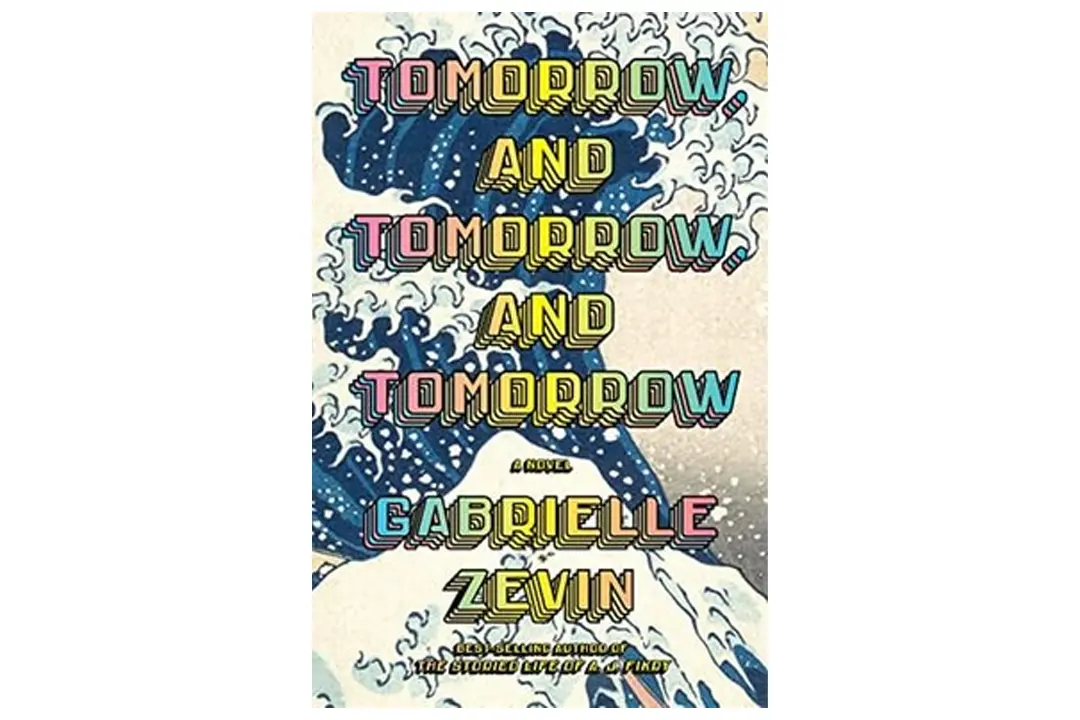
Tomorrow, and Tomorrow, and Tomorrow – Gabrielle Zevin: Book Summary
Beverly Ashford • 11 Mar 2026 • 70 views • 3 min read.Let me tell you about the book that made people cry about video games. Gabrielle Zevin wrote a novel about two game designers that somehow became one of the most acclaimed literary novels of the decade. It sounds niche—who wants to read about coding and game mechanics? But the book isn't really about games. It's about making things together. It's about love that doesn't fit into categories. It's about losing people and losing parts of yourself. The video games are just the medium. The story is universal.
Tomorrow, and Tomorrow, and Tomorrow – Gabrielle Zevin: Book Summary
Quick Summary:
- Two creative partners build legendary video games together across three decades
- Their relationship defies easy definition—not romance, not quite friendship
- The novel explores collaboration, identity, disability, and loss
- Published in 2022, it became a literary phenomenon and Book of the Year everywhere
The Meeting
Sam Masur and Sadie Green meet in a hospital when they're children. Sam is eleven, recovering from a car accident that killed his mother and shattered his foot. He's alone. Sadie is twelve, visiting her sister who has cancer. She's scared.
They find each other in the hospital's game room. They play Super Mario Bros. together, passing the controller, working through levels in tandem. The gaming sessions become ritual. Sadie visits whenever her sister has treatment. Sam waits for her.
Then Sam discovers Sadie has been visiting as part of a volunteer program—earning community service hours. He feels betrayed. Their friendship ends. Years pass.
They're both at college in Massachusetts when they meet again—Sam at Harvard, Sadie at MIT studying computer science. She sees him on a subway platform and says his name. He pretends not to hear at first. But she persists.
They start talking about video games. They start playing together again. And then they start making one.
Ichigo
Their first collaboration becomes a legendary debut.
Ichigo is set in a Japanese fishing village, centered on an orphan child. It's beautiful, melancholy, and unlike anything else in gaming at the time. Sadie does most of the programming. Sam does art direction and narrative. Together, they create something neither could make alone.
The game becomes a hit. Sadie and Sam become famous—young geniuses, creative partners, the faces of independent gaming. They start a company with Sam's roommate Marx, who handles business.
But success complicates everything.
Sam and Sadie work together brilliantly and terribly. They argue about credit, about recognition, about who contributed what. Sam is charming in public; Sadie feels invisible. Her programming genius gets overlooked while Sam gives interviews. Old wounds reopen.
Their next game is more ambitious. And the one after that. The company grows. The arguments intensify. The relationship—whatever it is—strains.
What They Are to Each Other
The novel refuses to define Sam and Sadie's relationship as romance or friendship.
They love each other. That's undeniable. But they never become a couple. Sam briefly dates Sadie's sister. Sadie has a long relationship with a professor (complicated by power dynamics) and later with another colleague. Sam's disability affects his romantic confidence. Sadie's ambition affects hers.
They orbit each other for decades—drawn together, pushed apart, unable to exist without each other, unable to fully exist with each other.
Marx, their business partner, becomes the third point of the triangle. He's in love with Sadie. He's best friends with Sam. He holds the company—and the friendship—together.
The book asks: what do you call a love that isn't romantic but is more than friendship? What do you call a partnership that defines your life's work?
There may not be a word for it. That doesn't make it less real.
Key Characters
| Character | Role | Represents |
|---|---|---|
| Sam Masur | Game designer, public face | Disability, reinvention, the cost of ambition |
| Sadie Green | Programmer, creative engine | Invisible labor, female genius overlooked |
| Marx Watanabe | Business partner, mediator | Love as bridge, mortality |
| Dov Mizrah | Sadie's professor/lover | Power imbalance, complicated mentorship |
| Anna Lee | Sam's girlfriend, Sadie's sister | Family entanglement, cancer's shadow |
The Games They Make
The novels follows their creations across decades:
Ichigo (1996) establishes them. A side-scrolling adventure that's emotionally complex, visually distinctive.
Both Sides (late 1990s) lets players experience the same events from different perspectives. The mechanic mirrors Sam and Sadie's relationship—the same story seen completely differently.
Counterpart High (2000s) becomes their biggest commercial success, though Sadie considers it a compromise.
Later games grow more ambitious, more personal, more difficult to make.
Each game reflects where they are in life, what they're struggling with, what they haven't resolved. The creative work is the relationship—its expression, its battleground, its record.
The Tragedy
Marx dies.
A man walks into their company's office and shoots him. The shooter is mentally ill, targeting Sam over some imagined grievance. Marx steps in front of the bullet.
The death shatters everything. Sadie loses her partner. Sam loses his best friend. The company loses its heart.
Sam, already struggling with chronic pain from his childhood injury, spirals. He becomes dependent on painkillers. His life narrows. His relationship with Sadie fractures further—grief pulling them apart rather than together.
Years pass before they find their way back. And when they do, it's through work. It's always through work.
What the Book Is Really About
Creative collaboration. Making something together is intimate in ways that resemble love but aren't the same. The book treats creative partnership as its own category of relationship—as profound as marriage, as fraught as family.
Visibility and credit. Sadie does most of the technical work. Sam becomes the public face. This pattern—women's labor made invisible—runs throughout. The book is explicit about how genius gets gendered.
Disability and identity. Sam's injured foot shapes his entire life. He performs able-bodiedness in public. He suffers privately. Games let him inhabit bodies without limitations. His disability isn't incidental—it's central to who he is.
Loss and continuation. Everyone loses. Parents, siblings, friends. The question is what you make afterward. The title—from Macbeth's speech about meaninglessness—becomes ironic. Life has meaning because of what we build with the time we have.
The indefinable relationship. Sam and Sadie resist easy categorization. That resistance is the point. Some loves don't fit the boxes we've made.
The Writing
Zevin's prose is deceptively accessible. It reads quickly while doing complex work.
The structure jumps through time, games, and perspective. We get Sam's view, then Sadie's. We get games-within-the-book that function as emotional chapters.
There's humor throughout—tech industry satire, cultural references, sharp dialogue. The book is fun even as it's devastating.
The video game sequences work even if you don't play games. Zevin writes about gameplay mechanics as metaphors for living, and it never feels forced.
Frequently Asked Questions
Do I need to know about video games?
No. The book explains everything you need. Gaming is the vocabulary, but the grammar is universal.
Is this a love story?
Yes and no. It's a love story that doesn't follow romantic conventions. Whether that satisfies you depends on what you expect from love stories.
Why does Marx have to die?
The death serves the story's examination of loss and continuation. Some readers find it manipulative; others find it earned. Zevin has discussed wanting to explore how grief affects creative partnership.
Is there representation I should know about?
Sam is half-Korean and disabled. Marx is half-Japanese. Sadie is Jewish. The book engages with how identity shapes experience in gaming and beyond.
Is the book sad?
Parts are devastating. But it's also funny, warm, and ultimately hopeful. The sadness isn't nihilistic—it's about how love persists through loss.
Should I read Zevin's other books?
The Storied Life of A.J. Fikry is her previous bestseller, about a bookstore owner. It's lighter than this. Both are good; Tomorrow is better.
The Bottom Line
Here's what Gabrielle Zevin achieved.
She wrote a novel about video games that's really about everything. She created a relationship that doesn't have a name but feels completely real. She examined how we make things together and what it costs us.
Sam and Sadie aren't together in any conventional sense. But they're also never apart. The games they make are their relationship—recorded, playable, immortal.
The book argues that creative partnership is its own form of love. That work can be the truest expression of who we are. That losing people doesn't mean losing what you made with them.
Tomorrow, and Tomorrow, and Tomorrow is about mortality and making things that outlast us.
It's also about two kids who played Mario together in a hospital and never stopped playing.