
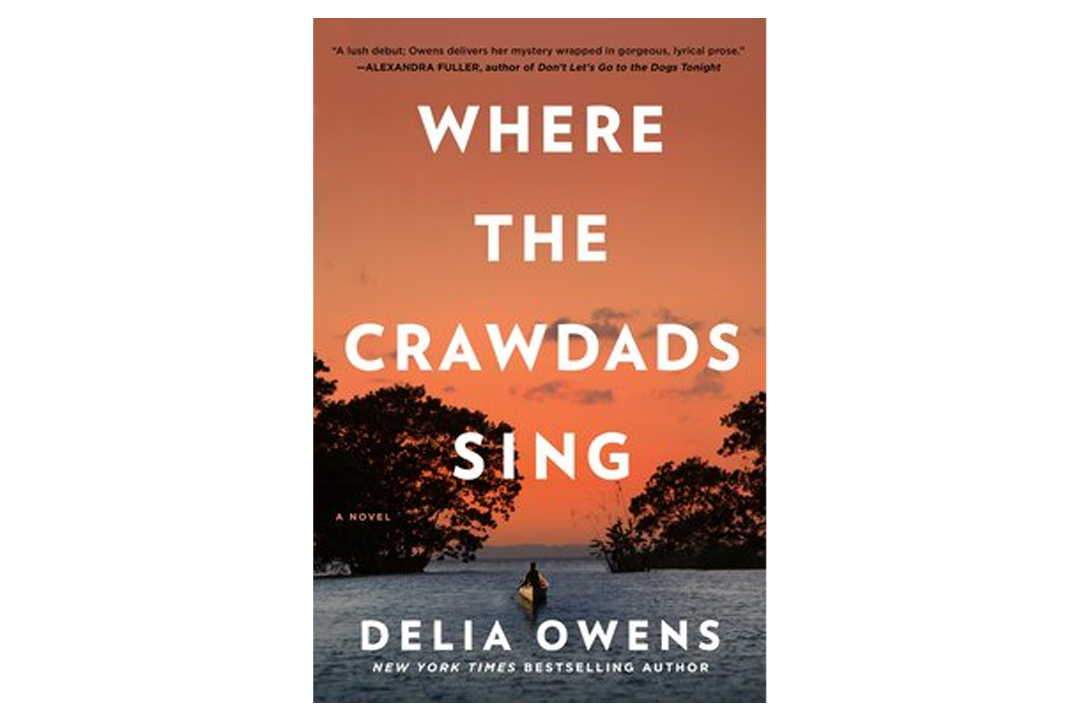
Where the Crawdads Sing – Delia Owens: Book Summary
Beverly Ashford • 11 Mar 2026 • 65 views • 3 min read.Let me tell you about the book that broke all the rules and still became a phenomenon. Delia Owens was a wildlife scientist, not a novelist. She was 69 when her debut novel was published. The book combines genres that supposedly don't mix—literary fiction, courtroom drama, romance, nature writing. It shouldn't have worked. It sold over 18 million copies. Where the Crawdads Sing spent years on bestseller lists. Reese Witherspoon turned it into a movie. Book clubs everywhere read it. Something about a wild girl surviving alone in the marshes captured the imagination of readers who rarely agree on anything. Here's the story that did all that.
Where the Crawdads Sing – Delia Owens: Book Summary
Quick Summary:
- An abandoned girl raises herself in the North Carolina marshlands
- When a local man dies mysteriously, she becomes the prime suspect
- Part coming-of-age story, part murder mystery, part nature writing
- Published in 2018, it became one of the best-selling novels of the decade
The Marsh Girl
Barkley Cove, North Carolina. A small fishing village on the edge of vast coastal marshlands.
Catherine Danielle Clark—called Kya—is six years old when her mother walks down the dirt lane and never comes back. One by one, her siblings leave too, escaping their abusive father. Eventually even her father disappears, leaving Kya completely alone.
She's seven years old. She raises herself.
The marsh becomes her world. She learns which plants are edible, which are poisonous. She learns the rhythms of the tides, the habits of birds, the patterns of life and death in the wetlands. She collects feathers, shells, specimens. She becomes an expert in ways that don't involve school or books.
The townspeople call her the Marsh Girl. They whisper about her. Children are taught to fear her. She's barely human to them—a wild creature, trash, something not quite civilized.
Kya learns to survive without them. She digs mussels, sells them to Jumpin', a Black man who runs a gas station and becomes her only reliable friend along with his wife Mabel. She lives in a shack without running water or electricity. She is profoundly, terribly alone.
Two Timelines
The novel alternates between two timelines.
1952-1969 follows Kya's life from abandonment through young adulthood. We watch her learn to survive, learn to read (taught by a kind boy named Tate), learn to love (first Tate, then the charming Chase Andrews), and learn to protect herself from a world that's never protected her.
1969-1970 follows the investigation into Chase Andrews's death. Chase is the golden boy of Barkley Cove—former quarterback, good family, engaged to a proper girl. He's found dead at the bottom of the fire tower, the grate that should have prevented falls mysteriously opened. There are no footprints, no evidence. But there are suspicions.
The Marsh Girl had been seen with Chase. She had reason to hate him. Who else could have done it?
The dual timelines slowly converge, each revealing information that reframes the other.
The Romances
Tate Walker enters Kya's life when she's fourteen. He's a few years older, son of a fisherman, planning to leave for college. He teaches her to read—her first real education. They fall in love slowly, through shared love of the marsh and its creatures.
Then Tate leaves for college and doesn't come back when he promised. Kya waits and waits. He doesn't come. She concludes she was right all along: everyone leaves.
Chase Andrews appears years later. He's everything Tate wasn't—popular, confident, part of the town's respectable world. He pursues Kya aggressively. She's flattered and lonely. They begin a relationship.
But Chase is also engaged to someone else. When Kya discovers this, when she realizes she's been used, something changes. Chase becomes threatening. He assaults her. He tells her no one will believe the Marsh Girl.
Kya is alone with this too.
Key Characters
| Character | Role | Represents |
|---|---|---|
| Kya Clark | Protagonist, the "Marsh Girl" | Resilience, isolation, nature's wisdom |
| Tate Walker | First love, biologist | Kindness, education, redemption |
| Chase Andrews | Second love, victim | Privilege, predation, the town's golden image |
| Jumpin' and Mabel | Gas station owners | Genuine compassion across racial lines |
| Tom Milton | Defense attorney | Justice, belief in Kya's humanity |
| Ma | Kya's mother | The original abandonment |
| Pa | Kya's father | Abuse, then neglect, then absence |
The Trial
Kya is arrested for Chase's murder. The town has wanted to punish her for years—for being different, for living outside their rules, for surviving without their permission.
The trial becomes the novel's climactic section. Evidence is presented: Kya's history with Chase, her knowledge of the marsh, the lack of evidence that points to anyone else. The prosecution argues she had motive, means, and opportunity.
Tom Milton, a retired defense attorney, takes her case for free. He argues for reasonable doubt. He presents Kya as a remarkable woman who educated herself, who published respected nature guides, who was failed by the community now judging her.
The jury acquits.
Kya returns to her marsh. Tate, who never stopped loving her, finally comes back. They build a life together, growing old in the shack that's now full of specimens and books and love.
The Ending
The twist comes after Kya's death from old age.
Tate finds a hidden compartment in the floor. Inside is a shell necklace—the necklace Chase was wearing when he died, which disappeared from the crime scene. There's also a poem in Kya's handwriting that confesses, obliquely, to the murder.
Kya did it.
She killed Chase Andrews. She planned it carefully. She established an alibi, left no evidence, and got away with it.
The reader has spent the entire book believing in her innocence. Many readers feel betrayed. Others feel it's justified—Chase assaulted her, threatened her, and the legal system would never have protected her.
The novel doesn't tell you how to feel. It gives you the facts and lets you sit with them.
What the Book Is Really About
Nature as sanctuary and teacher. The marsh isn't just setting—it's character. Kya learns survival from the natural world. She understands predator-prey relationships intimately. The book suggests that nature has its own morality, different from human law.
Isolation and its costs. Kya's solitude is both her protection and her wound. She survives alone but never fully heals from abandonment. Her loneliness is vast and aching, even as her independence becomes her identity.
Class and judgment. The town despises Kya because she's poor, uneducated, and different. They've created the conditions that made her who she is, then condemn her for it. The trial is really about whether the Marsh Girl is fully human.
Female survival. Kya is abandoned, assaulted, threatened, and accused. Every system fails her. Her survival requires becoming something outside those systems—self-sufficient, defensive, possibly dangerous.
Frequently Asked Questions
Is the ending supposed to be satisfying?
It's supposed to be complicated. Some readers feel justice was served—Chase was a predator who would have hurt Kya again. Others feel betrayed that Kya really was a murderer. The book invites this debate.
Is this based on a true story?
No, though there's controversy around the author. Delia Owens was involved in a real unsolved death in Zambia in 1995, where her stepson shot an alleged poacher. The parallels to her fiction are unsettling to some readers.
Is the trial accurate?
Legal experts note some procedural issues. It's more dramatically satisfying than legally precise. The trial works emotionally, which is what the novel prioritizes.
Why is it so popular?
The combination of elements—mystery, romance, nature writing, underdog protagonist, atmospheric setting—hits multiple pleasure centers. The audiobook is also excellent, which helped spread it through word of mouth.
Should I watch the movie?
The film is faithful but necessarily compressed. The book's nature writing—Owens's specialty—translates beautifully to screen. Reading first probably provides a richer experience.
Here's what Delia Owens achieved.
She wrote a novel that works as escapism while asking hard questions. The marsh is beautiful and the romance is compelling, but the book is also about what happens when society abandons its most vulnerable. It's about what survival costs.
The twist ending forces you to reconsider everything. Was Kya justified? Was she corrupted by her circumstances? Does the answer change your sympathy?
The book doesn't judge. It describes a world where a girl raised by the marsh learned its lessons—including that predators exist and sometimes the only protection is eliminating the threat.
That's not comfortable. Good books often aren't.